Open Box




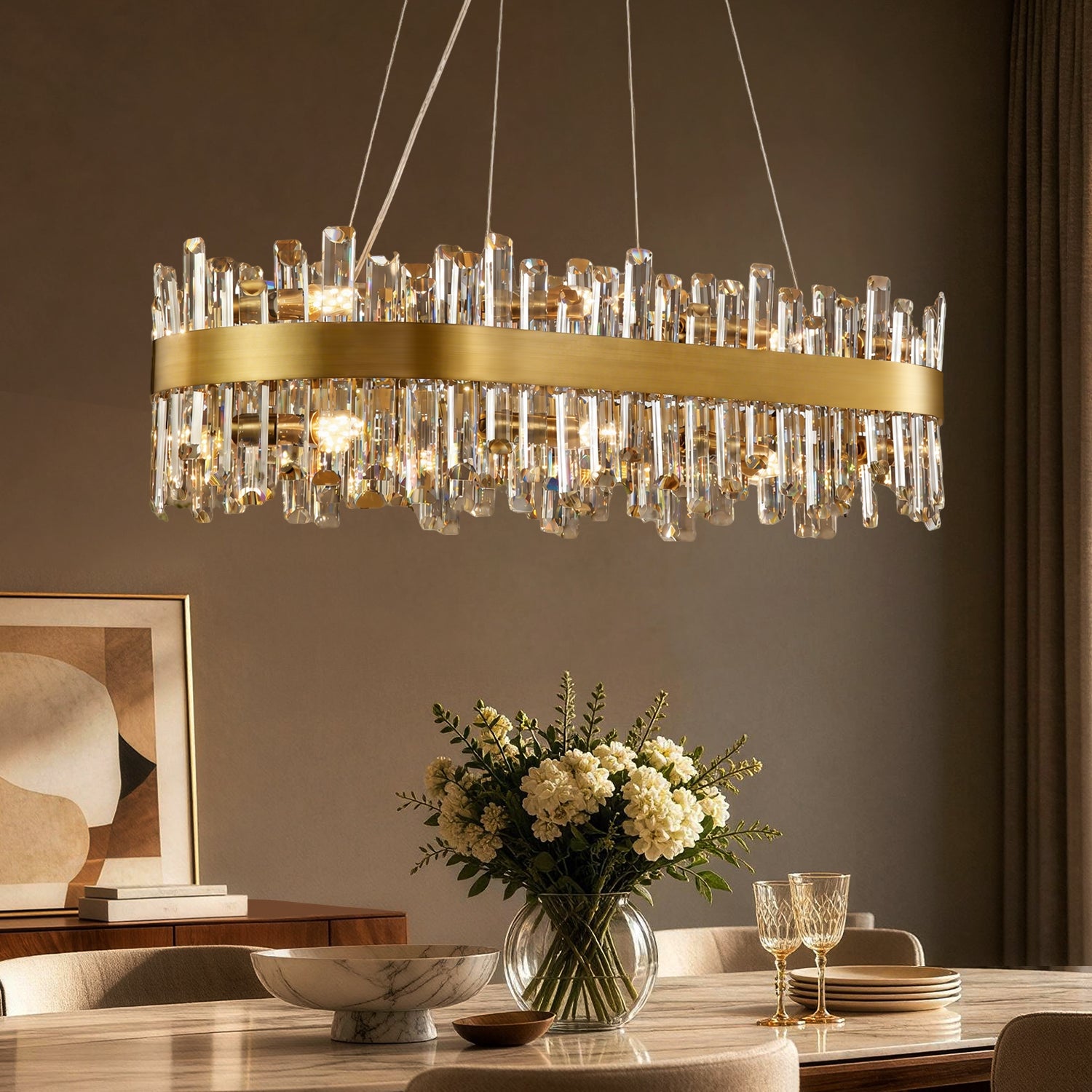
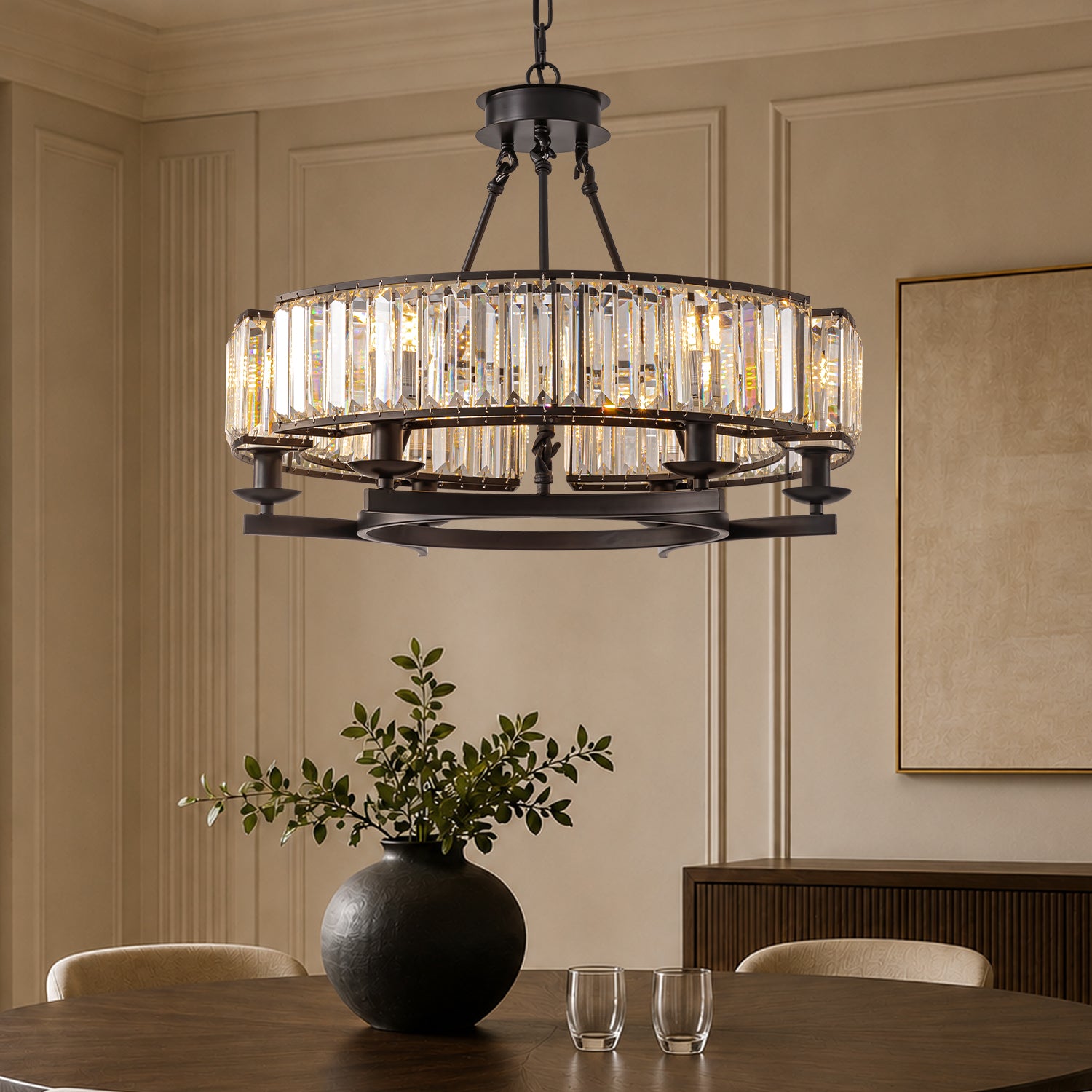
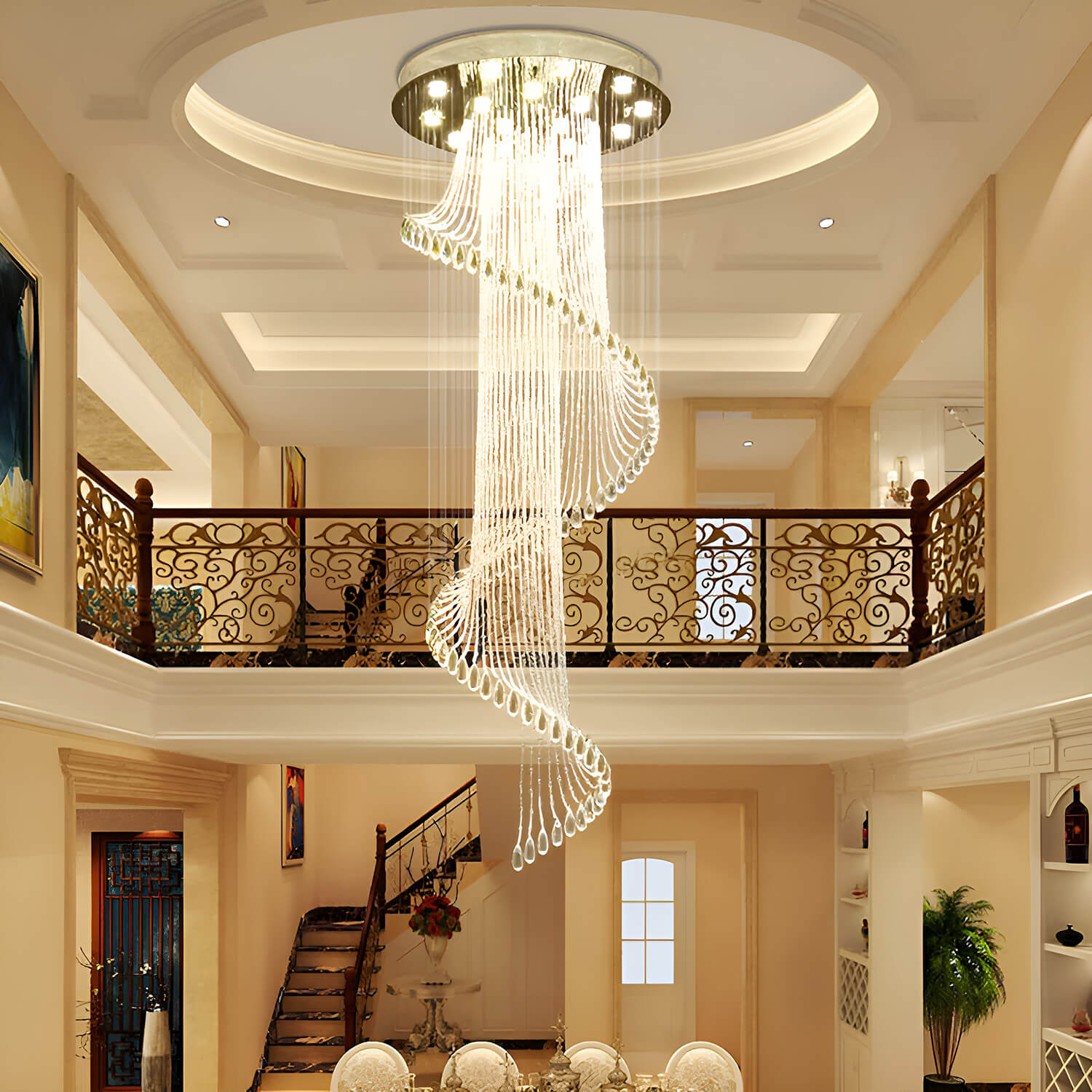


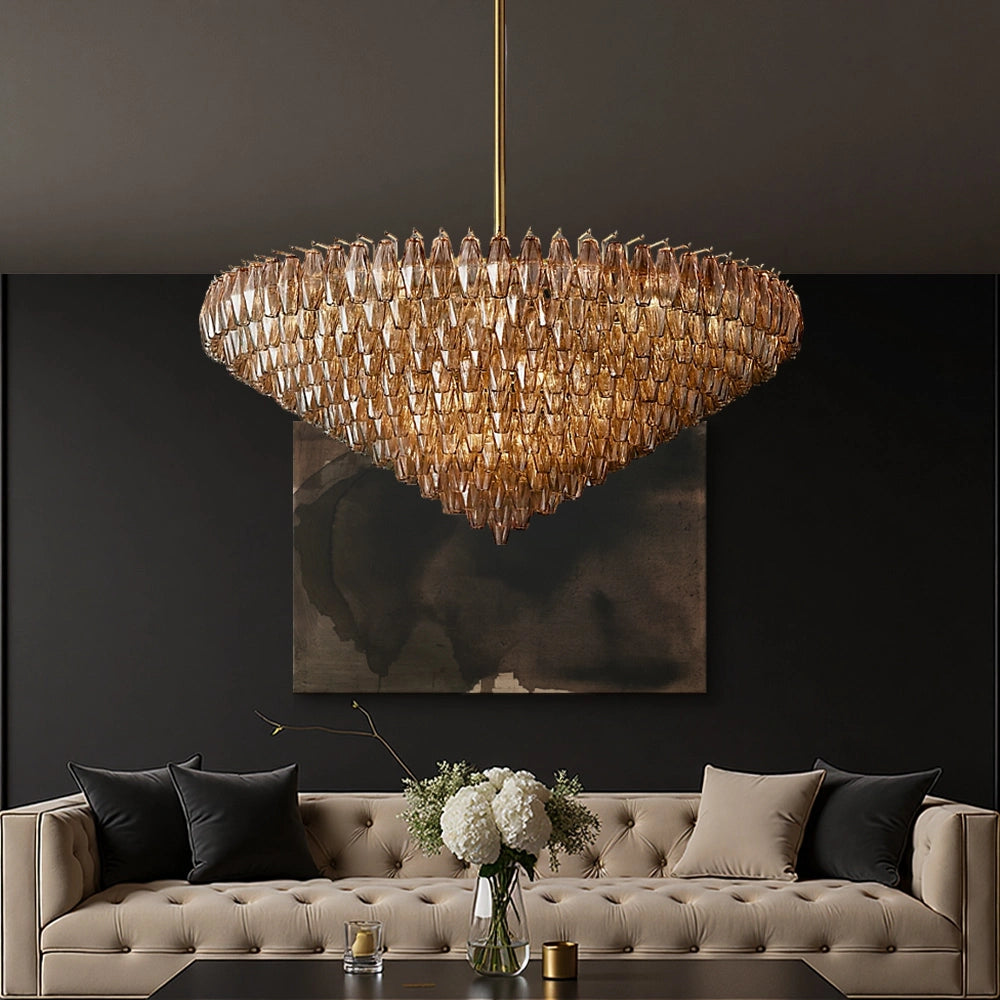
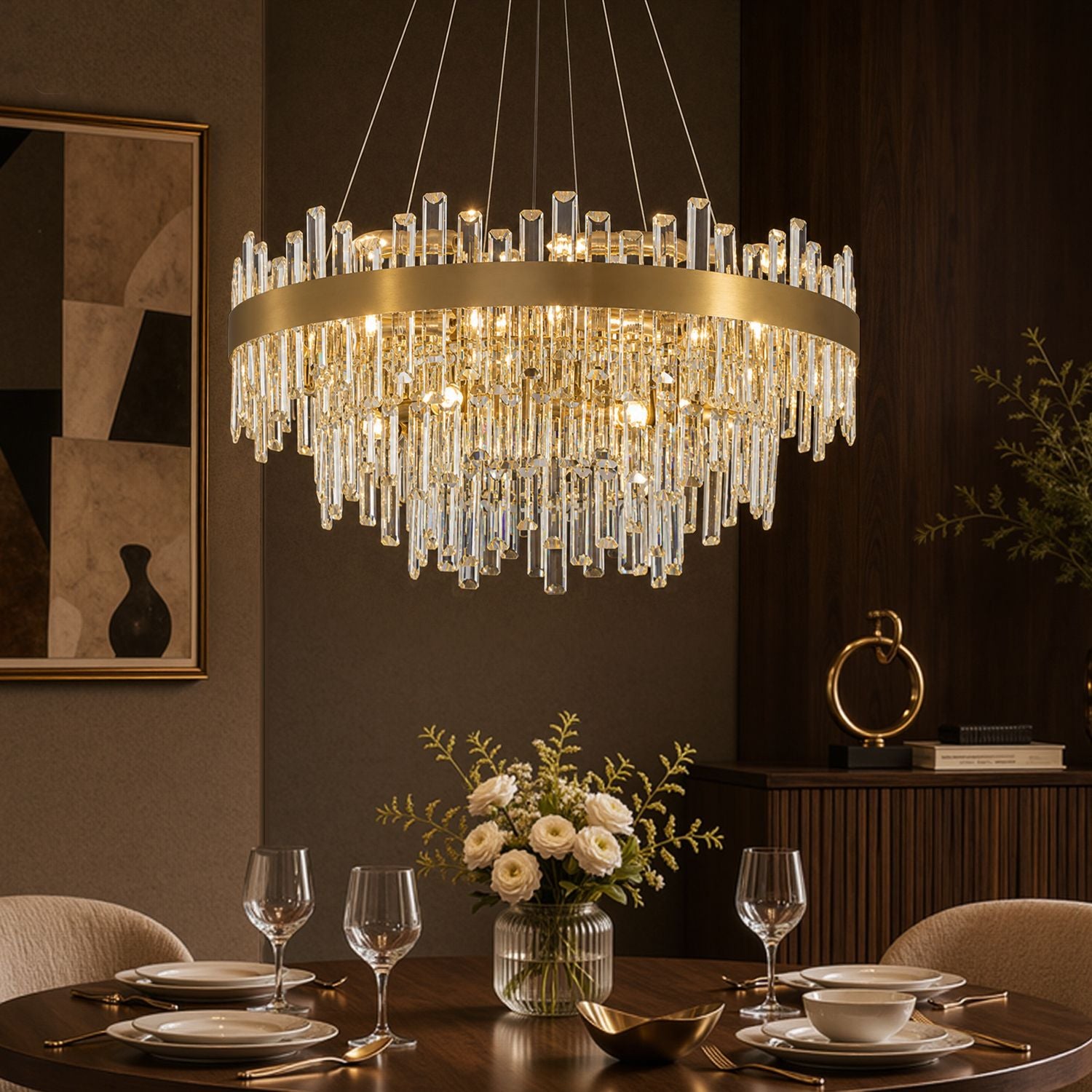
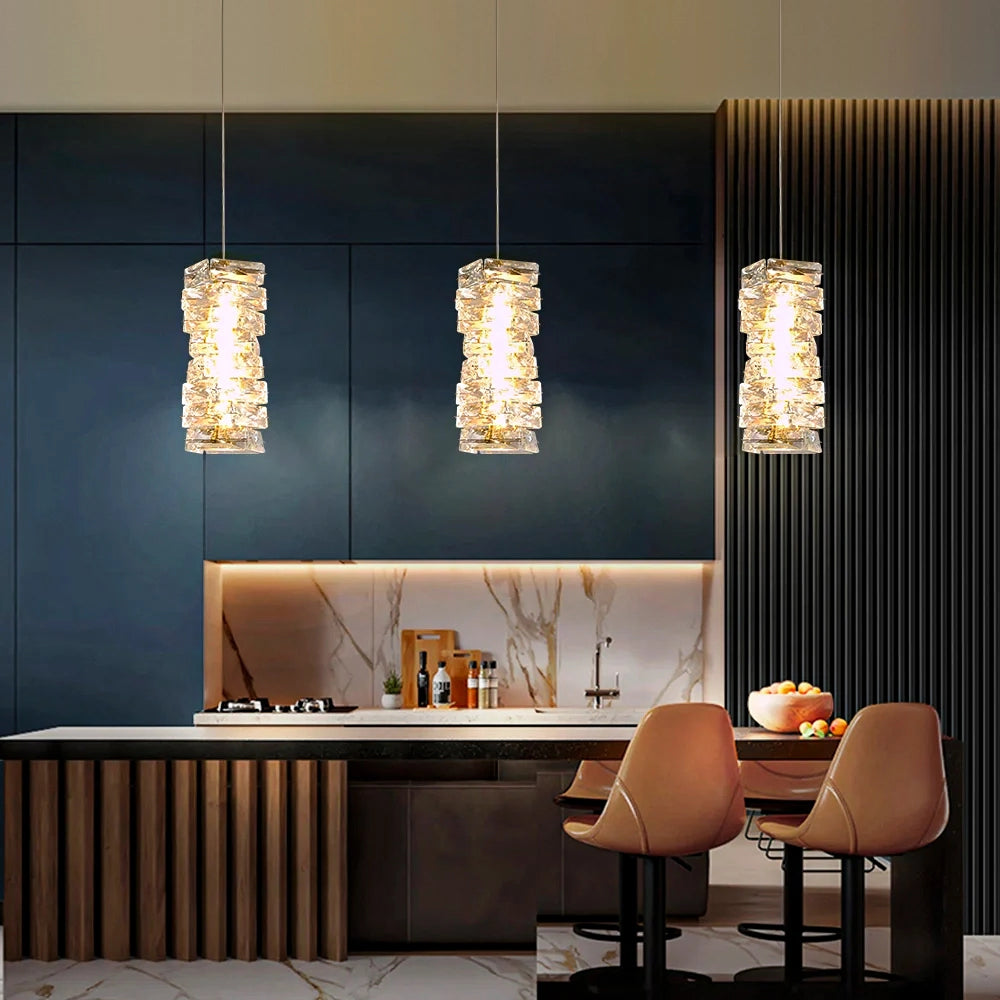



Chandeliers for Sloped Ceilings: What to Check Before Buying
11 minutes
Chandeliers for Sloped Ceilings: What to Check Before Buying
Quick answer: A chandelier can work on a sloped ceiling when the exact fixture and mounting assembly are approved for that ceiling, the suspension can hang vertically, the complete drop fits the room, and the outlet and building structure can support the installed weight. A chain or an adjustable rod by itself does not prove compatibility. Check the product's canopy or adapter, its permitted slope, the selected variant, and the installation instructions before ordering.
This is a pre-purchase planning guide for U.S. residential spaces. It helps you collect the right information for Sofary and your qualified installer; it does not certify a particular fixture-and-ceiling combination or replace a site inspection. Product information was reviewed September 26, 2026.
Five things to check before choosing a sloped-ceiling chandelier
- The mounting point: Measure the ceiling angle at the actual electrical outlet, not at a different point on the roofline.
- The mounting assembly: Confirm whether the selected model includes a pivoting/swivel canopy, uses a manufacturer-approved slope adapter, or needs another documented solution.
- The suspension: Check whether the chain, cable or rod and its top connection are designed to hang plumb on that slope. Do not assume a fixed rod will pivot.
- The usable drop: Check the complete installed height at the exact mounting point, including the canopy, couplers, suspension and fixture body.
- The support and access: Have the installer verify the complete installed weight, outlet box, structural attachment and safe access to the ceiling.
These are separate checks. A listing that says “Sloped Ceiling Compatible” answers the first screening question, but it rarely settles the maximum angle, the exact parts supplied or whether an existing outlet is suitable.

Start at the outlet—not at the chandelier photograph
A vaulted room may have several different ceiling planes. Photograph the outlet and the ceiling from across the room, then measure the angle at that location. Record the finished floor-to-outlet height, the height of the table or island below, and the horizontal position of the outlet relative to the furniture. If the outlet is not where the light should be, a longer chain does not move the electrical mounting point; ask the installer how the location can be changed.
The point of this measurement is not to apply a universal “allowed slope.” The permissible angle depends on the fixture's specific mounting hardware and instructions. Do not borrow the angle rating from a ceiling-fan kit, a different light or a visually similar canopy. For example, a manufacturer can list one of its chandeliers as usable on sloped ceilings while separately identifying a slope kit for another model; that is product-specific information, not a blanket rule. See the Kichler Aldergate product specifications for an example of a model explicitly listing a slope-ceiling kit.
Chain, cable or rod: what does the top connection actually allow?
Chain-hung fixtures
A chain can drop vertically under gravity, but the ceiling-side connection, canopy and mounting bracket still have to be suitable for the angle. Check the chain's adjustment range, the complete installed weight and the fixture's own instructions. If the chandelier has more than one suspension point, confirm that the supplied assembly can keep the body level without field-made alterations.
Cable-hung fixtures
Multiple cables may permit height adjustment, but the canopy may still be designed for a flat mounting plane. Ask for a drawing of the actual ceiling-side assembly and how each cable exits on the intended slope. A product's adjustable height claim is not a slope rating.
Rod-hung fixtures
A rigid rod needs a compatible pivoting coupler, swivel canopy or manufacturer-approved adapter at the top. Verify which part is supplied and its permitted angle; a photograph of the fixture on a flat ceiling cannot answer that question. Rods may also be supplied in set lengths rather than continuously adjustable. Confirm the combinations available for the exact variant before calculating the final hanging height.
Never improvise a connection by forcing a straight coupler to an angle, enlarging a canopy opening or substituting an unrelated adapter. The installer must follow the fixture and accessory instructions and applicable local requirements.
Calculate the complete drop at the mounting point
The height of the decorative body is only one part of the installation. Ask for the minimum and maximum overall hanging height of the exact configuration, measured from the finished ceiling at the outlet to the lowest point of the assembled fixture. Where a product lists rods separately, confirm which combinations are physically possible and whether an adapter adds height.
For a chandelier centered over a dining table, also measure the finished tabletop height and the intended distance from tabletop to the fixture's lowest element. The Sofary dining-room size and hanging-height guide explains how to screen that relationship. This article focuses on whether the mounting assembly can achieve the selected position on an angled ceiling; it does not assign one required hanging distance to every room.
On a vaulted ceiling, an apparent centerline in a photograph may not match the actual outlet. Tape the intended fixture footprint or use a temporary marker at the table center and check sightlines from both ends of the room. A long linear fixture usually needs its body level and its long axis aligned with the table—not tilted to follow the ceiling line.
Three Sofary product examples—and the unanswered questions
The table below is a screening comparison of published product information, not approval for a particular house. Names, variant dimensions and mounting claims were checked on September 26, 2026. Availability, included parts and instructions should be reconfirmed for the selected order.
| Exact product / example | Published information | Still confirm before purchase |
|---|---|---|
|
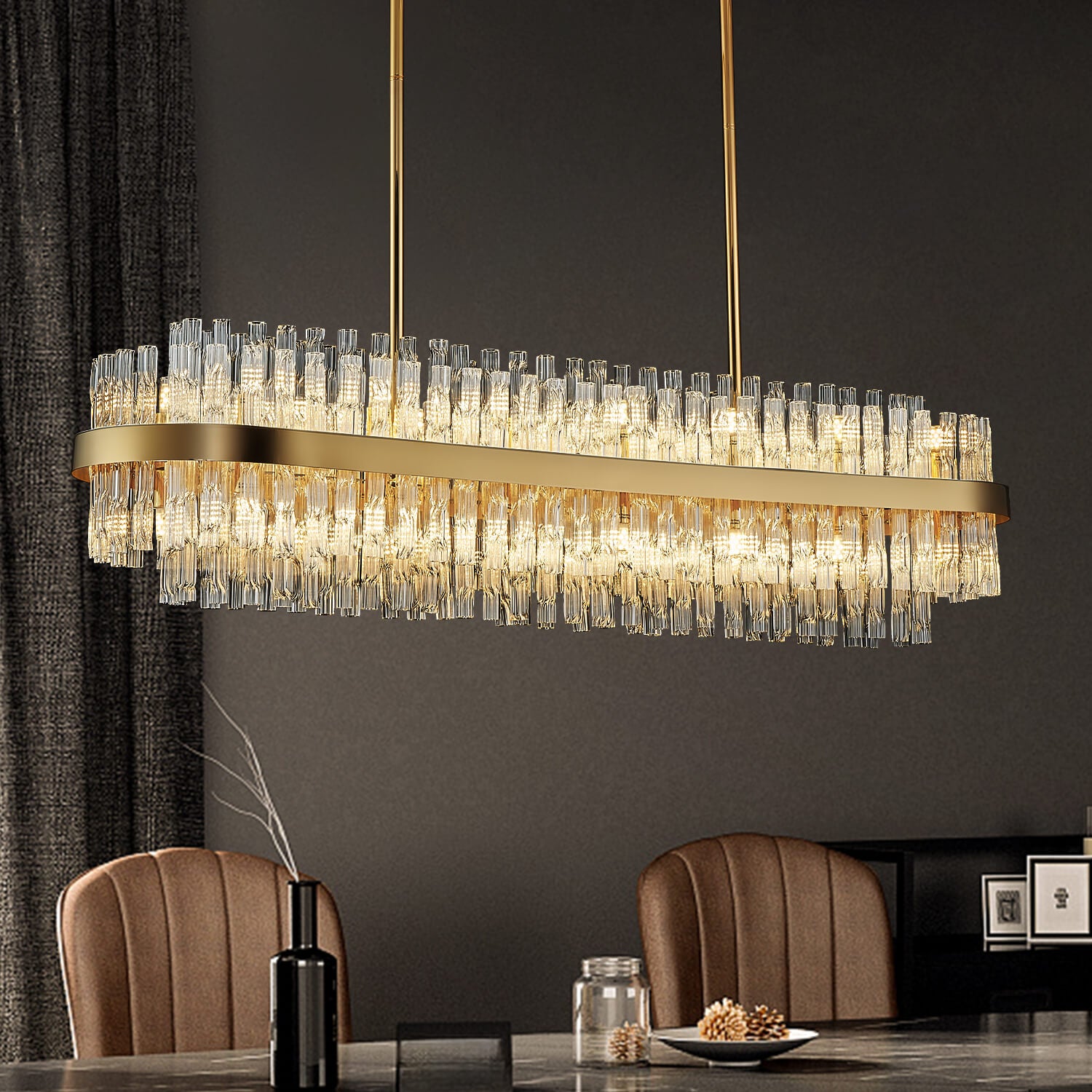
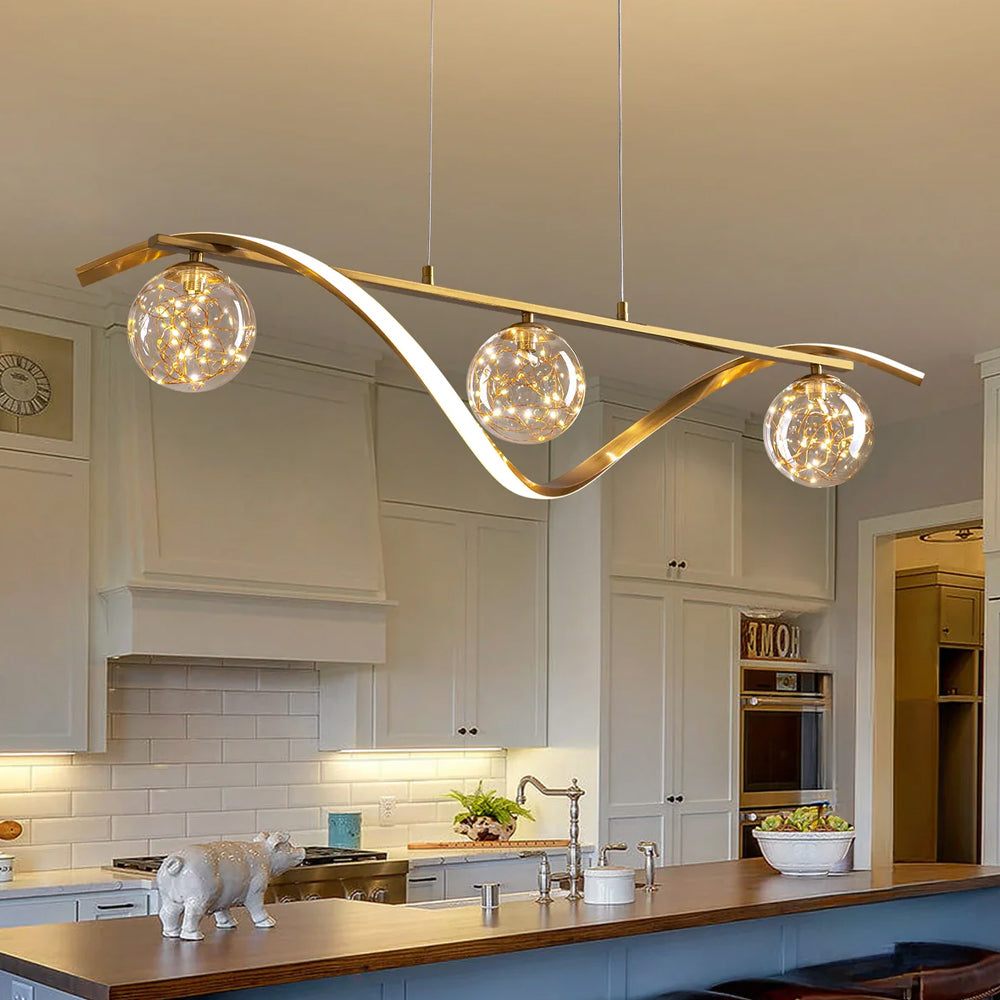
Vora Modern Gold Glass Globes Linear Chandelier White-globe variant CH119-A |
W 39.4 × D 10.6 × H 10.8 in; product copy describes a flexible swivel canopy for angled ceilings and lists two rod sections, 15.7 and 19.6 in (maximum combined length 35.4 in). | Permitted ceiling angle; exact swivel and rod configuration; whether the suspension rod hangs plumb and the body stays level; complete installed height and weight. |
| Contemporary Sputnik Globe Chandelier | W 39.4 × H 39.4 in; product page lists flat/sloped ceilings, 14.3 lb and five 7.9-in (20-cm) rods. | Which coupler or canopy makes the rods slope-compatible; the permitted angle, usable rod combinations, clearance and support at the actual outlet. |
|
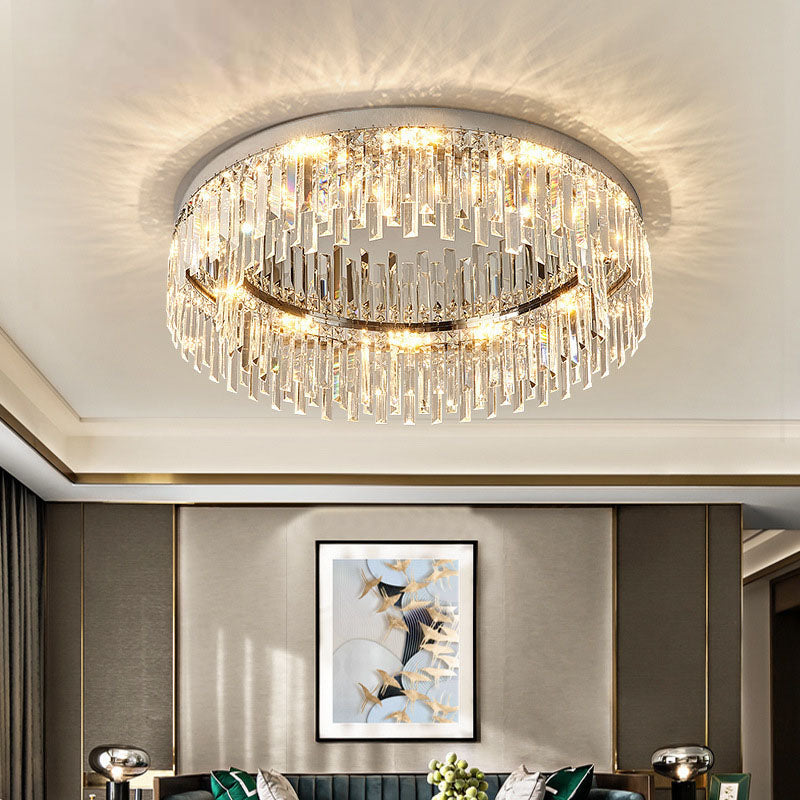
Celeste Crystal Flush Mount Chandelier Currently listed variants include CH182-A, CH182-B and CH182-D |
The page specifies “Flat Ceiling (Can be customized for sloped ceiling)” and a fixed-height body. | A proposed custom sloped-ceiling design, its drawings, lead time, cost, exact variant weight and written installation approval. Do not order the standard flat-ceiling version assuming it will fit. |
The distinction matters: Vora and the Sputnik are listed as sloped-ceiling compatible; Celeste is flat-ceiling as standard with customization potentially available. None of the inspected pages establishes a universal maximum ceiling angle for your project.

Weight and structure remain a separate decision
Compatibility at the canopy does not make an existing outlet box strong enough. Verify the complete installed weight for the selected size, including decorative components, and have the installer identify the box rating and its attachment to the building structure. The Sofary ceiling-box support guide discusses why the familiar 50-lb code threshold is not a universal capacity claim for an unidentified box.
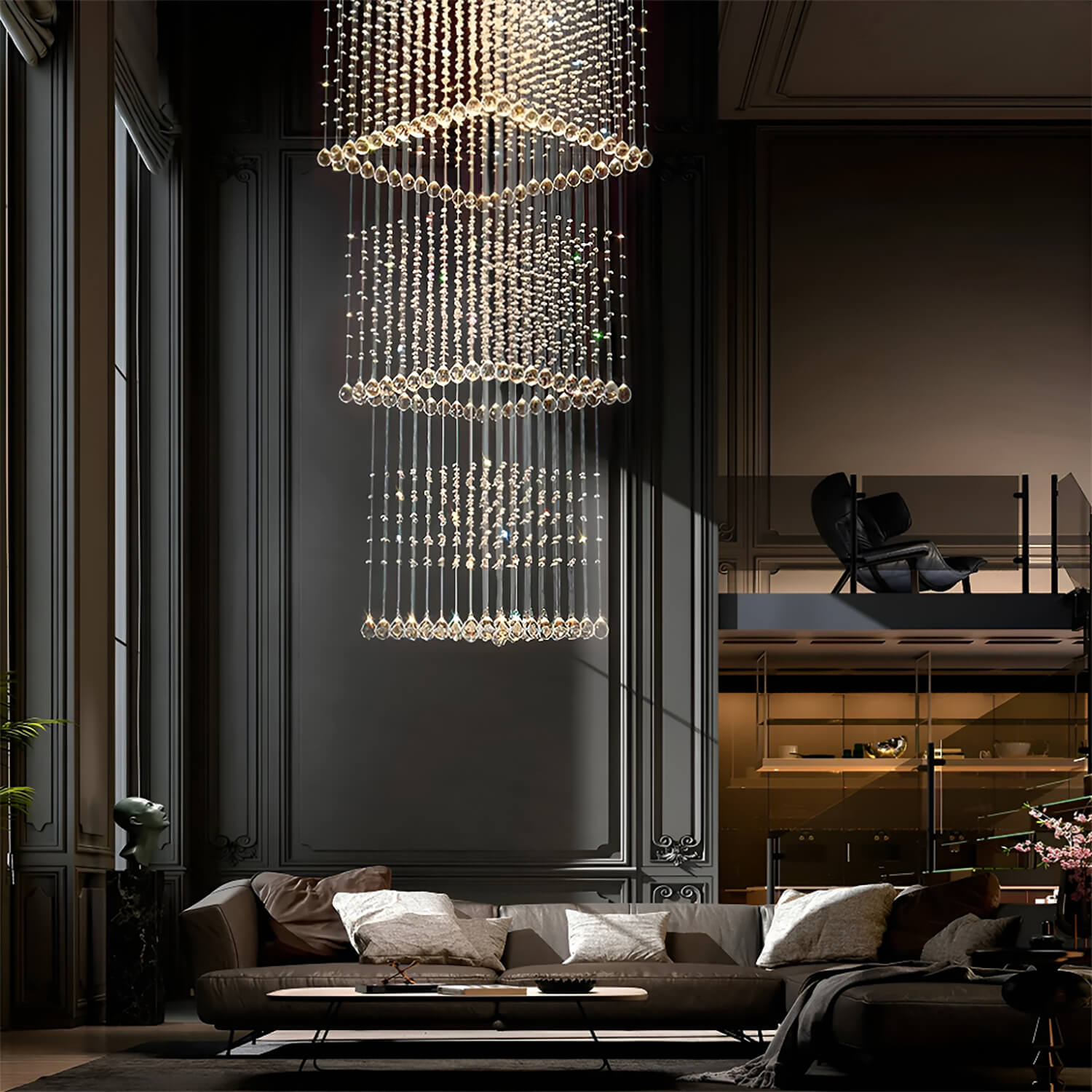
Large or high fixtures may also require specialized access, a clear assembly plan and provision for future cleaning or light-source service. For a tall entryway, use the two-story foyer planning guide alongside this ceiling-connection check. An approved slope adapter does not eliminate the need for verified structural support.
Send a useful compatibility request before ordering
Use this short brief with Sofary and the installer. Ask for a written model-specific answer rather than a general assurance that “most chandeliers work on slopes.”
- Exact product link, SKU, selected size and finish.
- Ceiling angle measured at the outlet, plus a wide room photograph and a close photograph of the outlet location.
- Finished floor-to-outlet height, table or island dimensions and desired lowest fixture point.
- Request for the installation manual or mounting drawing, the included canopy/adapter and its permitted slope.
- Complete installed weight, mounting/support requirements and the available overall drop or rod combinations.
- Confirmation of who supplies any additional approved part, and whether customization changes the mounting assembly.
The installer can then assess the existing outlet, support, wiring and access. If the manufacturer cannot confirm the mounting assembly for the measured slope, do not treat a sales-page badge as final installation approval.
Frequently asked questions
Can any chain chandelier hang from a sloped ceiling?
No. A chain may hang vertically, but the canopy, ceiling-side connection, support and fixture instructions must be suitable for the actual angle. Confirm the exact model rather than generalizing from the suspension type.
Does “adjustable height” mean “sloped-ceiling compatible”?
No. Height adjustment tells you about drop, not necessarily whether the ceiling connection pivots or is approved for an angled plane.
Do I need a sloped-ceiling adapter?
It depends on the model. Some fixtures include a suitable swivel or canopy; others require a specified accessory, while a flat-mount version may need manufacturer-approved customization. Ask for the part number and installation instructions.
What angle can a sloped-ceiling chandelier handle?
There is no universal angle across chandeliers. The permissible angle comes from the exact fixture and mounting assembly. The Sofary pages reviewed here do not publish a general maximum angle for the examples, so obtain written confirmation for your measured slope.
Can a flush-mount chandelier go on a vaulted ceiling?
Only if its standard assembly is approved for that configuration or the manufacturer supplies an approved custom solution. Celeste's published specification identifies flat ceilings as standard and notes that sloped-ceiling customization may be possible; that is not an approval of the standard version for a slope.
Can I keep a long chandelier level under a sloped ceiling?
Often that is the intended visual result, but it depends on the actual number of suspension points and the approved adjustments. Confirm it with a model-specific mounting drawing and the installer rather than relying on an illustrative room image.
Research scope and sources
Research date: September 26, 2026. Product-specific observations come from the linked Vora, Contemporary Sputnik and Celeste Sofary pages. A Kichler model page illustrates that slope-ceiling hardware can be identified at the product level. The ceiling-box article is an internal guide to support planning. Published compatibility, actual included components and installation suitability are different questions: the final decision depends on the selected variant, current manual, manufacturer confirmation, locally applicable requirements and on-site assessment by a qualified installer. No slope-angle test or installation of these Sofary models was performed for this article.
More Blogs
What Should You Take into Consideration When Buying a Chandelier?How to Find the Best Staircase Chandelier for Your HomeHow to Pick the Perfect Chandelier Ceiling Fan for Your Living RoomHow to Choose Matching Lamps with Chandeliers ?How to Choose the Right Light Bulbs for Your HomeHow to install crystal chandeliers | Sofary LightingThe Lighting Guide: How to Light Your FoyerChandelier Ideas: A Guide to Choosing the Right Crystal ChandeliersYour Guide to the Top Types of Crystal For ChandeliersCrystal Chandelier Maintenance: How to Keep It Sparkling Like New