Open Box






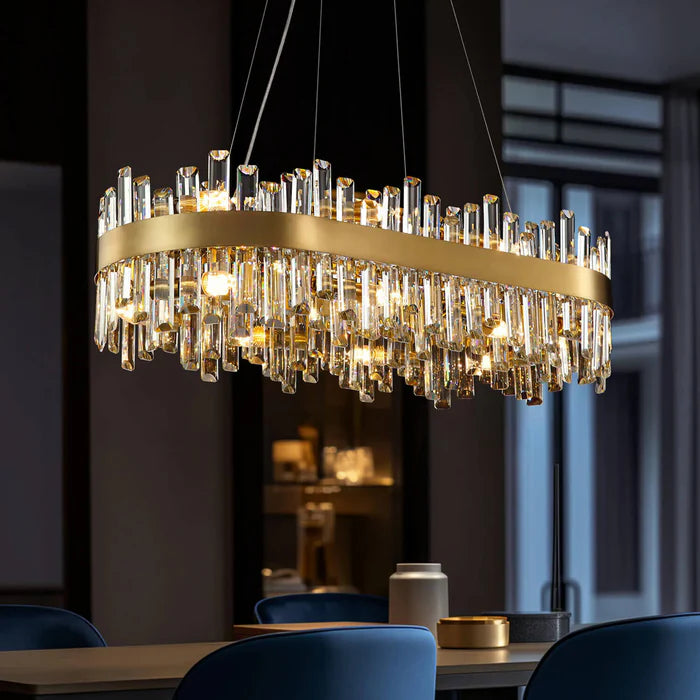
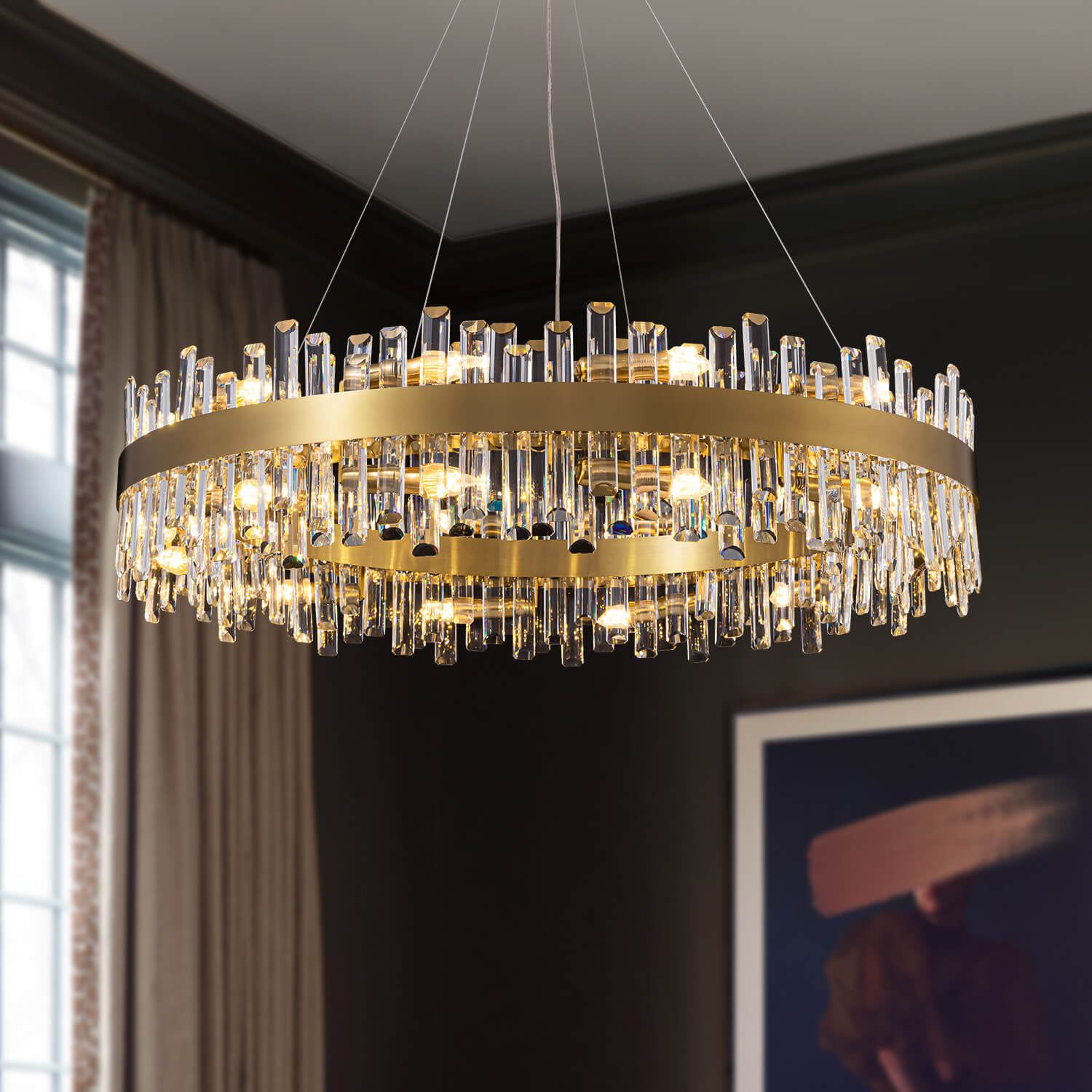
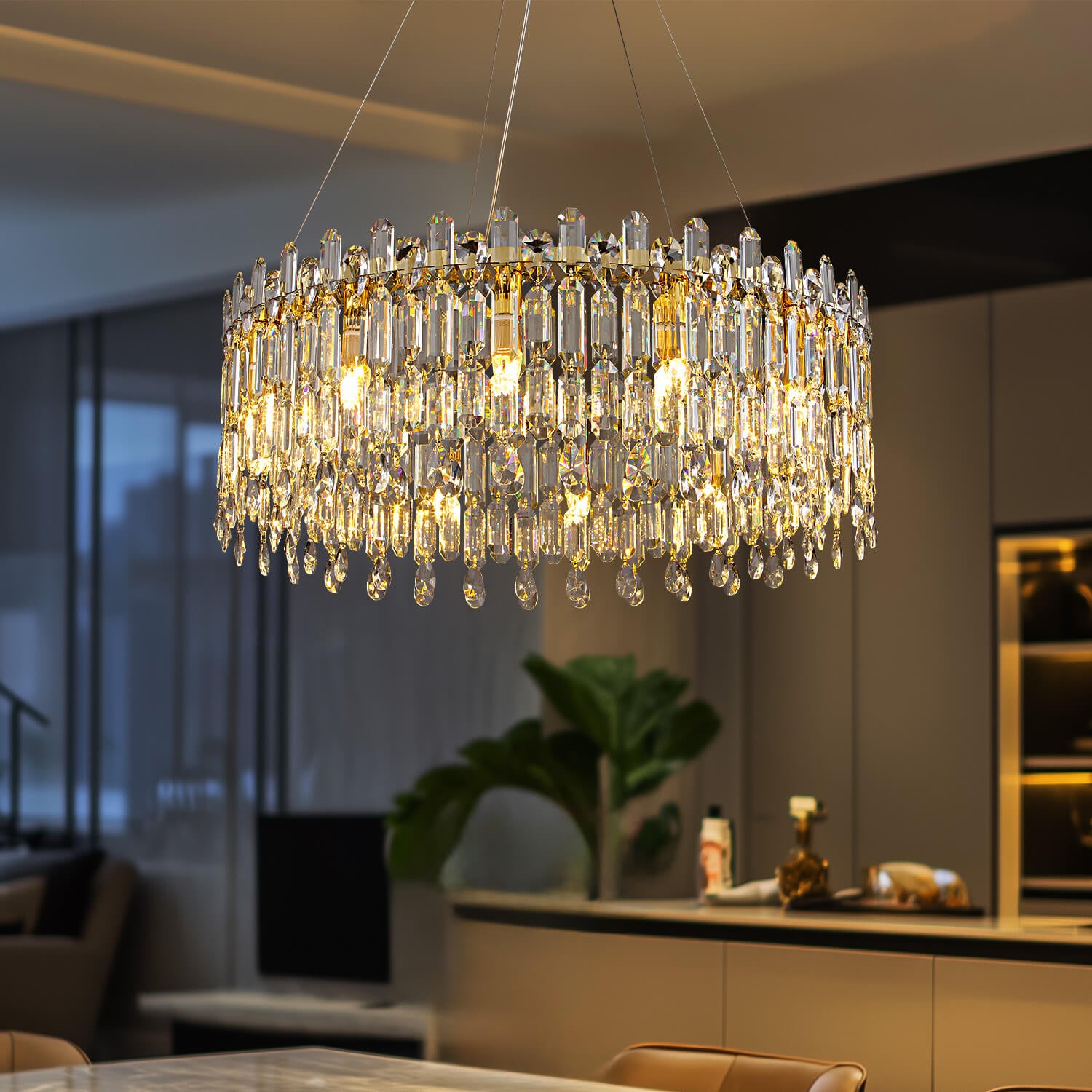
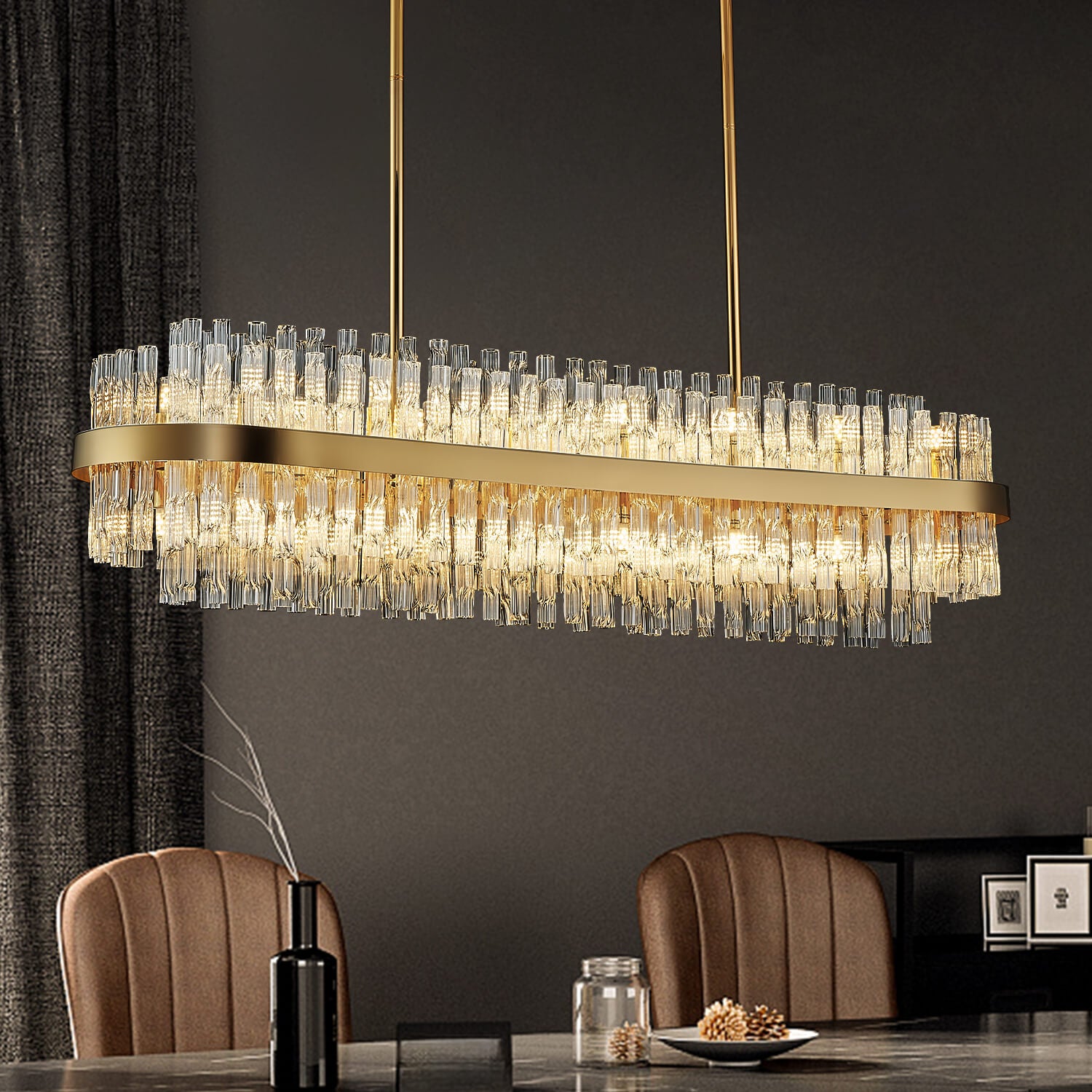










How Much Weight Can a Ceiling Box Support?
Chandelier Mounting Requirements by Fixture Weight
Quick answer: A ceiling box has no universal weight capacity. The familiar 50-pound threshold applies within the NEC's ceiling-outlet support provisions; it does not establish the capacity of an unidentified existing box. Above that threshold, the referenced rule calls for independent support unless the box is listed for the weight supported. Before hanging a chandelier, verify its complete installed weight, the exact support system, and how that system attaches to the building.
A chandelier may fit the room perfectly while needing a different mounting arrangement from the light it replaces. This guide helps you prepare that decision with your electrician. It covers residential, ceiling-suspended chandeliers—not ceiling fans, wall sconces, or a complete structural or wiring design.

What the 50-pound ceiling-box rule actually means
NEC 314.27(A)(2), as summarized in EC&M's guidance on ceiling outlet boxes, addresses luminaire support at ceiling outlets. A luminaire weighing more than 50 lb must be supported independently of the outlet box unless the box is listed for at least the weight being supported. This threshold does not establish the capacity of an unidentified existing box.
That is a requirement for a qualifying installation, not proof that the box already in your ceiling qualifies. Its identity, attachment, condition, and permitted use still matter. Nor does being under the threshold excuse an unsuitable mounting arrangement.
The installer must check the NEC edition and amendments adopted for the project. This guide does not treat publication of a newer code edition as automatic nationwide adoption. Ask the local electrical authority about permits and inspections; Washington L&I's permit and inspection guidance is one example of jurisdiction-specific information.
A ceiling box, a brace, and the building structure do different jobs
The useful question is: What carries the load all the way from the chandelier to the building? A decorative canopy conceals the connection. Its size does not tell you what is behind it.
| Arrangement | What it does | What needs verification |
|---|---|---|
| Fixture-support outlet box | Encloses the electrical connection and supports the fixture when designed and installed for that use. | Exact box, permitted fixture load, attachment method, and condition. |
| Listed brace-and-box assembly | Transfers the supported load to framing through an identified assembly. | Model, framing compatibility, span, rated configuration, and specified hardware. |
| Independent structural support | Carries the chandelier through a separate designed connection to suitable structure. | Structural capacity, connectors, fixture attachment, and a compliant electrical enclosure arrangement. |
These are planning categories, not interchangeable installation recipes. A higher-rated box does not strengthen weak framing, and a strong beam does not establish the capacity of an unknown connector. Independent support also does not eliminate the need to address the electrical connection properly.
Ask your installer to identify the support components by model or drawing. “Heavy duty” and “we always use this” are less useful than a documented arrangement for your fixture and ceiling.

Start with the complete installed weight
Request the weight for the exact size and configuration you are buying. Confirm whether the figure includes all crystals, glass or stone pieces, bulbs, and the suspension components that the mounting system must carry. For a custom fixture, obtain an updated figure for the final design.
Shipping weight is not an installation specification: it may include cartons, foam, or a crate, and a shipment may be split across packages. A bare-frame weight can also omit a substantial part of the finished assembly.
The following is an editorial decision aid. Its rows describe what information is missing or needs checking; they are not new code classifications.
| Known condition | Next step |
|---|---|
| Installed weight is unknown | Obtain it before selecting support. Do not estimate it from diameter, material name, or a photograph. |
| Weight is within a documented system rating | Confirm the actual ceiling and installation match that rating's conditions. |
| Weight exceeds 50 lb | Resolve the listed-box or independent-support path under the applicable ceiling-outlet provision. |
| Weight exceeds the selected system's applicable rating | Choose a different documented support arrangement; do not improvise extra capacity. |
| Weight is close to a limit or subject to change | Resolve omissions and uncertainty with the manufacturer and installer before purchase. |
For multiple suspension points, provide the manufacturer's load distribution and mounting drawing. Dividing the total weight by the number of cables does not, by itself, establish the load at each attachment.
Why the same brace can have two different fixture ratings
The Westinghouse Saf-T-Brace 0110000 installation instructions provide a concrete example:
- 16-inch joist centers: lighting fixtures up to 150 lb.
- 24-inch joist centers: lighting fixtures up to 50 lb.
- Ceiling fans: a separate rating of up to 70 lb.
These are model-specific conditions, not ratings for every expandable brace. The instructions also distinguish the designated threaded mounting inserts from the box ears. The correct attachment location matters alongside the weight number.
Illustrative decision: a 60-pound chandelier exceeds this model's stated fixture rating at 24-inch centers. The 150-pound figure for a different span cannot be used to approve it. At 16-inch centers, it is within the stated fixture rating, but the framing, assembly, and chandelier connection still need verification. Do not interpolate an unlisted rating for an intermediate span.
How to assess an existing ceiling outlet
Give the electrician the new fixture's instructions before the appointment. Ask them to identify the box and support, inspect their condition, and determine whether the existing arrangement can be reused.
A useful inspection should resolve:
- Whether the box or assembly can be identified and its permitted use established.
- How it is fastened, and what it is fastened to.
- Whether mounting threads, brackets, or structural attachments show damage or movement.
- Whether the fixture's mounting parts are compatible with the support.
- Whether wiring, grounding, and enclosure requirements are also satisfied.
An old chandelier remaining in place for years is not documentation of capacity for a replacement. Likewise, a box being metal rather than plastic does not establish its load rating.
Do not pull on the box or hang a test weight from it. Leave opening and inspecting the electrical connection to a qualified installer using appropriate isolation and testing. OSHA's electrical work-practice provisions illustrate the importance of deenergization and verification in covered workplaces; switching a light off is not equivalent to proving its wiring is deenergized.
Sloped ceilings and tall foyers need separate checks
A sloped ceiling changes connection compatibility
Measure at the actual mounting point and tell the supplier the ceiling slope. Ask whether the selected canopy, suspension, and support arrangement are approved for that condition, and whether a specific adapter is needed.
A chain allowing the fixture to hang vertically does not establish that its canopy or ceiling connection is suitable for the slope. Avoid substituting a generic swivel or adapter solely because its threads appear to fit.
A tall foyer changes access and handling
A higher ceiling does not automatically reduce a box's marked capacity. It does make the installation and future servicing plan more consequential. Ask the contractor how the fixture will be assembled, supported during attachment, and reached for cleaning or repairs.
For structural questions beyond the installer's scope—such as uncertain framing, concentrated loads, or proposed alterations to engineered members—request review by the appropriate structural professional. This article does not prescribe joist modifications or anchor sizes.
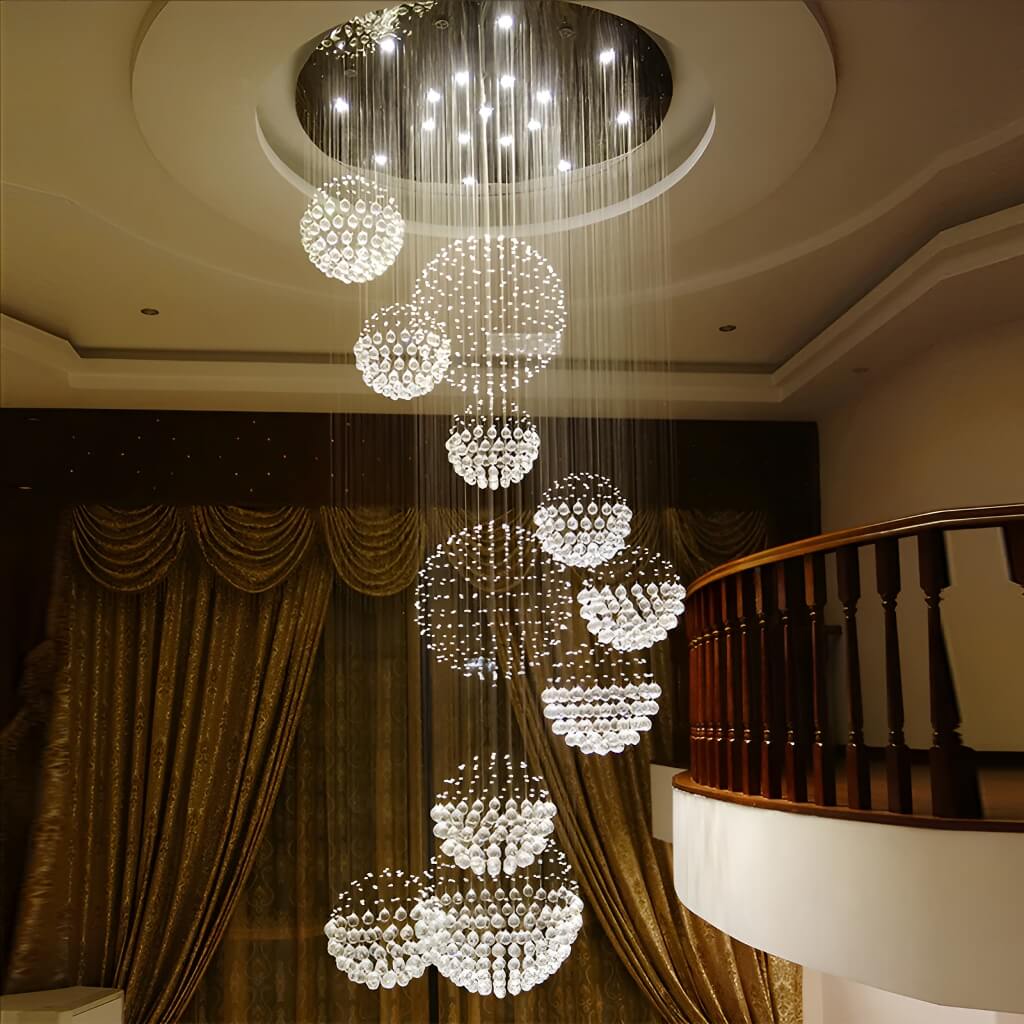
Use Sofary's two-story foyer chandelier guide for placement and access planning, and the dining chandelier size and hanging-height guide for table relationships. Geometric fit and structural suitability are separate decisions.

Does a chandelier lift solve the support problem?
A lift can make servicing more accessible, but it introduces its own mounting system. The building still needs to support the resulting installation.
For example, the Aladdin ALL200 specifies a 200-pound maximum fixture weight and has defined mounting and access requirements. That figure is not the capacity of your ceiling. Its installation manual also specifies cable alignment and connection requirements.
For a Sofary fixture, confirm the exact coupler, thread standard, canopy arrangement, and electrical compatibility with both parties before selecting a lift. An available slope adapter or a sufficient lifting rating does not establish compatibility with every chandelier.
What to confirm before ordering a Sofary chandelier
Send the product link, selected SKU, and room information through Sofary customer support. Request a specification package your installer can assess:
- Complete weight: what is included, and whether customization changes it.
- Mounting details: canopy, bracket, suspension points, and assembly drawing.
- Ceiling compatibility: flat or sloped ceiling, required adapters, and any limitations.
- Handling requirements: assembly sequence and access needed for installation and service.
Then ask the installer to confirm the support model or design, its applicable capacity, and its attachment to the actual structure. If the supplier cannot document a needed field, keep it unresolved rather than filling it with a guess.
For planning, we recommend using an appropriately licensed electrical contractor for hardwired chandelier installations. That is an editorial recommendation, not a claim that every U.S. jurisdiction has identical homeowner-work rules. Confirm local permit requirements and arrange structural assistance when needed.
Frequently asked questions
Can a standard ceiling box hold a 50-pound chandelier?
“Standard” is not enough information. Identify the box, its intended use, and its installation. The threshold discussed above does not verify an unknown existing assembly.
Can I hang a heavy chandelier from drywall anchors?
Do not substitute a general-purpose drywall anchor rating for a documented chandelier support system. Have the installer select an arrangement appropriate to the fixture, ceiling construction, and applicable requirements.
Can I reuse a ceiling-fan box for a chandelier?
Possibly, after checking the exact system's luminaire rating and attachment instructions. A fan rating and a lighting-fixture rating are not interchangeable; the Westinghouse example above shows why.
Does a chandelier above 50 pounds always need a beam-mounted hook?
No single hook arrangement follows automatically from that weight. The referenced rule allows a suitably listed box or independent support. The actual solution needs a documented connection and suitable structure.
Can I add larger screws to increase the rating?
Do not treat a screw substitution as an approved increase in capacity. Ask the manufacturer or installer for the specified support arrangement; changing one fastener does not establish the strength of the whole assembly.
Does a safety cable replace the main mounting support?
Do not assume so. Follow the fixture's documented primary-support and secondary-retention requirements. A backup component should not be used to justify an otherwise unverified installation.
What if the product page does not give the weight?
Request the complete installed weight for the exact SKU before committing to its mounting plan. A similar model's weight is not an adequate substitute.
Research scope and sources
Research date: September 14, 2026. This is a buyer-planning guide based on published support information, manufacturer instructions, and identified code-reference material. The scenarios are illustrative; no load testing, site inspection, or approval of a specific Sofary fixture-and-ceiling combination is claimed.
The code discussion uses NEC 314.27(A)(2), as summarized in the linked EC&M guidance. It is not a substitute for reviewing the code edition and amendments adopted in the project’s jurisdiction. This guide provides general planning information and does not approve a specific fixture, support system or installation. The installer must verify the locally adopted code, applicable amendments, manufacturer instructions and actual site conditions.
More Blogs
What Should You Take into Consideration When Buying a Chandelier?How to Find the Best Staircase Chandelier for Your HomeHow to Pick the Perfect Chandelier Ceiling Fan for Your Living RoomHow to Choose Matching Lamps with Chandeliers ?How to Choose the Right Light Bulbs for Your HomeHow to install crystal chandeliers | Sofary LightingThe Lighting Guide: How to Light Your FoyerChandelier Ideas: A Guide to Choosing the Right Crystal ChandeliersYour Guide to the Top Types of Crystal For ChandeliersCrystal Chandelier Maintenance: How to Keep It Sparkling Like New