Open Box

























How Long Does Chandelier Installation Take?
14 minutes
How Long Does Chandelier Installation Take?
Quick answer: A chandelier installation may fit into one prepared visit when the fixture is complete, the ceiling support is suitable and access is straightforward. Assembly-heavy crystal fixtures, support changes, two-story access or a new chandelier lift can add setup work or require a return visit. Ask the installer to quote the exact fixture and room, including assembly, access equipment, mounting, electrical work, testing and cleanup.
This guide shows how to define that scope before booking a U.S. residential installation. The worked calculation below is illustrative rather than a measured Sofary installation-time study.

First, define what “installation time” includes
Two quotes can describe the same chandelier and still measure different work. One may cover only mounting and connection; another may include unpacking, removing the old fixture, attaching every crystal, adjusting the drop and cleaning up. Compare their scope before comparing their hours.
- On-site elapsed time: the time between the crew arriving and leaving, including work performed in parallel.
- Labor-hours: the sum of each worker’s time. Two people working for three hours contribute six labor-hours, although only three hours have elapsed.
- Project duration: the calendar time from preparation to completion, including equipment bookings, replacement parts, inspections where required and return visits.
The labor-hour example is arithmetic, not an installation benchmark. Nor does doubling the crew necessarily halve the appointment: some tasks must wait for earlier work to finish.
Which type of installation are you booking?
Use the following categories to brief an installer. These are editorial planning categories, not measured time bands.
| Project | What the estimate must include | What may change the schedule |
|---|---|---|
| Replacement at the same location | Removal, support verification, fixture assembly, mounting and testing | An unsuitable existing box, damaged wiring or a different mounting arrangement |
| Crystal chandelier with substantial assembly | Parts inventory, sorting, the specified attachment sequence and final alignment | Missing components, mixed strand lengths or assembly excluded from the quote |
| Two-story foyer or stairwell | Site assessment, equipment delivery and setup, safe handling and equipment removal | Restricted access, stairs beneath the outlet or inadequate space for equipment |
| Relocation or support modification | Electrical and support work scoped separately from hanging the fixture | Concealed conditions, ceiling repair, other trades and required inspections |
| Installation with a new chandelier lift | Lift compatibility, structural and electrical preparation, commissioning and handover | Above-ceiling access, system-specific requirements or incompatible components |
A “simple replacement” is a conclusion reached after checking the site and fixture. It should not be assumed merely because a chandelier already hangs there. If the installer cannot verify the support until the old canopy is removed, ask for a base estimate and a clearly defined process for approving additional work.
Break the work into stages before assigning hours
1. Receiving, inventory and preparation
Confirm that the correct model, size and finish have arrived. Keep the packaging labels, identify the instructions and check components against the packing list before the appointment. Record any damage or missing parts while the original packaging is available.
Unpacking is not the same as assembly. Ask whether the installer wants decorative pieces left in their labeled packaging. Mixing visually similar strands can create avoidable sorting work later. Any permitted owner preparation should be agreed in advance; do not preassemble the fixture in a way that makes lifting or mounting more difficult.
2. Room protection and access
The work area needs space for the crew, equipment and protected parts. Decide who moves the dining table, clears the entryway and protects finishes. For a stairwell, provide photographs showing the floor beneath the fixture, the stair configuration and the route from the exterior door to the work area.
Equipment setup and removal belong in the schedule. A photograph of the ceiling alone does not establish whether a suitable platform can reach it.
3. Removal and verification of existing conditions
Before the replacement is hung, the installer needs to establish that the support and electrical arrangement suit the new fixture. The old light’s successful operation does not document the capacity of concealed hardware.
Manufacturer instructions can be configuration-specific. For example, the Westinghouse model 01100 support instructions distinguish fixture capacities at different joist spacings. This is why “there is already a brace” is not enough information for a fixed installation scope. Discovering unsuitable support can change the work, materials and visit plan.
4. Assembly and decorative attachment
Assembly should be an explicit line item. On the Celestia product page, Sofary notes that the crystal strands are individually packaged and numbered. This helps clarify the assembly sequence, although the instructions supplied with the selected fixture should remain the primary reference.
Ask how the fixture arrives, which parts require individual attachment, and which steps take place before or after mounting. A parts count can help an installer assess the work, but it cannot establish time on its own: access, handling, attachment method and sorting all matter.

5. Mounting, connection and positioning
Agree on the intended centerline and total hanging drop before the crew commits to the mounting arrangement. For a dining room, use the actual table position. For a foyer, consider the entry view and upper landing as well as the floor below.
See Sofary’s dining-table sizing guide and two-story foyer planning guide to prepare those decisions. The exact fixture instructions and site assessment determine the final installation.
Electrical work should be handled by an appropriately qualified professional, with licensing as required locally. The schedule must allow for safe isolation and verification, correct assembly and the manufacturer’s prescribed checks. This article is not a wiring procedure.
6. Testing, finishing and handover
Define completion as more than “the light turns on.” Include final positioning, checking decorative components against the assembly plan, cleaning handling marks as permitted by the manufacturer and clearing the work area. If dimming is part of the project, identify the intended lamp or driver and control combination beforehand and include functional checks.
Kichler’s installation overview treats assembly, mounting, connection and finishing as distinct steps. It does not establish a universal completion time. A useful quote should likewise identify the work that remains after the fixture first reaches the ceiling.
A worked scheduling example: elapsed time versus labor-hours
Hypothetical example only: suppose a contractor proposes the following sequence for a particular assessed job. These invented inputs demonstrate the calculation; they are not Sofary results, recommended allowances or an estimate for your home.
| Sequential work block | Elapsed time | People working | Labor-hours |
|---|---|---|---|
| Protection and preparation | 0.5 hour | 2 | 1.0 |
| Assembly | 1.5 hours | 1 | 1.5 |
| Mounting and connection | 1.0 hour | 2 | 2.0 |
| Finishing and checks | 0.5 hour | 1 | 0.5 |
| Total | 3.5 hours | Varies by task | 5.0 |
This example assumes the blocks happen one after another, with no delays. If two people remain on site throughout, their total attendance is seven person-hours; the contractor’s billing terms determine how waiting, minimum charges and crew attendance are charged. Five task labor-hours do not automatically mean a five-hour invoice.
Ask the installer to replace these hypothetical entries with their own assessment and state what could cause an overrun. If some work can overlap safely, they can account for it. Do not subtract overlapping time from a quote without confirming the actual crew plan.
Real Sofary products: what to ask before requesting a time estimate
These product examples show the information an installer needs before estimating the job; they do not assign a standard labor time.
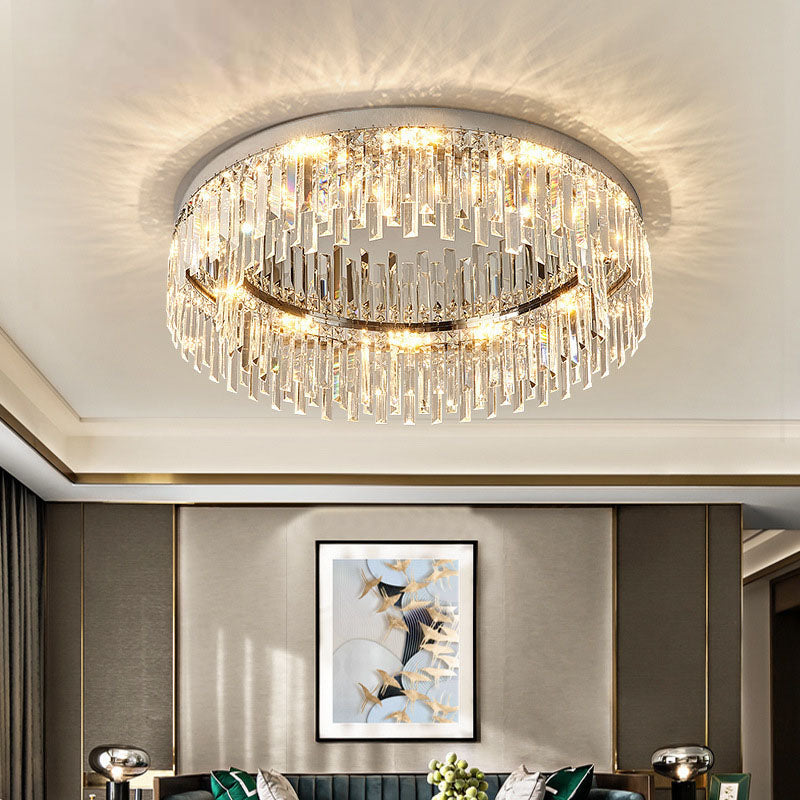
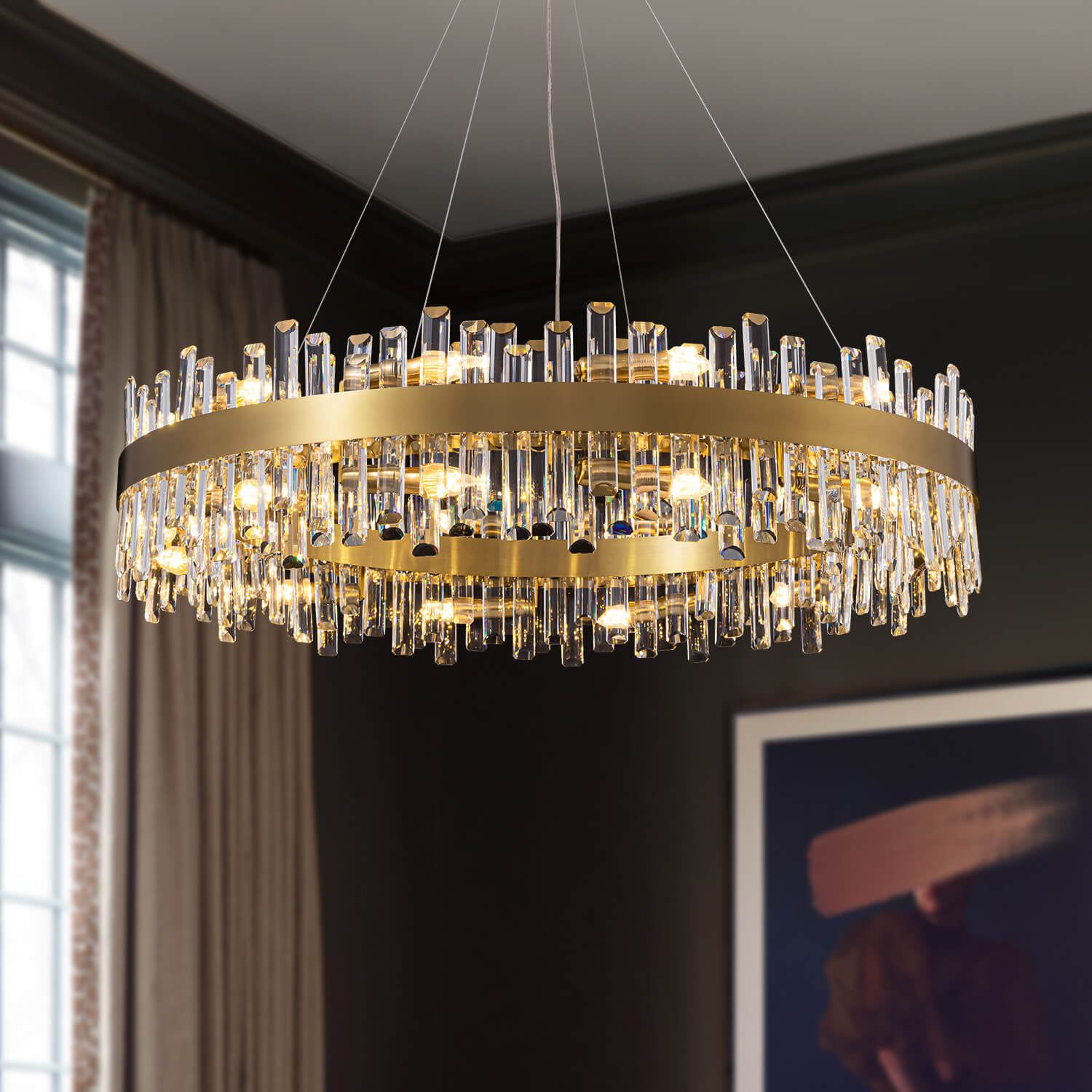
Modern Round Crystal Chandelier: identify the selected size
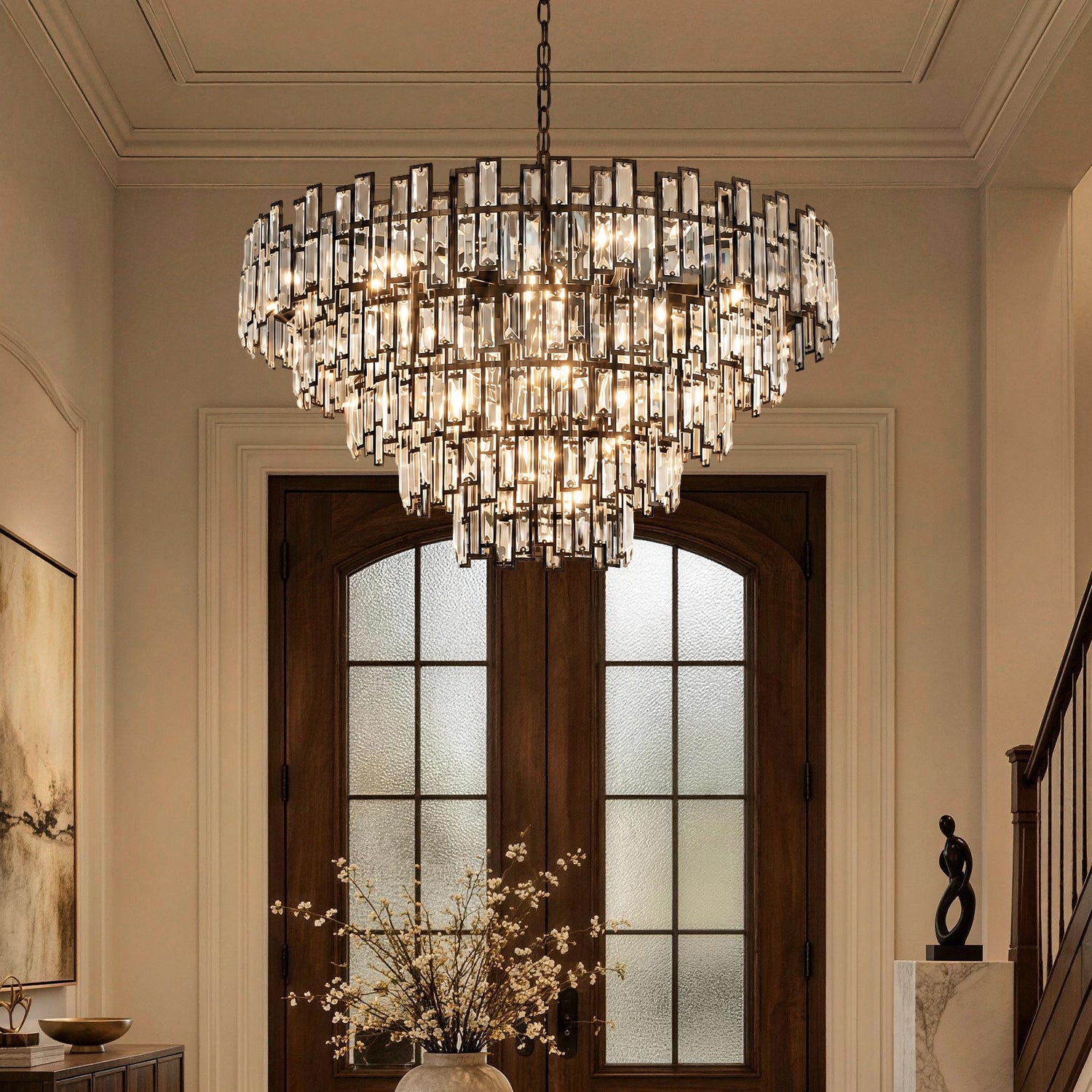
Sofary currently offers the Modern Round Crystal Chandelier in widths of 23.6, 31.5 and 39.4 inches, each with a listed fixture height of 13.8 inches. Send the installer the exact selected option, not just the family name.
Ask for the matching assembly instructions, installed weight and packing information. Have the installer confirm handling, mounting and the final hanging position. A listed body dimension should not be treated as the complete installed drop, and a wider option should not inherit a smaller option’s time estimate.
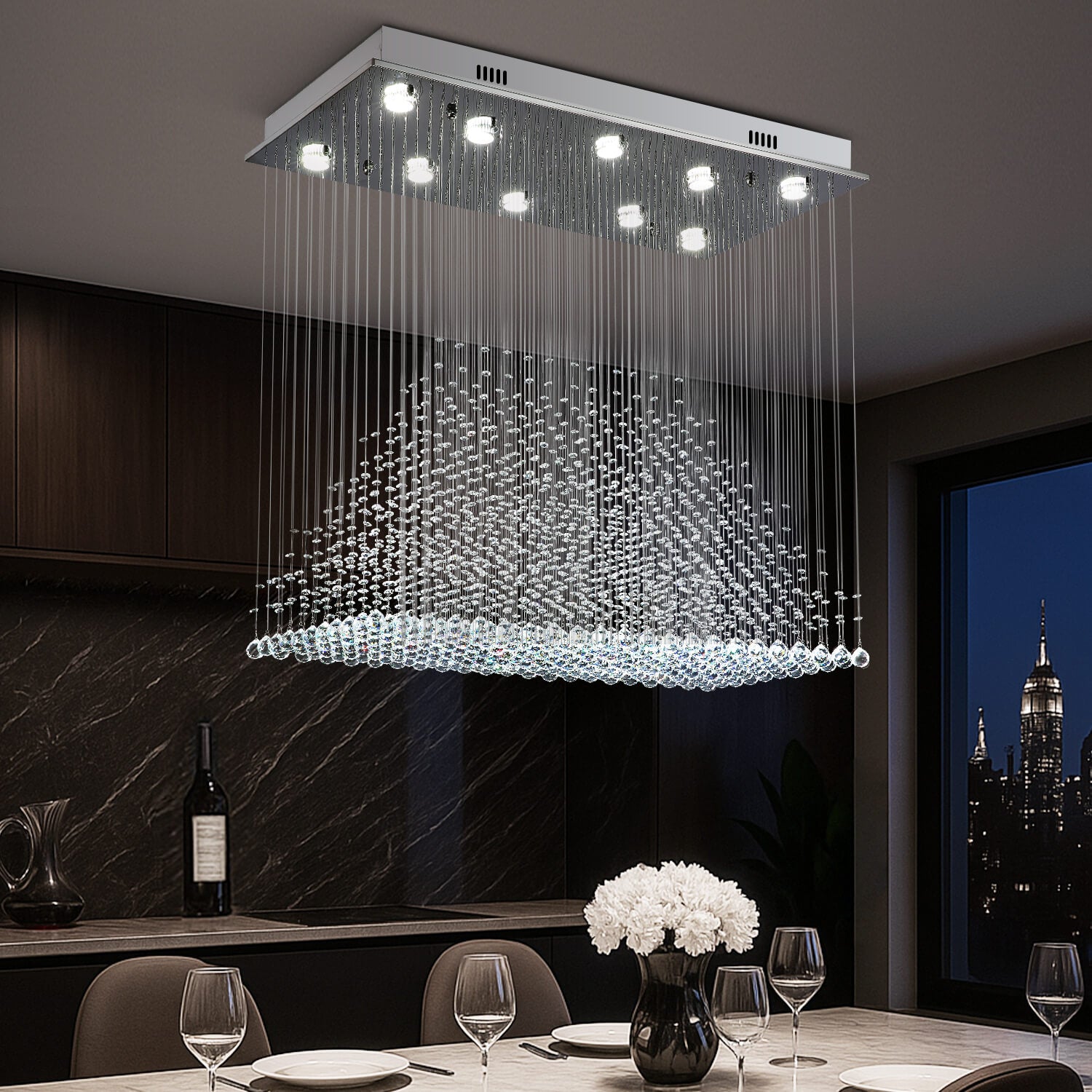
Celestia: match the fixture to the access plan
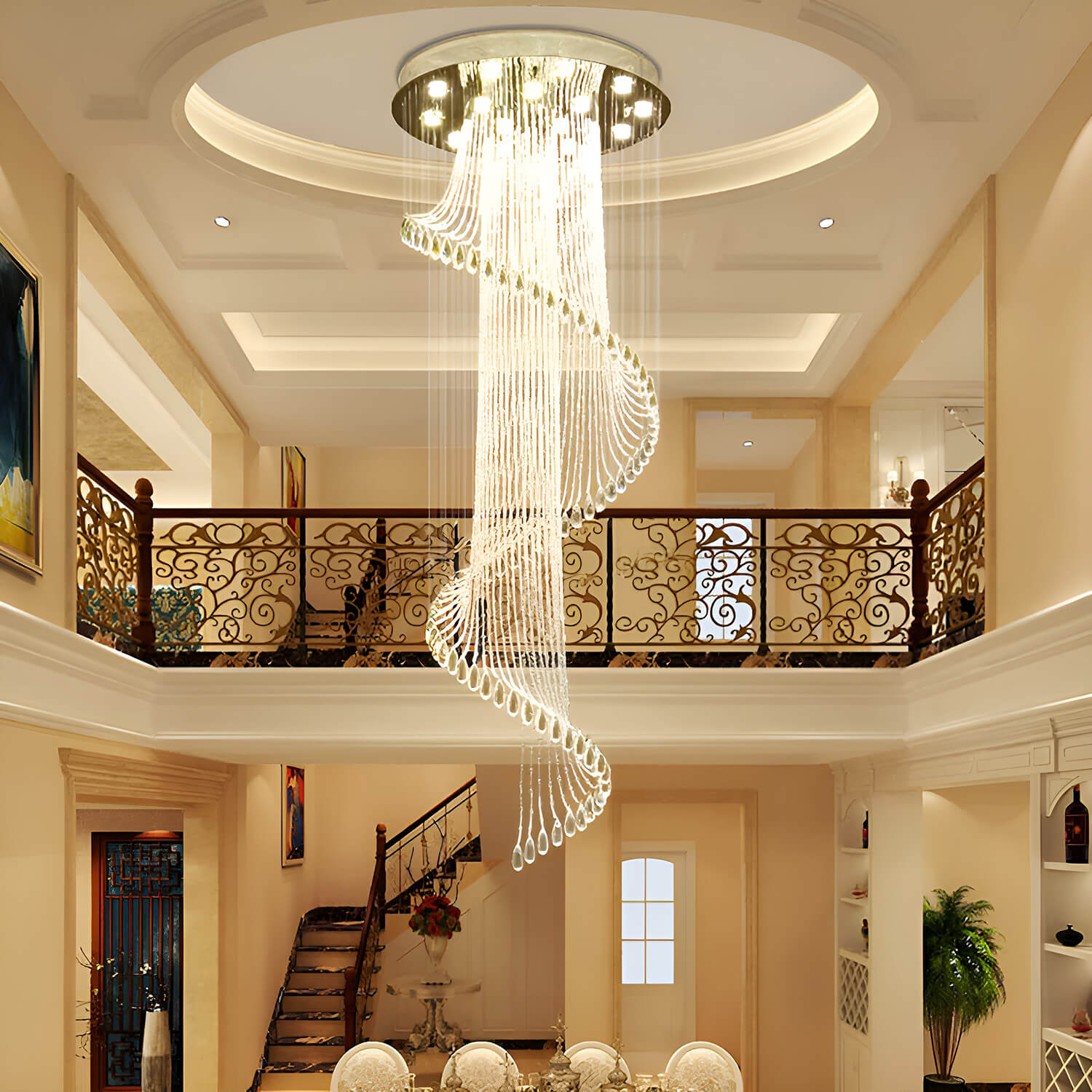
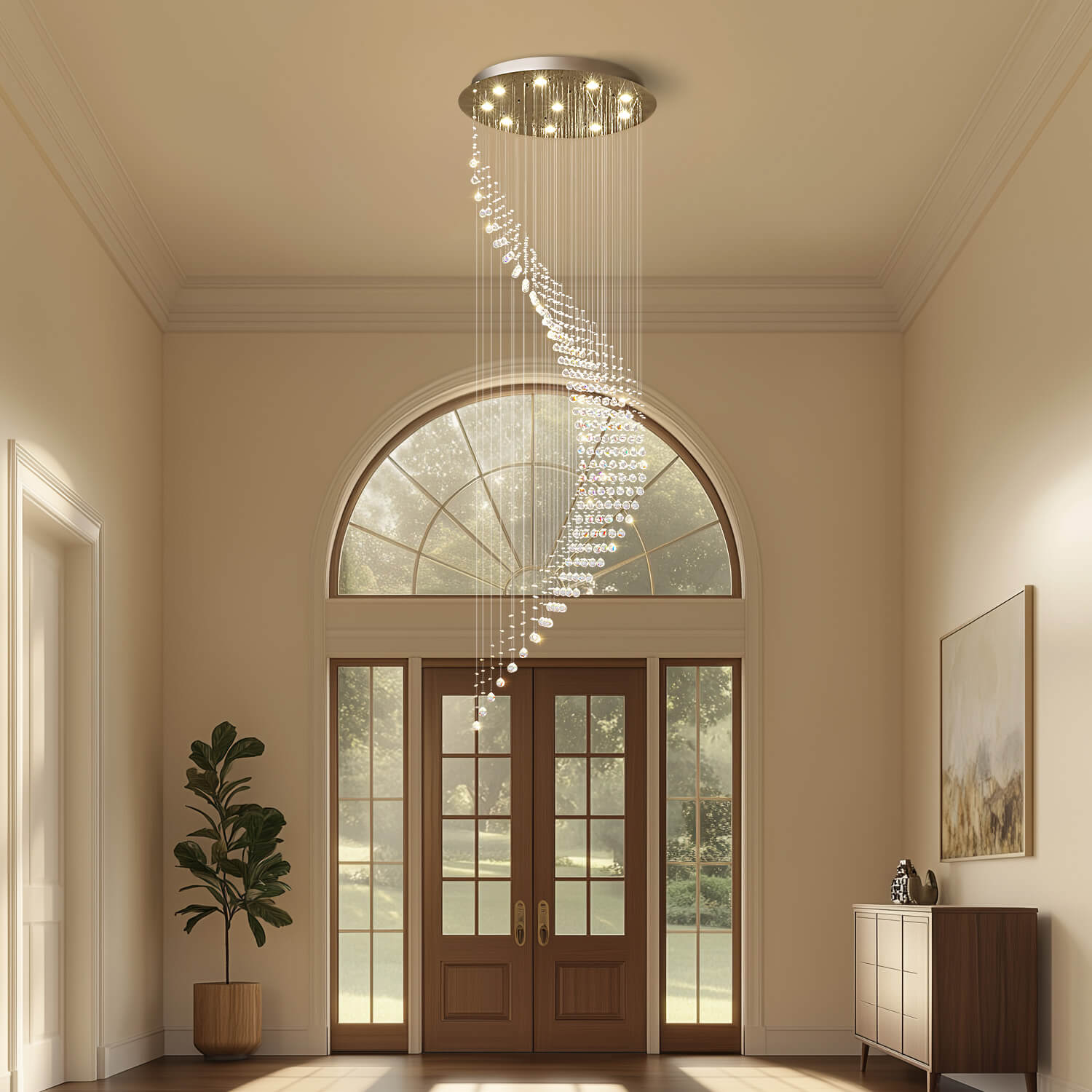
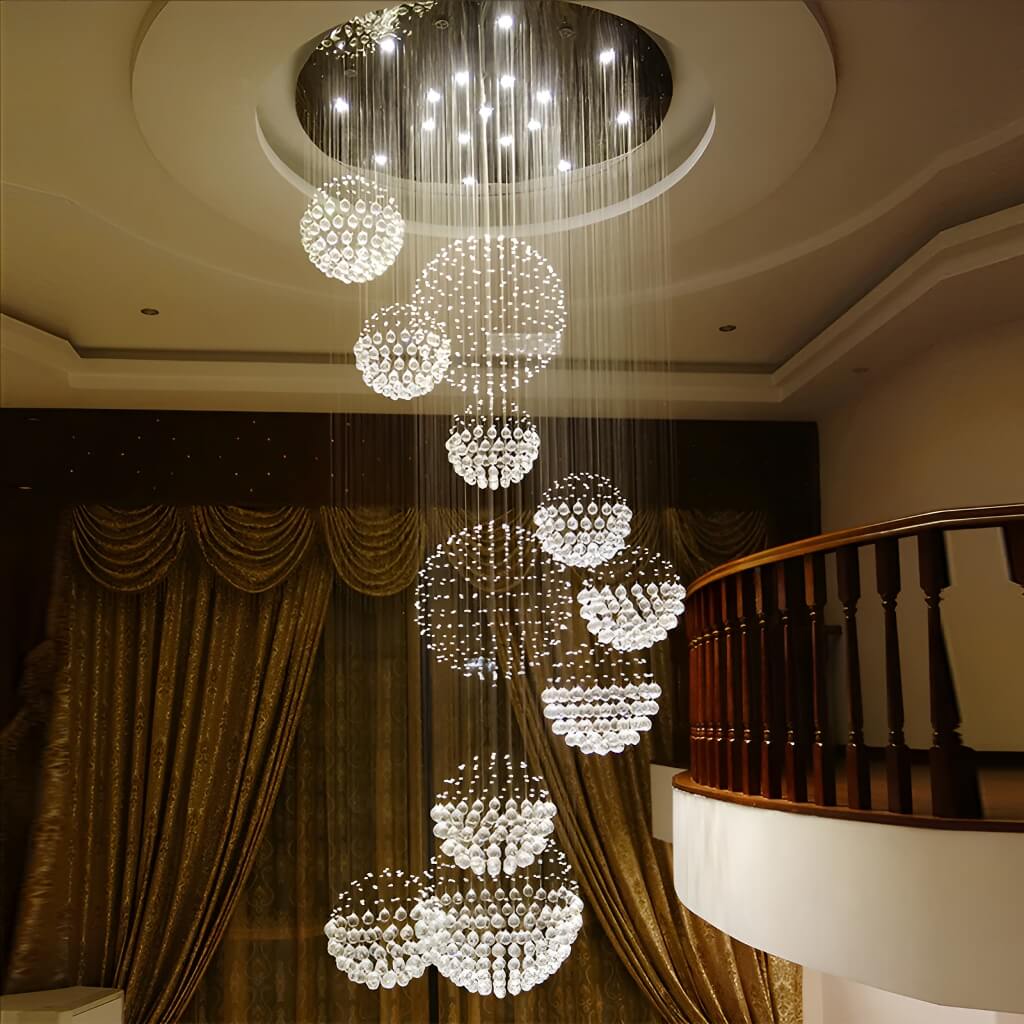
Sofary currently offers the Celestia K9 Crystal Spiral Raindrop Chandelier in sizes ranging from W 15.7 × H 47 inches to W 39.4 × H 118.1 inches. These are published product dimensions, not a calculation of safe placement in a specific foyer.
Provide the selected option alongside the room height and stair photographs. Ask how the crew will reach the canopy, manage decorative assembly and check the finished appearance from the landing. Confirm the exact instructions and installed weight with Sofary before the installer finalizes the scope.

Why high ceilings and heavy fixtures need a separate scope
A tall room creates access and handling questions that a standard dining-room quote may not address. A heavy fixture creates support and lifting questions even in a low room. Treat these as separate variables rather than using ceiling height as a proxy for installation difficulty.
Before booking, ask whether the installer needs an on-site assessment, what access equipment is proposed, and whether the crew can bring it through the doors and position it safely. The installer should determine staffing and handling requirements; adding an untrained helper is not a substitute for a suitable work plan.
A chandelier lift also needs its own installation scope. The Aladdin ALL200/ALL200-CM manual requires installation by a licensed, bonded and insured electrician and specifies an accessible, level installation location. Those requirements demonstrate why adding a lift cannot simply be treated as time saved on the first appointment. Compatibility and the complete installation must be assessed for the selected system.
What causes return visits—and what you can resolve beforehand
- Incomplete delivery: check all cartons and the packing list before confirming the installation date.
- Unknown support: ask whether a preliminary inspection is needed and how additional support work will be priced.
- Unresolved placement: agree on table position, centerline and target drop before installation.
- Sloped-ceiling uncertainty: confirm that the exact canopy and suspension arrangement is approved for the slope. A chain alone does not confirm compatibility.
- Missing control information: identify bulbs, drivers and the proposed dimmer before the visit rather than choosing them during commissioning.
- Unplanned ceiling work: establish who handles patching and painting, and whether those activities affect the return date.
- Access restrictions: tell the installer about stairs, narrow doors, limited parking and occupied work areas when requesting the quote.
Do not schedule a time-sensitive event on the assumption that delivery and installation will both finish immediately beforehand. Agree on contingency arrangements with the installer, especially when replacement parts or other trades may be involved.
Send this information with your quote request
A useful request contains enough information to distinguish known work from unresolved conditions:
- Product link, exact SKU or selected option, and current instructions.
- Published installed weight and dimensions; flag anything still awaiting confirmation.
- Ceiling height, slope and photographs of the room, floor and access route.
- Whether the fixture replaces an existing light or moves to a new location.
- Desired hanging position and any required suspension components.
- Available information about the existing support, without opening electrical equipment yourself.
- Bulb or driver details and the intended control arrangement.
- Requested scope: removal, assembly, access equipment, support work, testing, disposal and cleanup.
Then ask: “What on-site duration and crew size does this quote assume? Does it include all decorative assembly? Which conditions would require extra work or a return visit, and how would you obtain approval?”
For a Sofary fixture, contact Sofary with the exact product and size to request missing product information before the installer finalizes the estimate. Product information supports the assessment; the installer determines the site-specific schedule.
Frequently asked questions
Can a chandelier be installed in one visit?
One visit may be feasible when the fixture is complete, the site is ready and the installer has confirmed the support, access and assembly scope. Ask for that confirmation rather than assuming every replacement qualifies.
Does installing a crystal chandelier take longer?
Individually attached crystals introduce assembly work, but “crystal” alone does not predict duration. The packing arrangement, attachment system, number of parts and working height determine what the installer needs to assess.
How many installers will I need?
The contractor should determine staffing from the fixture instructions, dimensions, weight and access plan. There is no crew number in this guide that applies to every chandelier.
Can I attach the crystals myself to reduce the bill?
Ask the installer which preparation, if any, is appropriate for your model and circumstances. Do not change the prescribed assembly order or take on overhead work simply to reduce quoted labor. Agree on responsibility for assembly, handling damage and final checks before splitting the work.
Is a new electrical outlet included in a chandelier installation quote?
Only if the quote says so. Relocation, new wiring, support changes and finish repairs should be identified separately. Ask who handles any local permit and inspection requirements.
Will two installers finish twice as fast?
Not necessarily. Additional staffing may help with handling or parallel tasks, but mounting, connection and final checks still have dependencies. Compare both elapsed time and the crew’s chargeable hours.
Why doesn’t this guide give one average installation time?
A meaningful average needs a defined sample and consistent scope. This article has no audited installation-time dataset. Giving a single average would conceal differences in assembly, access and support work. A written estimate for the exact fixture and room is more useful for booking.
Research scope and sources
Researched September 19, 2026. This guide draws on the linked Sofary product pages, selected crystal-assembly information, Kichler’s installation overview and the named Westinghouse and Aladdin manuals. Manufacturer examples illustrate tasks and constraints; they do not establish installation-time averages for Sofary products.
The scheduling categories, quote checklist and worked calculation are editorial planning tools. No customer installation records or timed trials were used. Follow the current instructions for the exact fixture and support system; an appropriately qualified installer must verify actual site conditions and applicable local requirements.
More Blogs
What Should You Take into Consideration When Buying a Chandelier?How to Find the Best Staircase Chandelier for Your HomeHow to Pick the Perfect Chandelier Ceiling Fan for Your Living RoomHow to Choose Matching Lamps with Chandeliers ?How to Choose the Right Light Bulbs for Your HomeHow to install crystal chandeliers | Sofary LightingThe Lighting Guide: How to Light Your FoyerChandelier Ideas: A Guide to Choosing the Right Crystal ChandeliersYour Guide to the Top Types of Crystal For ChandeliersCrystal Chandelier Maintenance: How to Keep It Sparkling Like New