Open Box









How to Coordinate Lighting in an Open-Plan Kitchen, Dining and Living Room
13 minutes
How to Coordinate Lighting in an Open-Plan Kitchen, Dining and Living Room
An island pendant can look right on its own and still feel wrong next to the dining chandelier. The problem usually becomes obvious from the sofa, where both fixtures share the same view. That is the view to design first.
Quick answer: how do you coordinate open-plan lighting?
Choose one decorative focal point, then connect the kitchen, dining and living areas through a repeated finish, material or shape. Let the other fixtures vary in size and detail to suit their jobs. Check the combination from the main seating positions, use a consistent light-color starting point, and give each zone its own appropriate controls.
Matching sets are optional. A textured-glass island pendant, a stone dining chandelier and a wall sconce can belong together when their metalwork, proportions and light appearance have been considered as a group.
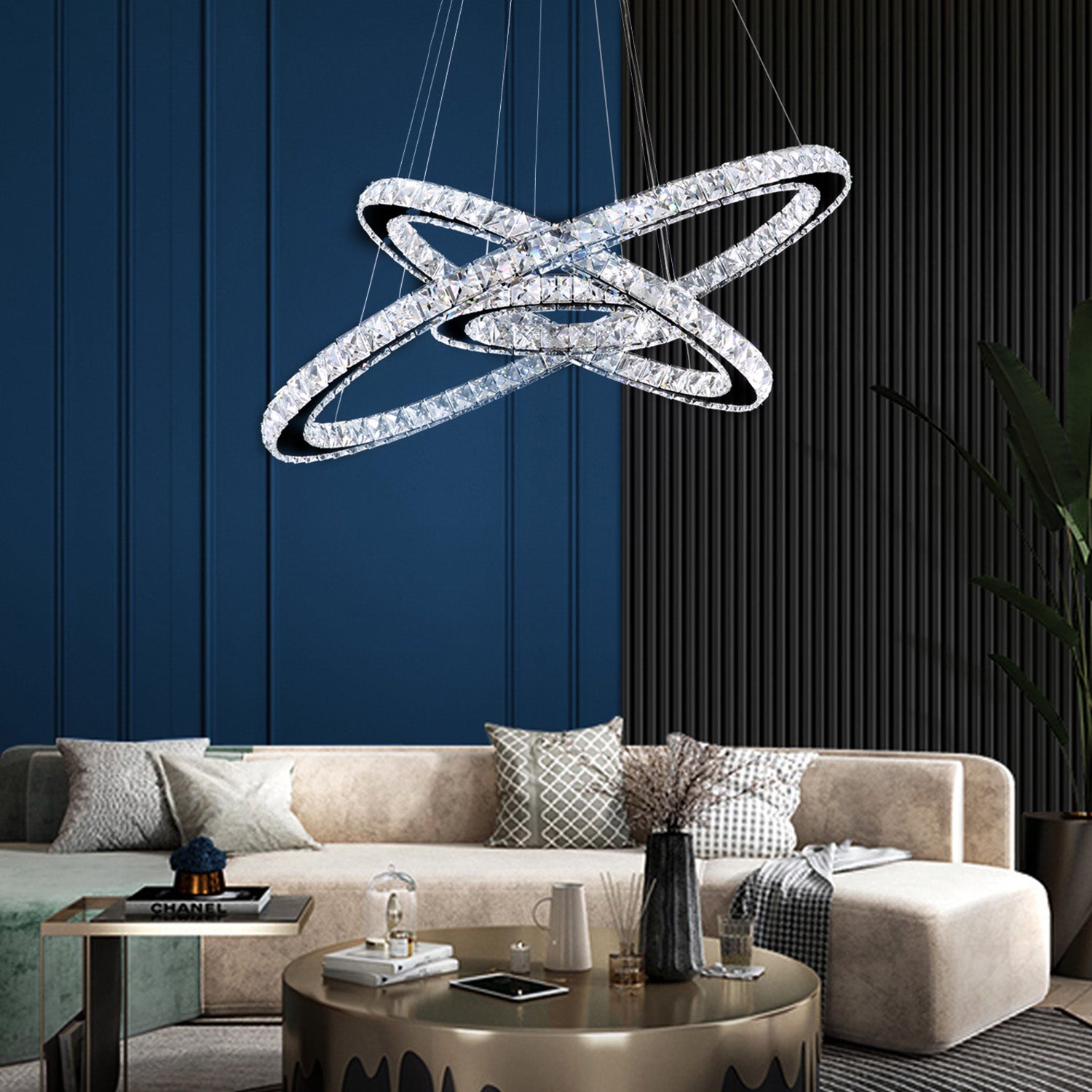
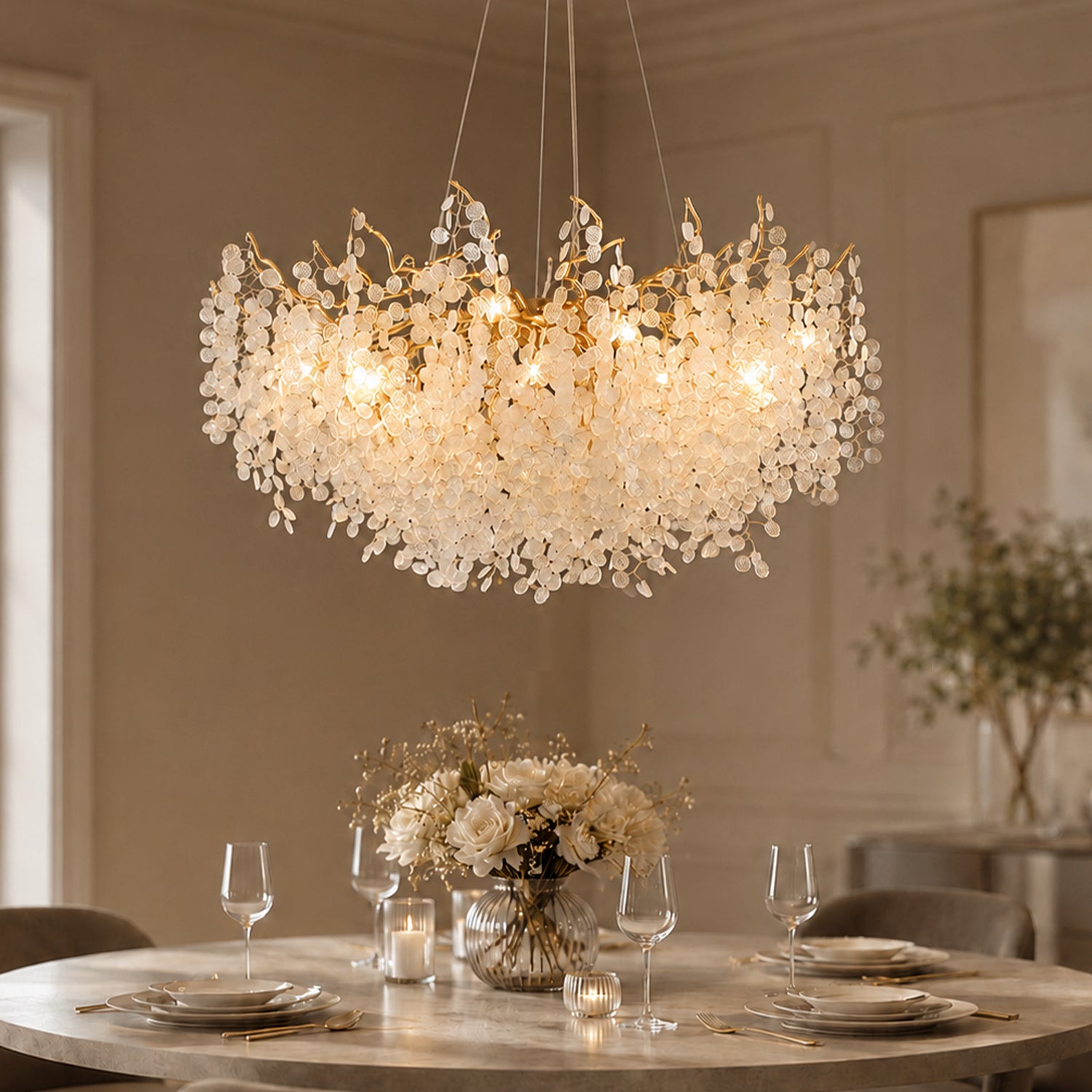
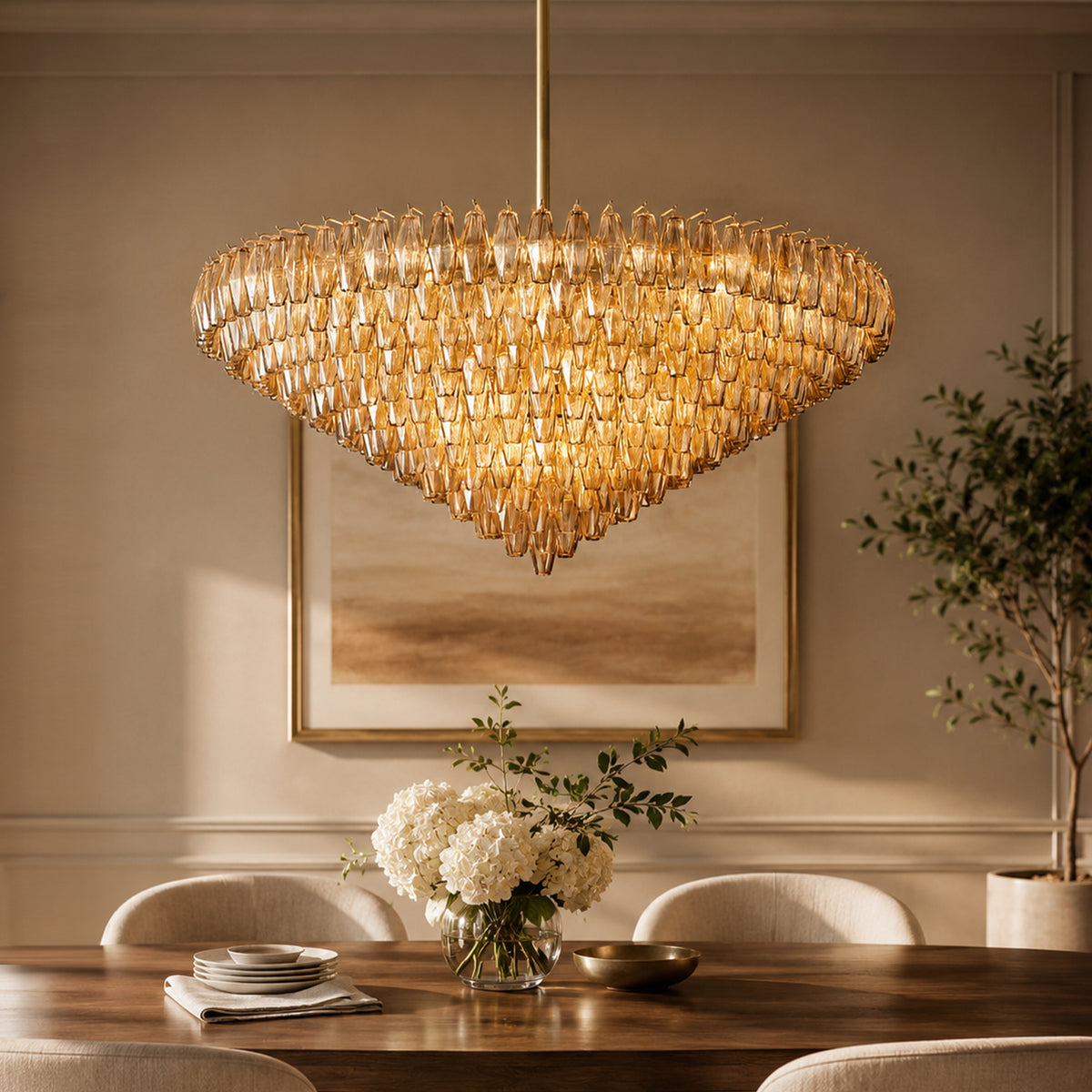
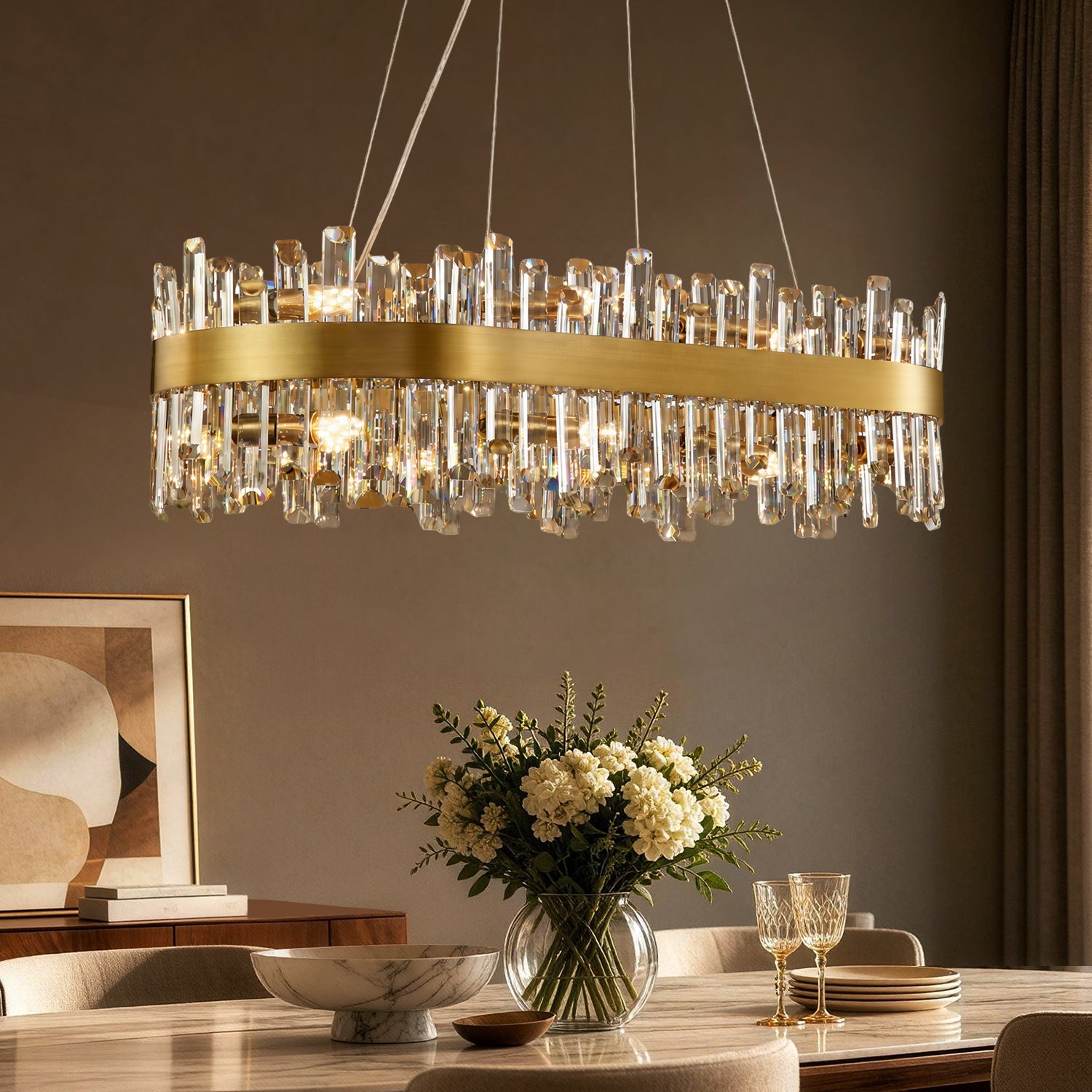
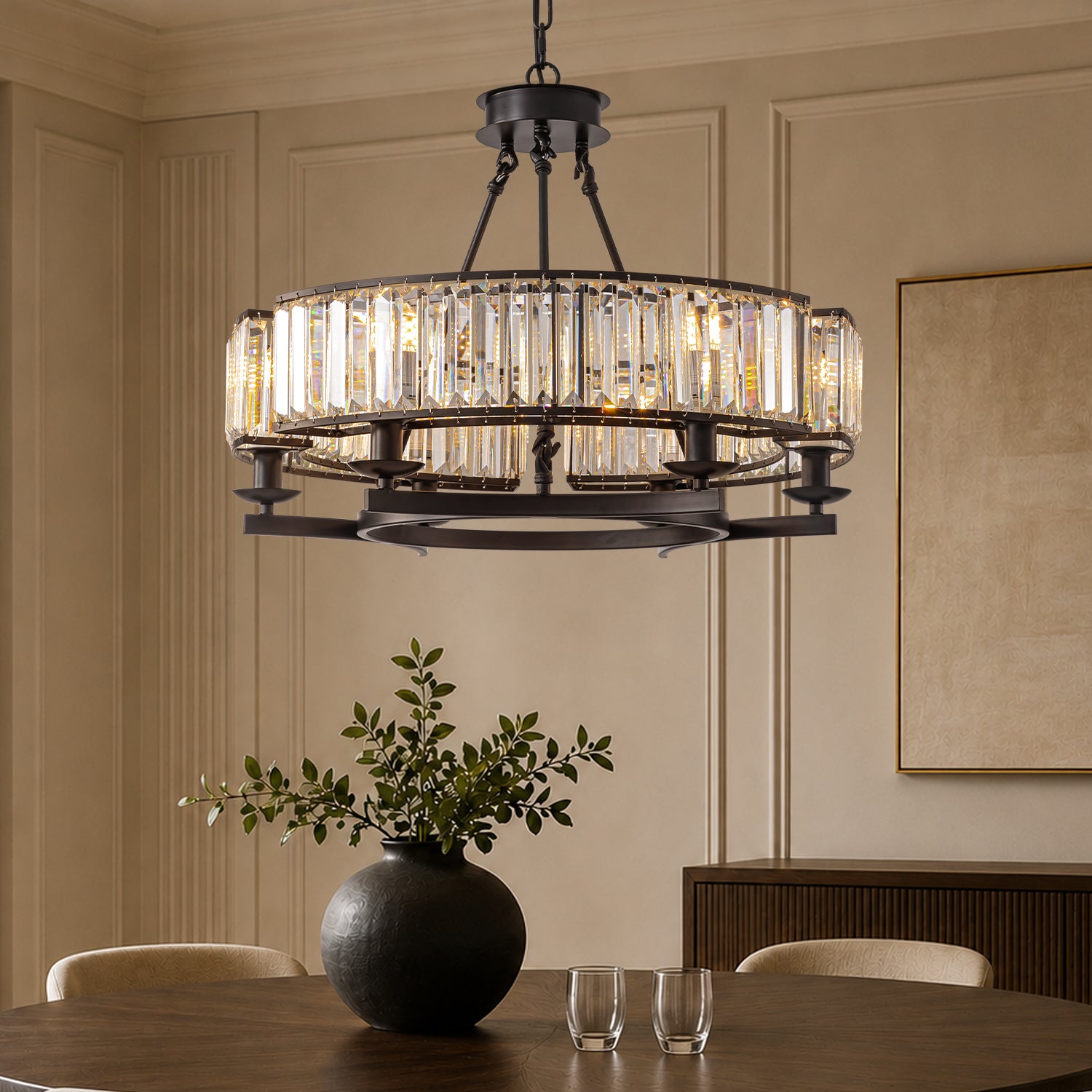
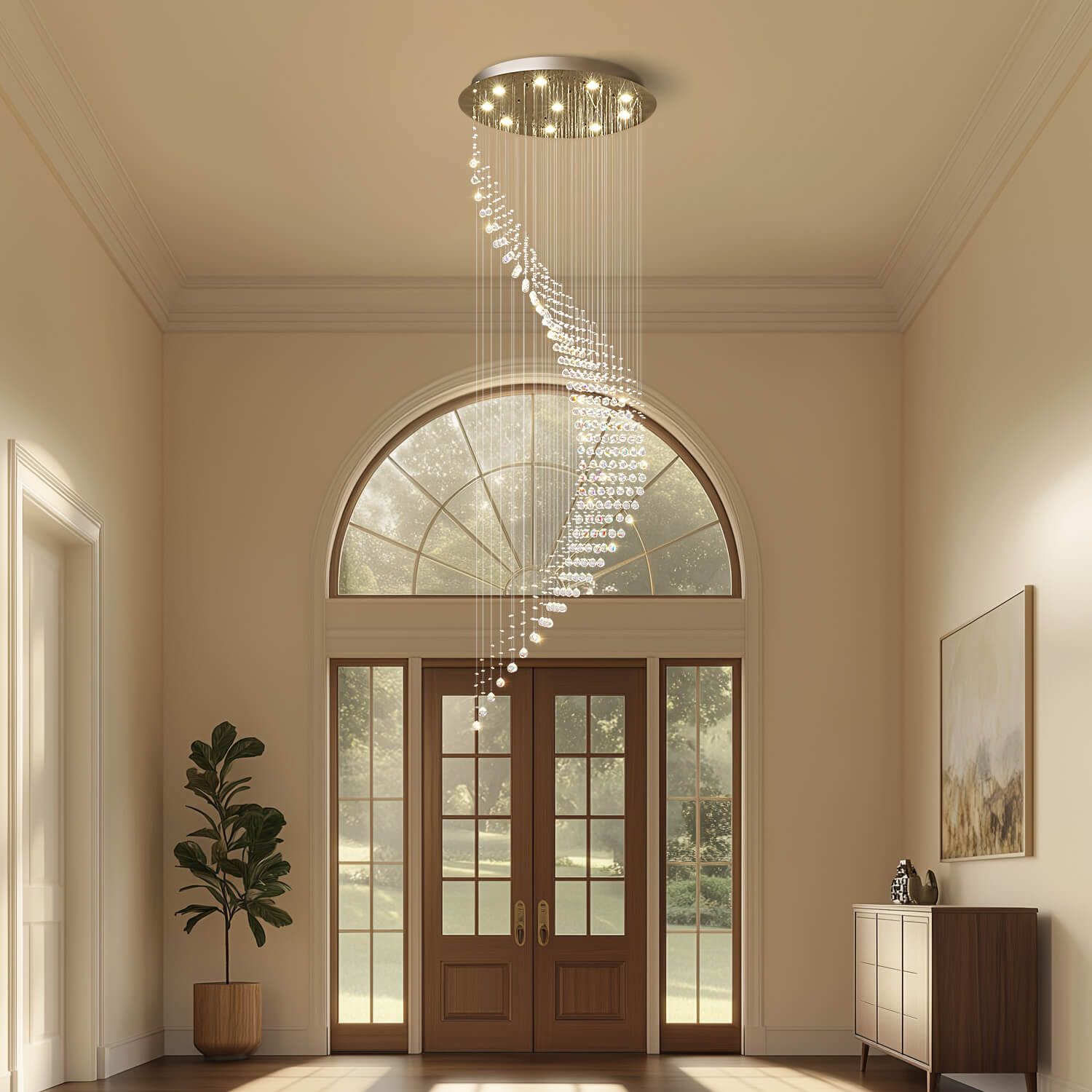
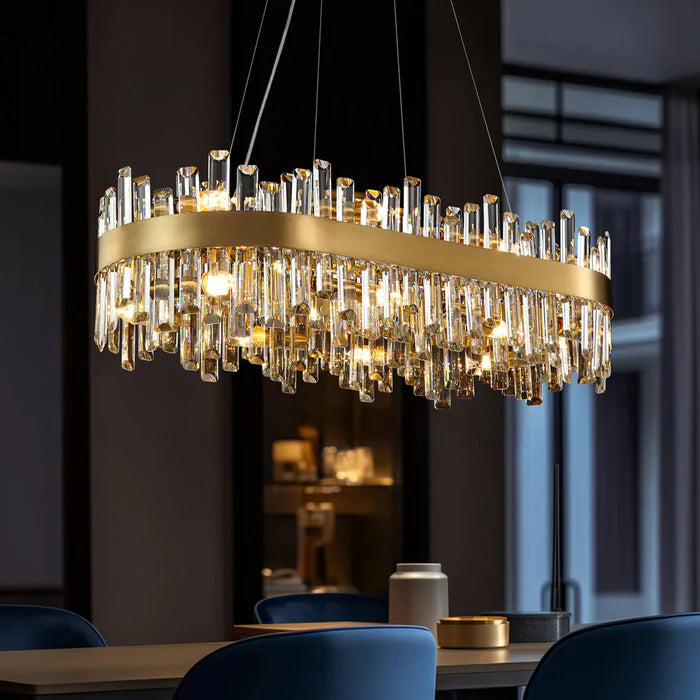
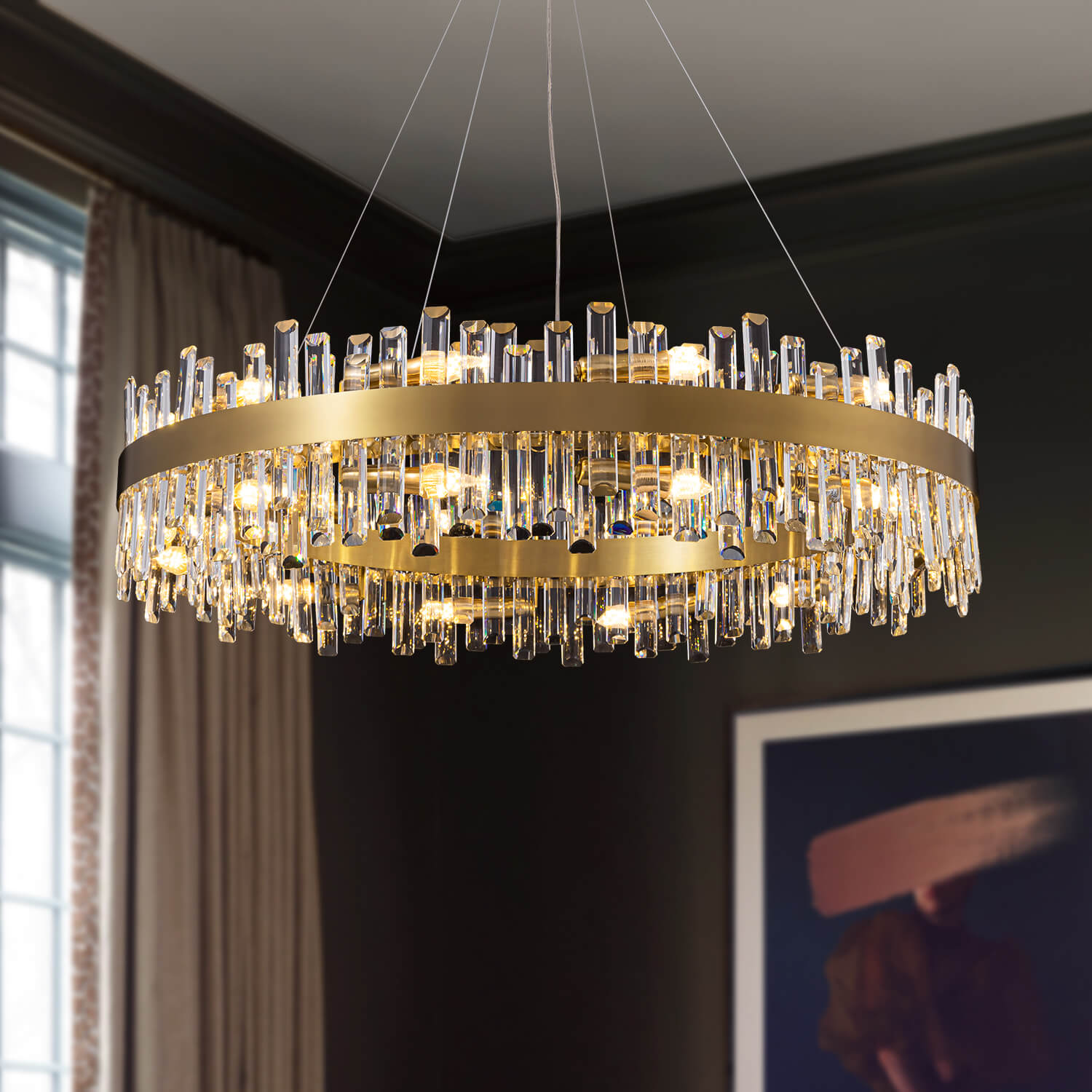
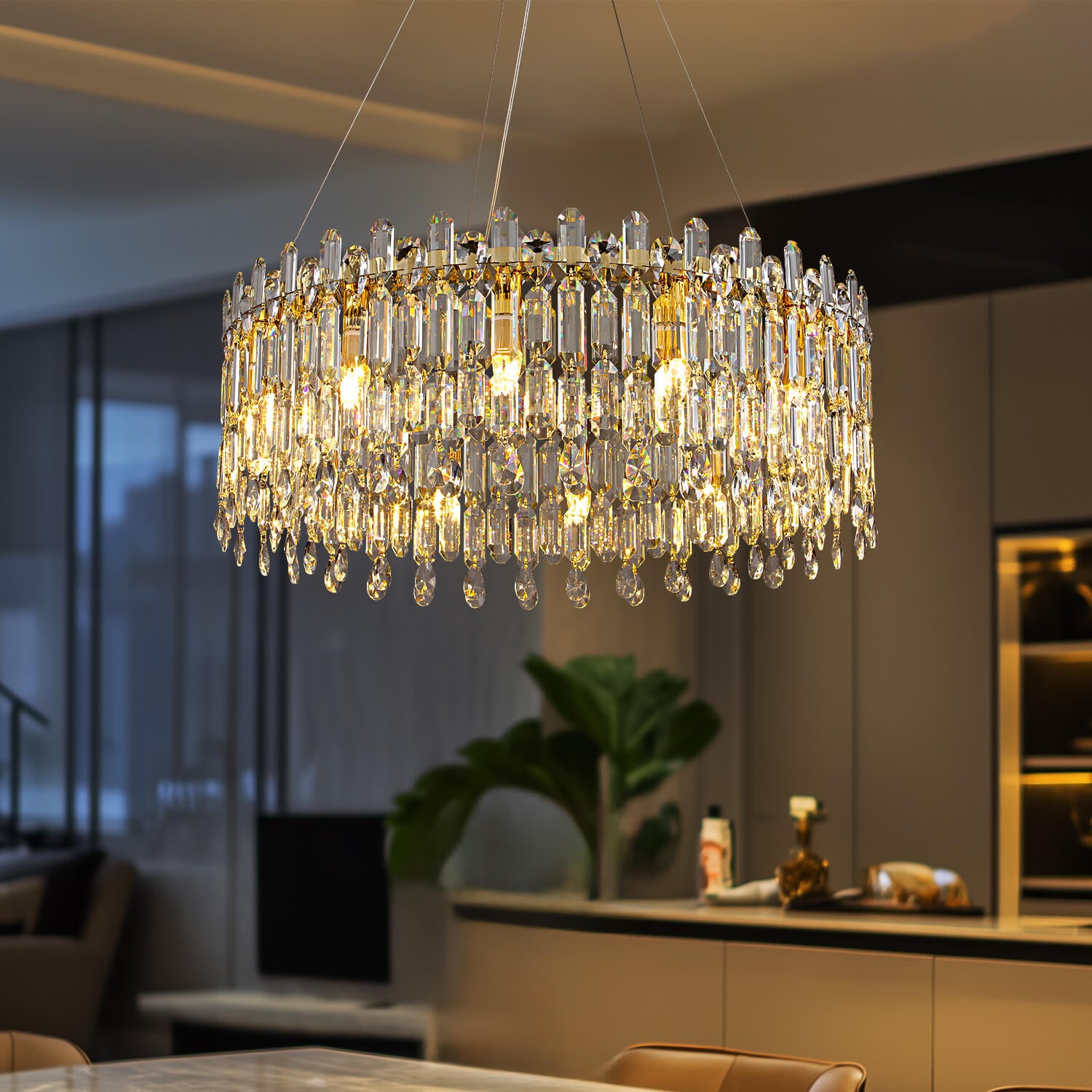
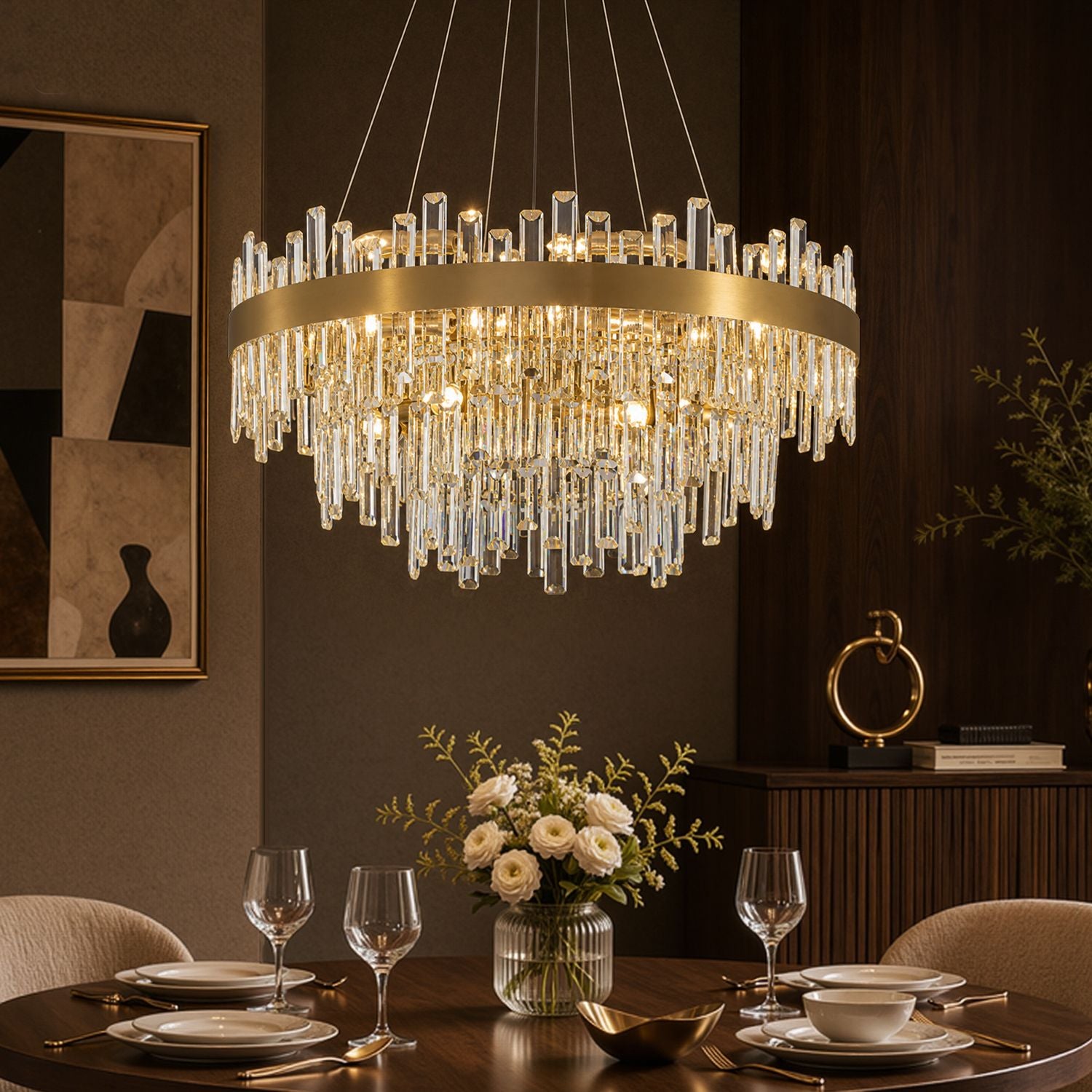
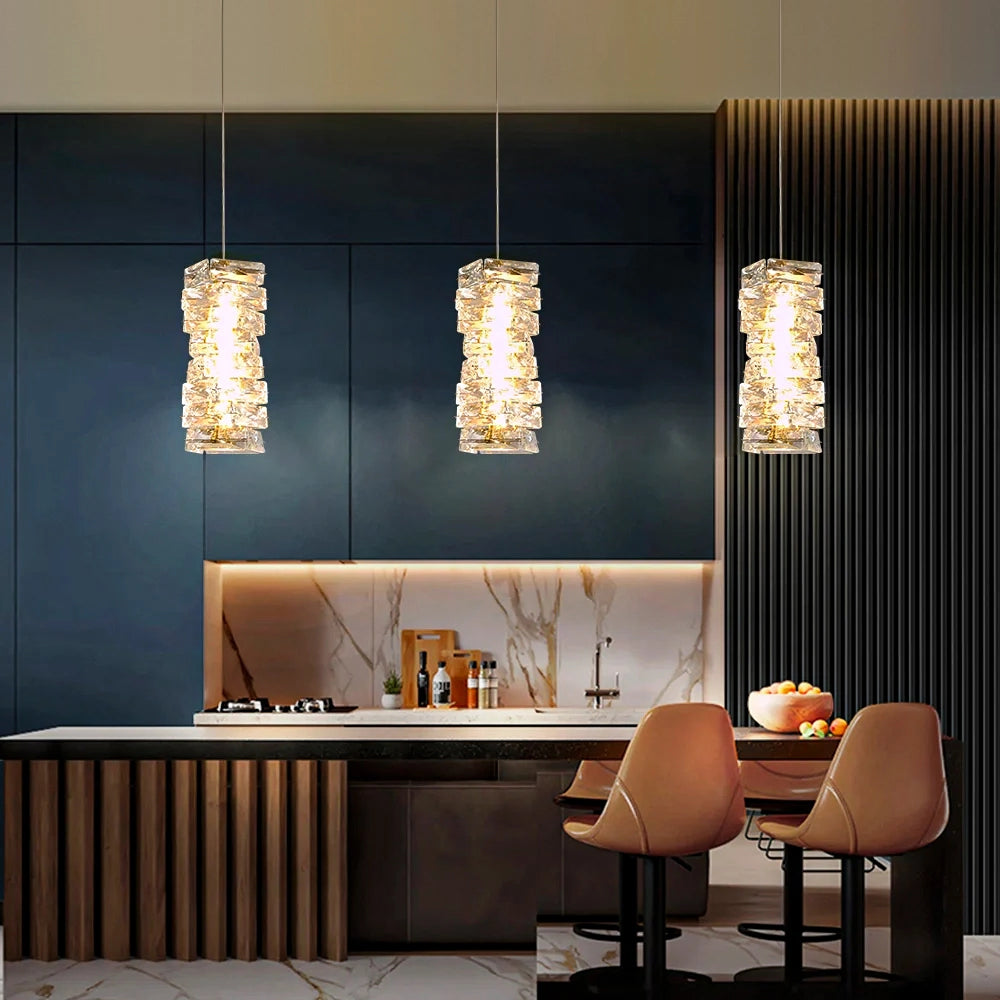
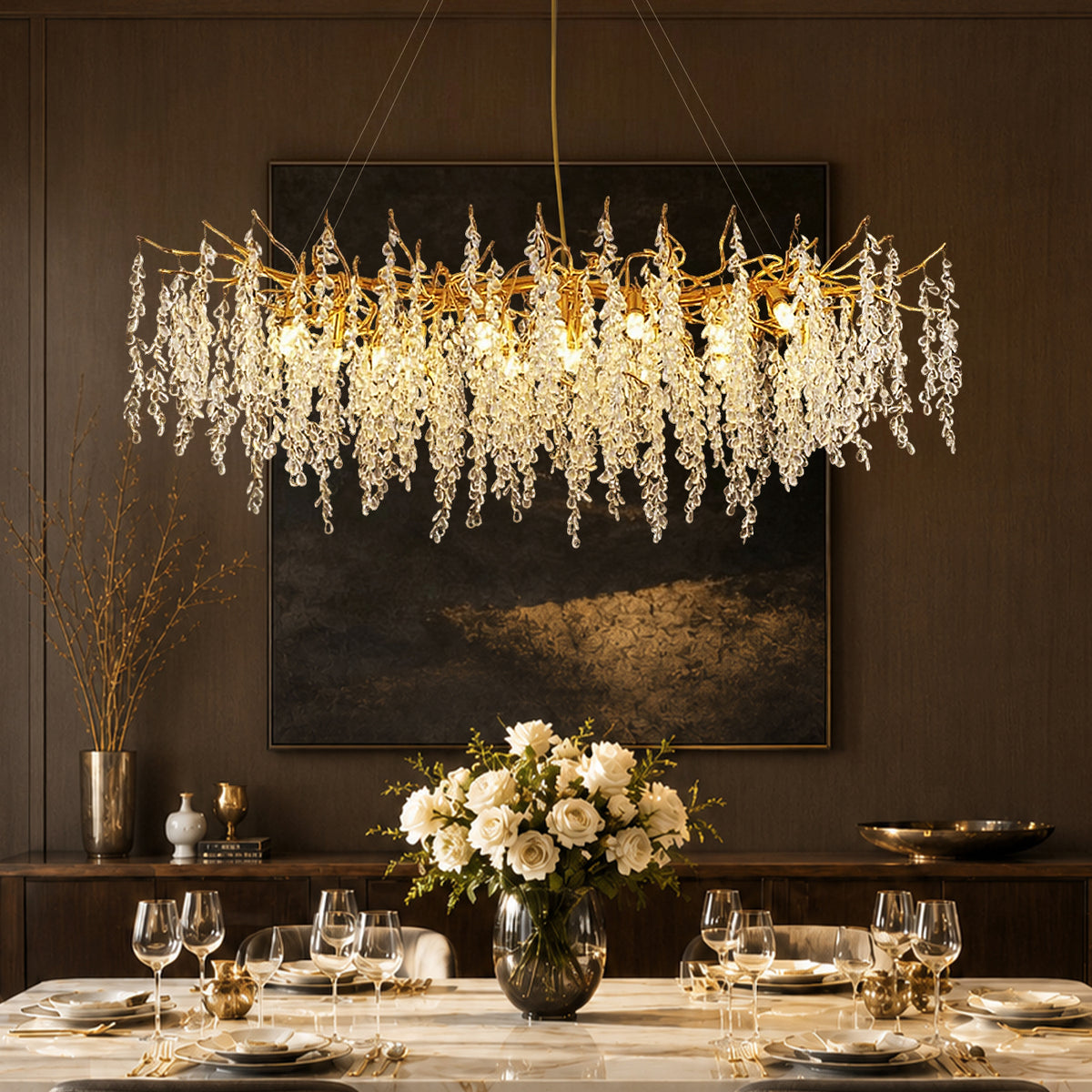
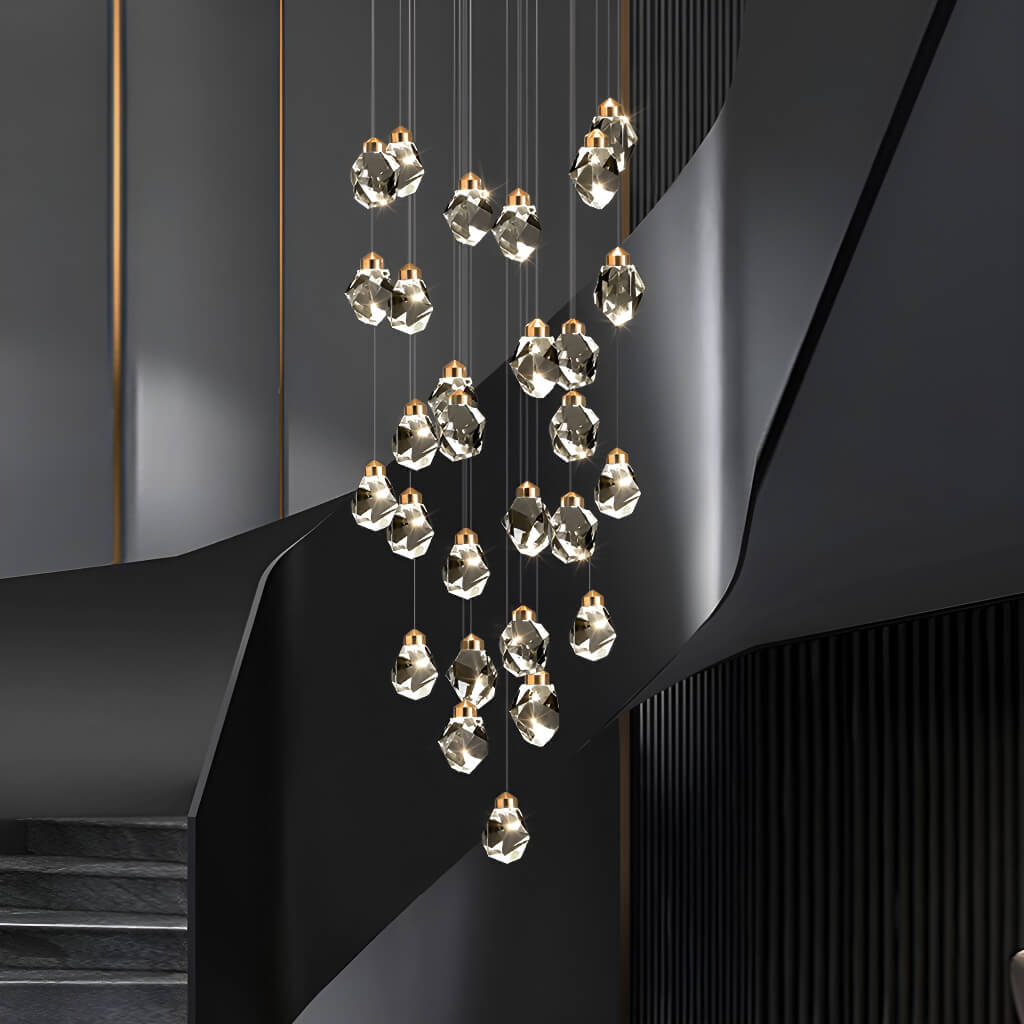
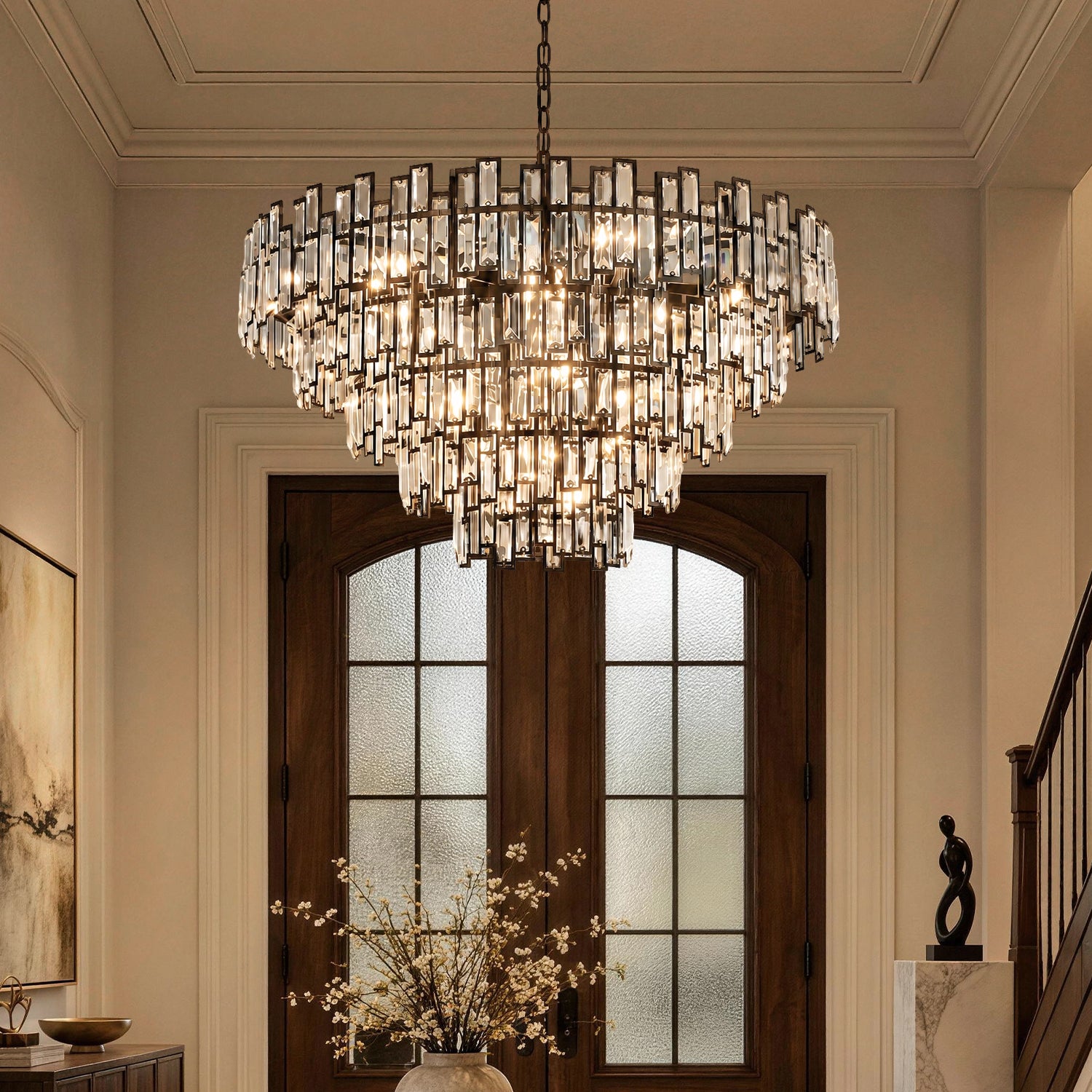
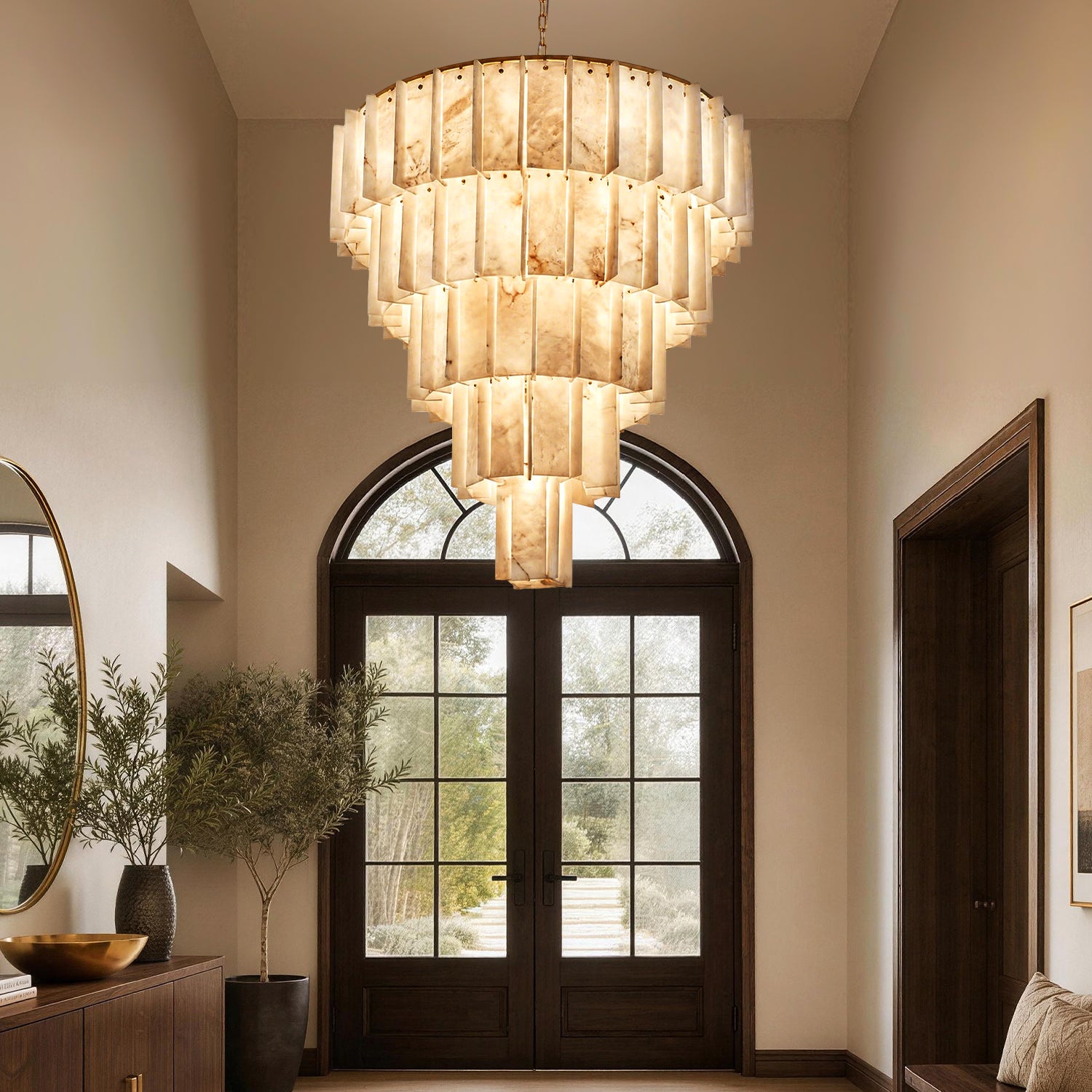
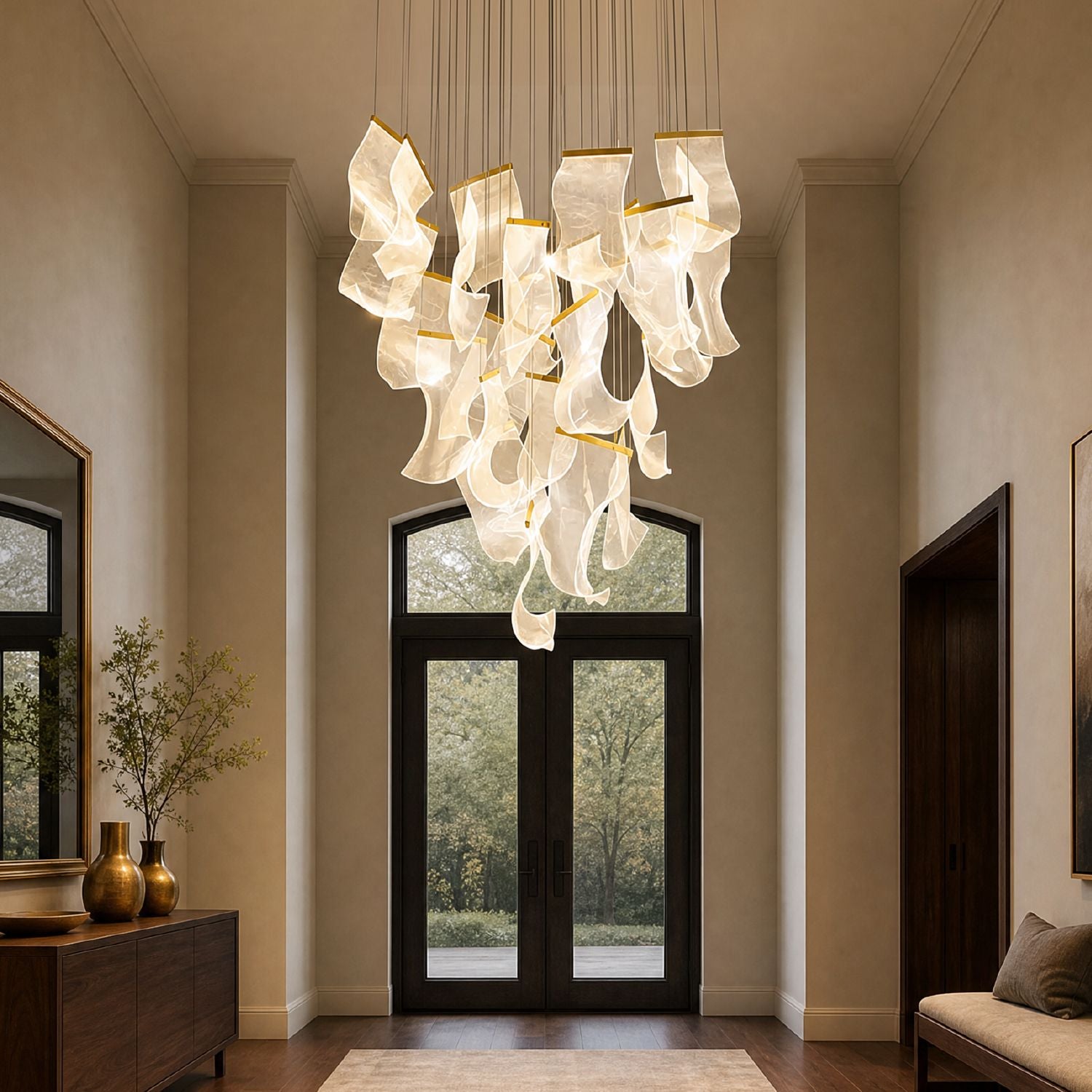
The room images in this guide are AI-generated styling illustrations based on the linked Sofary products. They are not customer installations or measured lighting demonstrations; use the listed dimensions and installation instructions to assess fit.

1. Plan the view from the living room
Start with the furniture layout. Mark the island, dining table, main sofa, television and walking routes. Then stand where people enter and sit where they spend time. Those positions reveal which lights will appear beside, behind or directly in front of one another.
A dining chandelier viewed against an empty wall has room for detail. The same chandelier seen through two glass island pendants may create a crowded cluster. Moving the viewing angle can expose the problem before anything is ordered.
Choose where you want the eye to settle. In many homes that is the dining table; in others it is a sculptural island fixture or a living-room feature. This is an editorial design choice, not a requirement that every open room must have exactly one statement light. When two fixtures share a tight sightline, giving one a quieter silhouette makes the relationship easier to manage.
Kichler's open-floor-plan guide likewise treats lighting, furniture groupings and repeated materials as ways to define connected areas. Start with the arrangement of the room, then choose its decorative fixtures.
2. Give each zone a different job
| Zone | Main lighting job | What to check |
|---|---|---|
| Kitchen | Make preparation and cleanup comfortable; use pendants to define the island. | Worktop shadows, exposed bulbs and the view toward the dining area. |
| Dining | Anchor the table and provide a comfortable setting for meals. | Table shape, the assembled hanging height and seated sightlines. |
| Living | Support conversation, reading and quieter evening use. | Reflections in the television, light near seats and independent switching. |
Island pendants alone may leave parts of the kitchen worktop in shadow. Plan the functional ceiling or undercabinet lighting around the surfaces you actually use. In the living area, an atmospheric wall sconce can soften the room, but its decorative glow does not establish that there is enough light to read. A reading position needs a suitably directed source.
For the island itself, use the separate guide to one linear chandelier versus multiple pendants. For the table, check the dining-room size and hanging-height guide. Coordination works after each fixture has a plausible place to go.
3. Repeat a detail, then allow some variation
Use metal finishes as a link
Black frames can connect island pendants to a dining chandelier. Warm metal can connect a pendant canopy to a wall sconce and cabinet hardware. The fixtures can still have very different bodies.
Names such as gold, brass and antique bronze do not guarantee identical color or sheen. Compare actual product views, especially when fixtures will sit close together. If exact matching matters, request finish confirmation before ordering.
Mixed metals are easier to read when their placement makes sense: black in the window frames and pendant hardware, for example, with gold repeated in a sconce and a small piece of furniture hardware. Avoid introducing several almost-matching gold finishes in one tight view and relying on their names to make them agree.
Repeat a shape or texture without copying the whole fixture
Curved glass at the island can relate to a round dining fixture. A pale stone chandelier can connect to a stone wall light even when one is circular and the other rectangular. Choose a link you can see across the room; a tiny detail visible only in a product close-up will do little to connect distant zones.
Balance visual weight
Diameter is only part of the comparison. A deep, densely layered chandelier can command more attention than a wider open frame. Amber glass may read as a stronger object than clear glass in the same shape. A repeated row of small pendants also creates a substantial group.
Put product images beside one another, with their listed dimensions written underneath. Compare the whole island group with the whole dining fixture. This catches combinations that seem balanced when each product is viewed alone at the same screen size.
4. Three Sofary combinations to build from
These are coordinated selections from the current catalog, not fixed room packages. The same Norevia wall sconce appears in all three to show how one accent can work with different overhead fixtures.
Combination A: amber glass and warm metal
Island: Virelune in Antique Bronze / Amber Glass, CH570-A.
Dining: Sirene tiered glass chandelier, CH803-A.
Living accent: Norevia gold alabaster wall sconce, WL485-A.
Virelune's rounded glass panels and Sirene's stepped drum share an amber appearance without repeating the same shape. Walnut, warm upholstery and restrained metal accessories can carry that warmth into the seating area. Norevia brings a quieter stone surface to the wall.

Sirene is the prominent piece here: its listed body is 31.5 inches wide and 22.4 inches high. Its published weight is 72.3 pounds, so structural support needs specific review; a coordinated look does not establish mounting suitability. Virelune's smaller body is 12.6 inches wide and 10.2 inches high. Its listed chain maximum is only 19.7 inches, and the product is specified for flat ceilings. Confirm the full installed hanging range before using it in a taller room.
Use this combination when you want the dining fixture to be the main event. If the island and table are very close, start with fewer pendants where the island's dimensions and required lighting allow it, rather than filling every zone with dense glass.
Combination B: black hardware, clear glass and pale stone
Island: Virelune in Gunmetal Black / Clear Glass, CH570-D.
Dining: Vessara alabaster disc chandelier, CH686-A.
Living accent: Norevia, WL485-A.
The black pendant hardware relates to Vessara's black frame, while its pale stone discs connect to the wall sconce's alabaster. Norevia introduces gold as a secondary finish. Repeat that gold elsewhere in a small, deliberate way if the sconce would otherwise be the room's only warm-metal object.

Vessara's listed body is 23.6 inches in diameter and 14.2 inches high. It is a modestly sized chandelier; consider it against a compact round table and check the exact table-to-fixture proportions. The listing specifies a rod system and flat-ceiling installation. Verify the available rod combinations against the drop you need; a collection of rods does not imply continuous height adjustment.
This is a useful direction when a room already has black window frames or dark hardware but needs some softer material at the table. Keep busy veined worktops and other strong patterns in mind when choosing the stone fixture.
Combination C: woven texture and clear glass
Island: Virelune in Antique Bronze / Clear Glass, CH570-B.
Dining: Tavira woven-rattan drum chandelier, CH646-A.
Living accent: Norevia, WL485-A.
Here, the connection comes through warm neutrals and rounded forms. The glass keeps an open view across the island, woven rattan adds texture at the table, and alabaster provides a quieter accent beside the seating. This gives pale oak, linen and off-white walls some variety.

Tavira measures 18.9 inches in diameter and 9.8 inches in body height. Its compact body makes it a starting point for a small round table or breakfast nook. In a larger dining area, compare the room and table dimensions with that listed size. Its black suspension also differs from Virelune's antique-bronze hardware. Treat that as an intentional mix, supported by other dark details in the room.
All selections above were checked against active Sofary online-store listings on October 17, 2026. Availability and lead times can change. Body dimensions exclude the complete installed canopy-and-suspension assembly unless the product listing explicitly says otherwise.
5. Coordinate the light after dark
Finishes that look coherent in daylight can feel disconnected once the lights are on. Before buying bulbs for the whole room, try the intended light color against the worktop, upholstery and fixture materials.
For a warm residential scheme, 2700K or 3000K is a reasonable starting point. Choose one starting CCT across the main visible zones, then judge it in the room. The U.S. Department of Energy's bulb-buying guidance explains that CCT describes light color and that lumens describe light output. Raising the color temperature is not a substitute for providing adequate task light.
The same labeled CCT will not make amber glass, clear glass and alabaster look identical. Their materials change the light you see. For finishes and food, CRI is another useful check: DOE describes CRI of 90 or higher as excellent color fidelity. That is a bulb-selection consideration, not a verified CRI claim for the decorative fixtures pictured here.
The selected products use replaceable bulbs: Virelune, Sirene, Vessara and Norevia use E12 bases; Tavira uses E26. The listings say bulbs are not included. Check the required bulb dimensions and the fixture's labeled limits as well as the base.
Plan independent controls
The kitchen may need useful preparation light while the dining table is set for dinner and someone watches television nearby. Separate switching for those areas makes that possible. A decorative wall light can provide a quieter living-room layer without leaving the whole kitchen fully lit.

If dimming is important, verify the specific bulb or driver and dimmer combination. An E12 or E26 base identifies the connection, not dimming compatibility. DOE advises checking that the source is dimmable and compatible with the control system. For a new or altered circuit, have the electrician plan the controls around the actual selected equipment.
6. Fix the mismatch before replacing everything
- Every fixture competes for attention: simplify the island group or choose a less dense dining body. Changing bulb output alone will not change the daytime silhouette.
- The room looks mismatched only at night: compare bulb CCTs and the effect of tinted shades, then check dimming behavior.
- The living area feels disconnected: repeat a visible material or finish at seating level, and give it an independently controlled light source.
- The kitchen is bright but the worktop is awkward to use: review where light falls and where your body casts a shadow. More decorative pendants may not solve that placement problem.
- The combination works in separate product photos but crowds the room: compare installed heights and the whole fixture group from the sofa before ordering.
Before you order
Save the exact variant links, body dimensions, full hanging requirements and finish choices together. Check the canopy and ceiling type, the support needed for each fixture, bulb requirements and control compatibility. For heavier designs, use the ceiling-box support guide to prepare questions for your installer.
Finally, assess the group once in daylight and once after dark. If the table has a clear focal point, the kitchen remains practical and the living area can settle into a quieter light level, the fixtures are doing useful work together.
Frequently asked questions
Do kitchen and dining lights have to match?
No. They can share a finish, material or visible shape while using different silhouettes. In a tight sightline, compare their visual weight as well as their diameter.
Can I mix black and gold lighting in an open-plan room?
Yes. Give each finish a recognizable role and consider repeating it in the surrounding hardware or furniture. Compare actual finishes; different products called gold may have different tones.
Should island pendants and a dining chandelier hang at the same height?
They do not need to share the same bottom elevation. The island and dining table may have different surface heights and uses. Set each fixture's position for its own zone, then assess the combined view.
What color temperature should I use across an open-plan room?
For a warm scheme, try 2700K or 3000K as a common starting point. Check the result in the room, since glass color, stone, surfaces and the light source all affect its appearance.
Does an open-plan living room need another chandelier?
Only if it serves the room. Wall lights or other appropriate task and ambient sources can give the seating area its own identity without adding another large ceiling centerpiece.
Can I put every light on one dimmer?
Do not assume that different sources will work together on one dimmer. Confirm equipment compatibility, load and wiring requirements with the installer. Independent zone controls also allow the room to support different activities at the same time.
Sources and product notes
Product selections and listed dimensions were checked on October 17, 2026. The product links identify the exact variants discussed. Kichler provides the cited open-plan design guidance; the U.S. Department of Energy provides the cited explanations of light color, output, color fidelity and dimmer compatibility. The combinations and visual-balance suggestions are Sofary editorial judgments. No room-lighting measurements or comparative product tests are claimed.
More Blogs
What Should You Take into Consideration When Buying a Chandelier?How to Find the Best Staircase Chandelier for Your HomeHow to Pick the Perfect Chandelier Ceiling Fan for Your Living RoomHow to Choose Matching Lamps with Chandeliers ?How to Choose the Right Light Bulbs for Your HomeHow to install crystal chandeliers | Sofary LightingThe Lighting Guide: How to Light Your FoyerChandelier Ideas: A Guide to Choosing the Right Crystal ChandeliersYour Guide to the Top Types of Crystal For ChandeliersCrystal Chandelier Maintenance: How to Keep It Sparkling Like New