Open Box




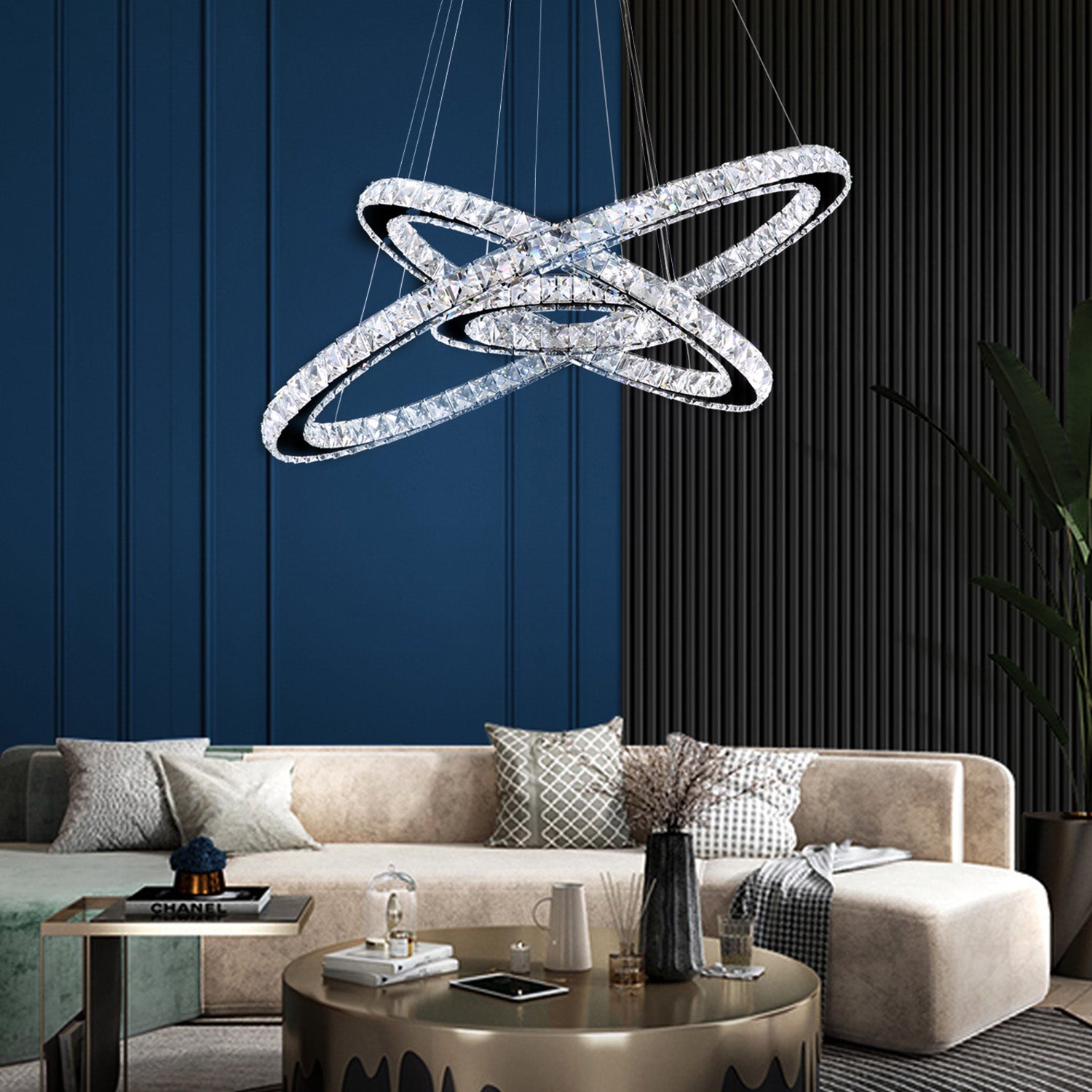
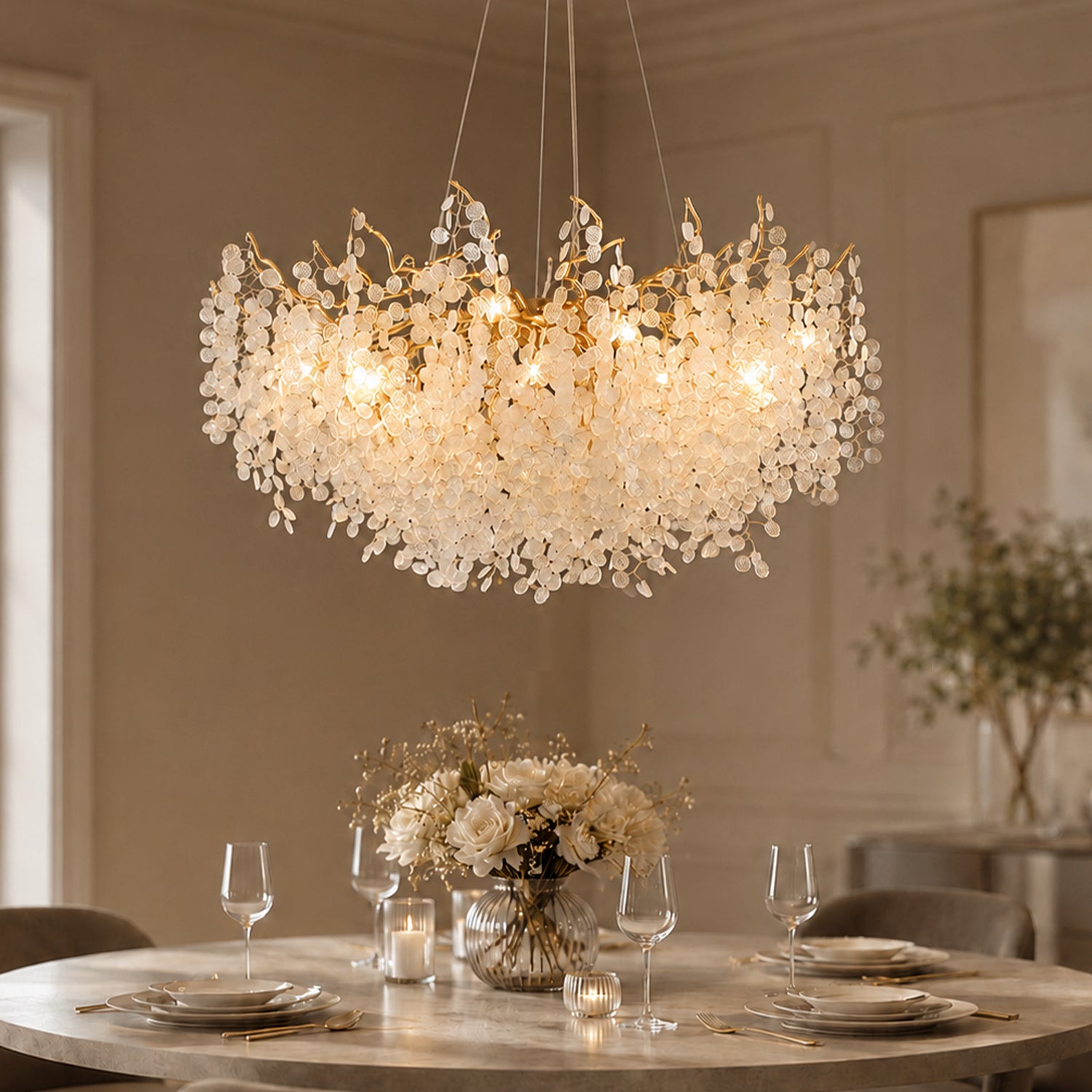
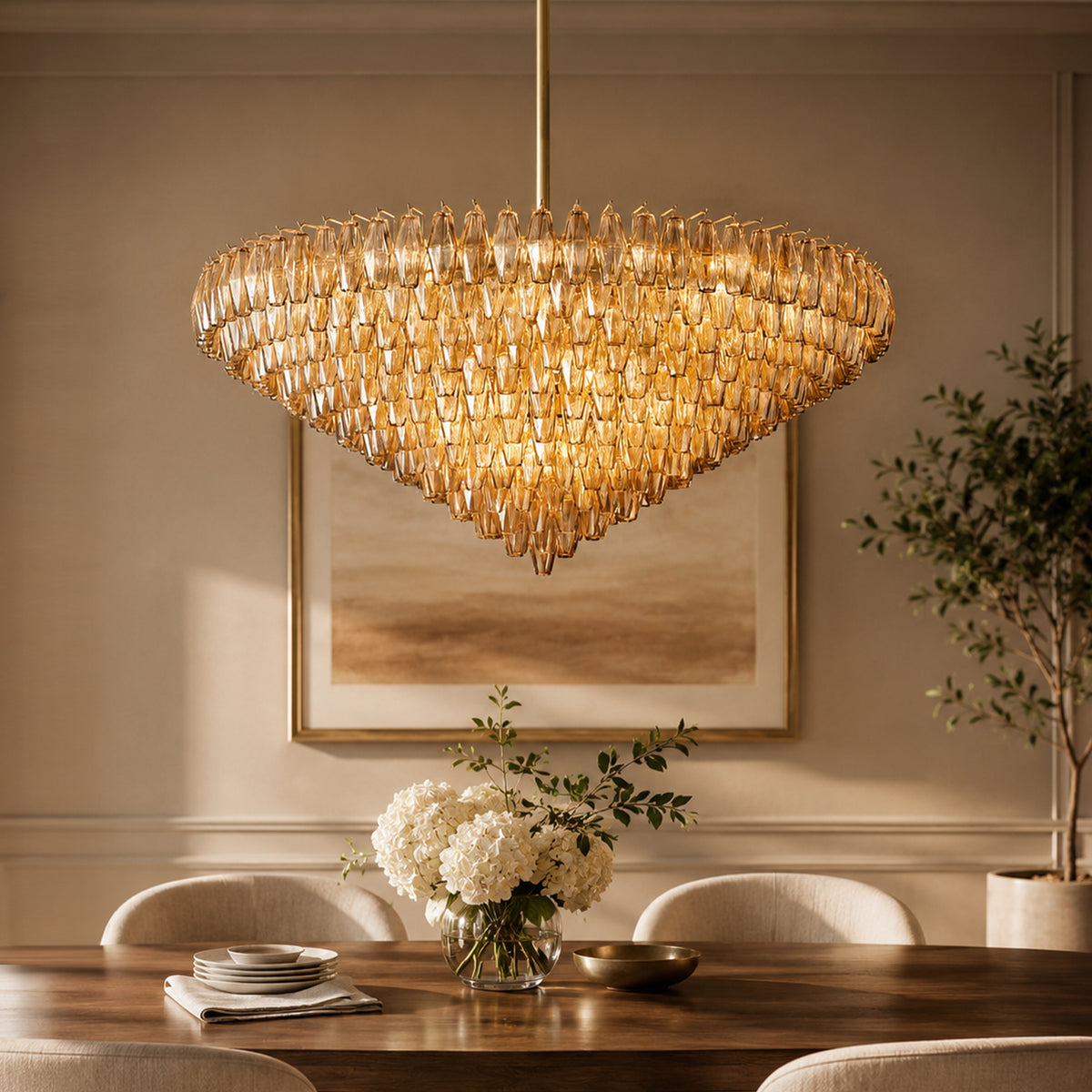
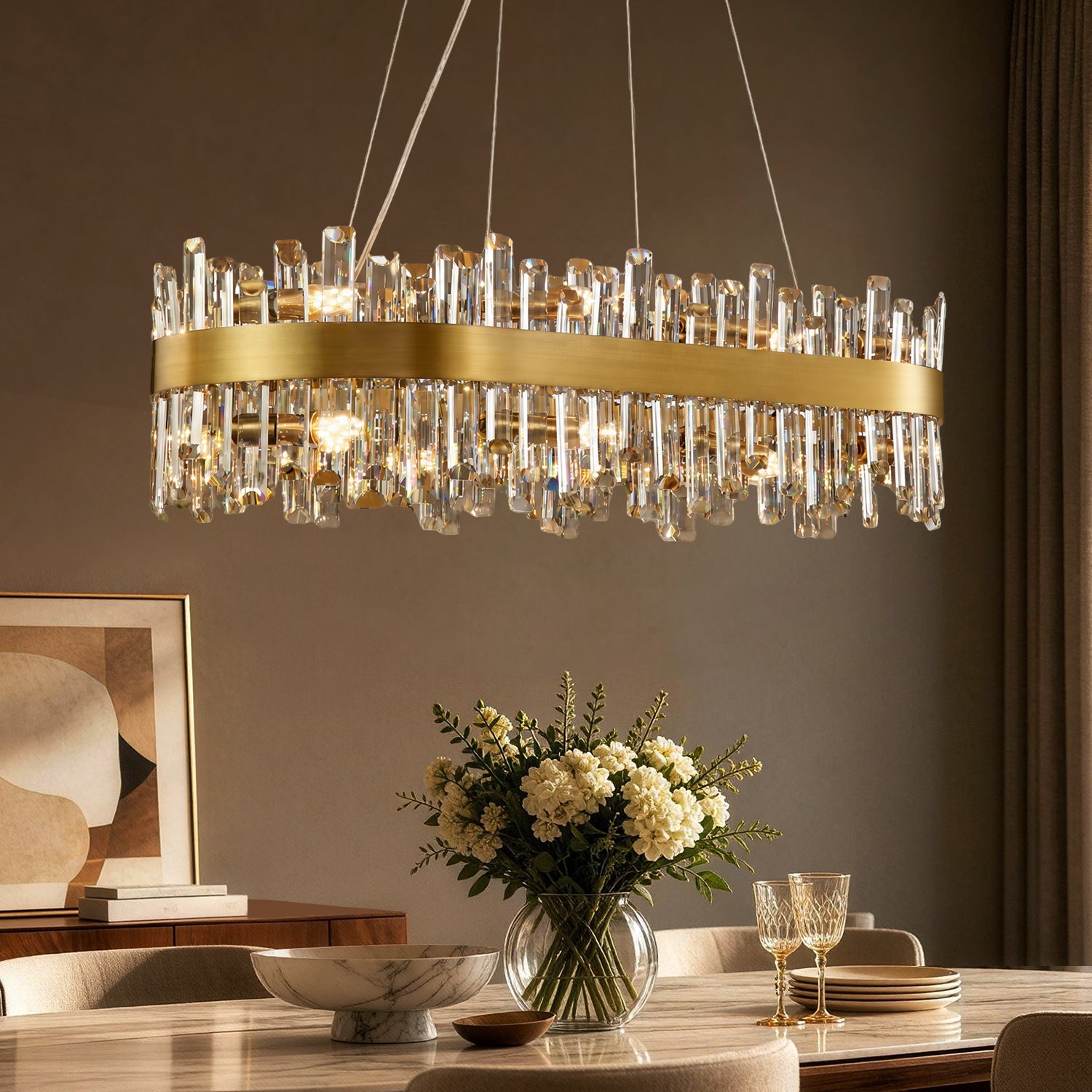
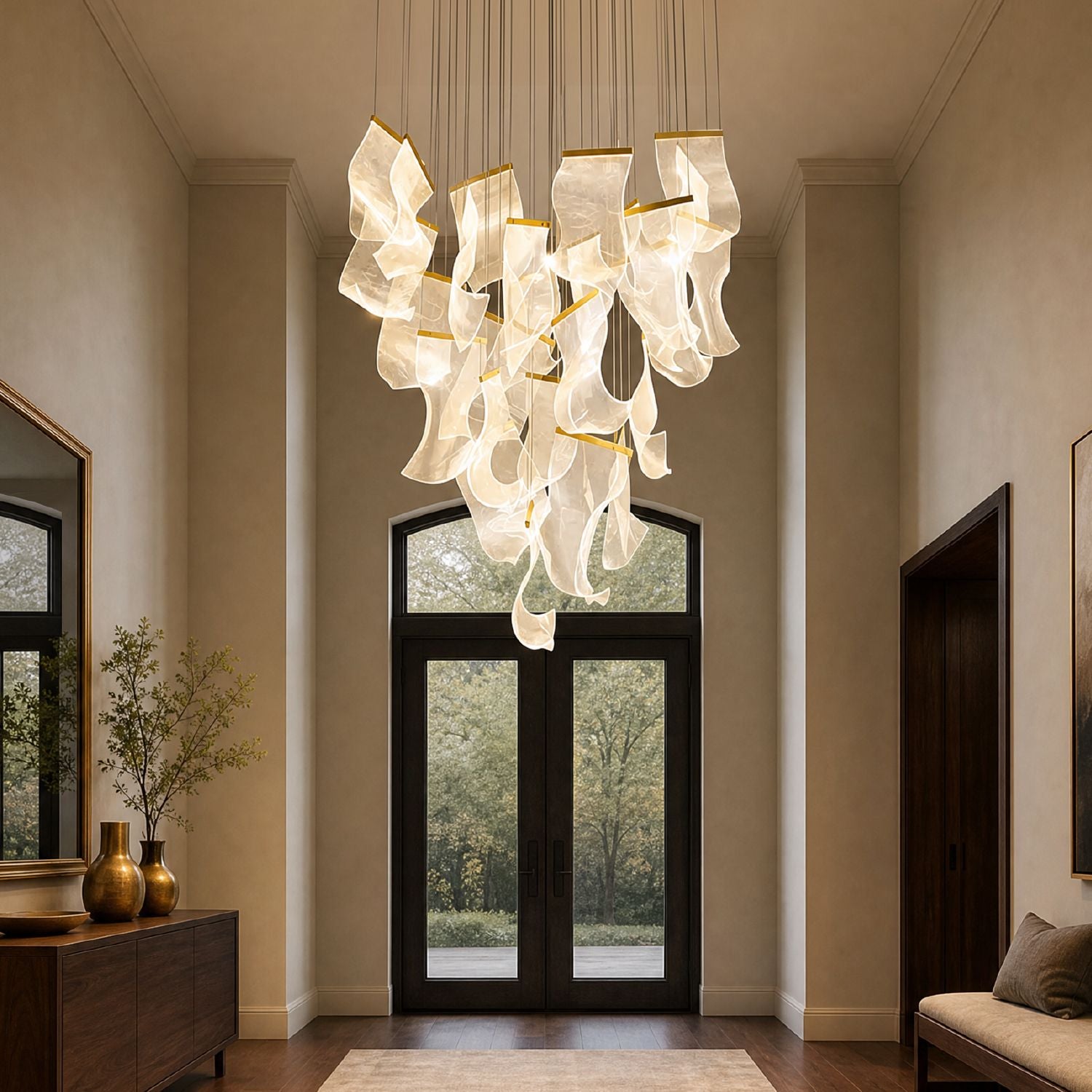
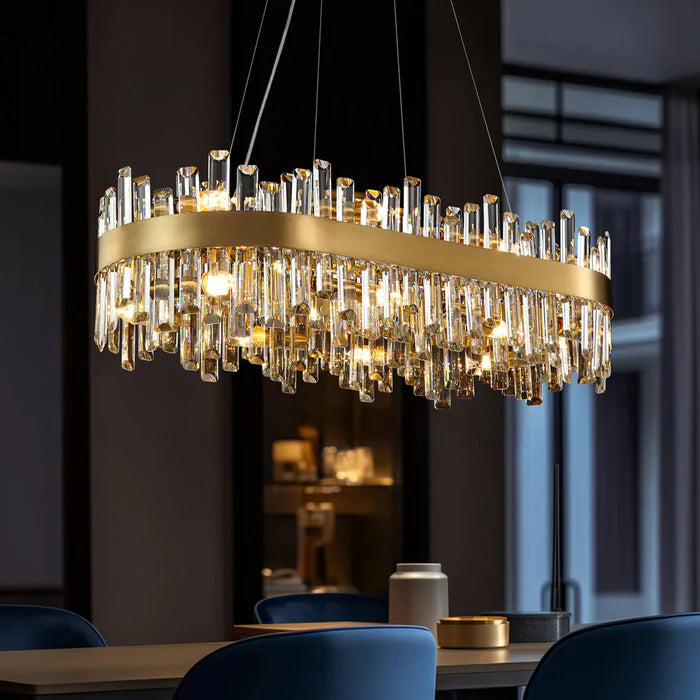
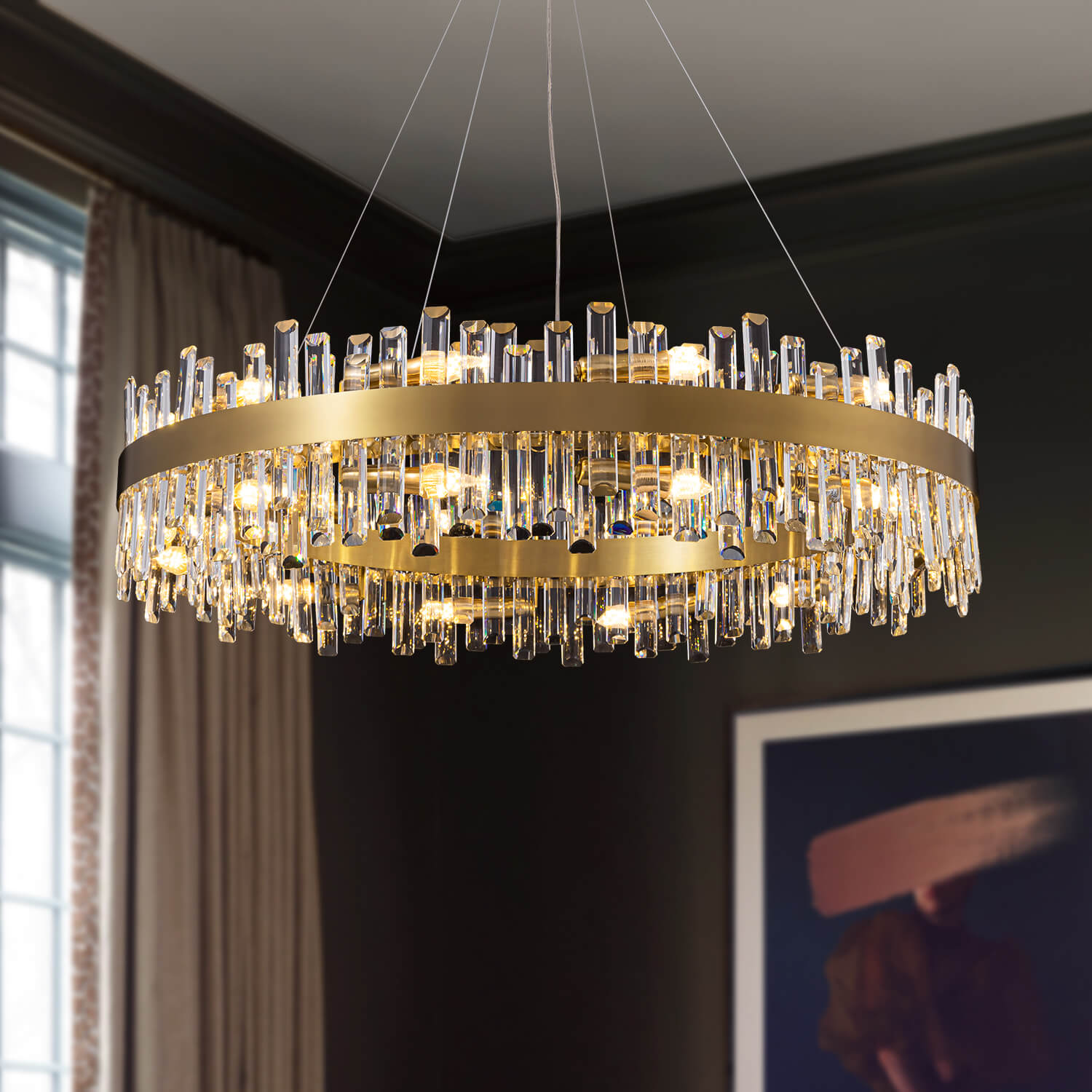
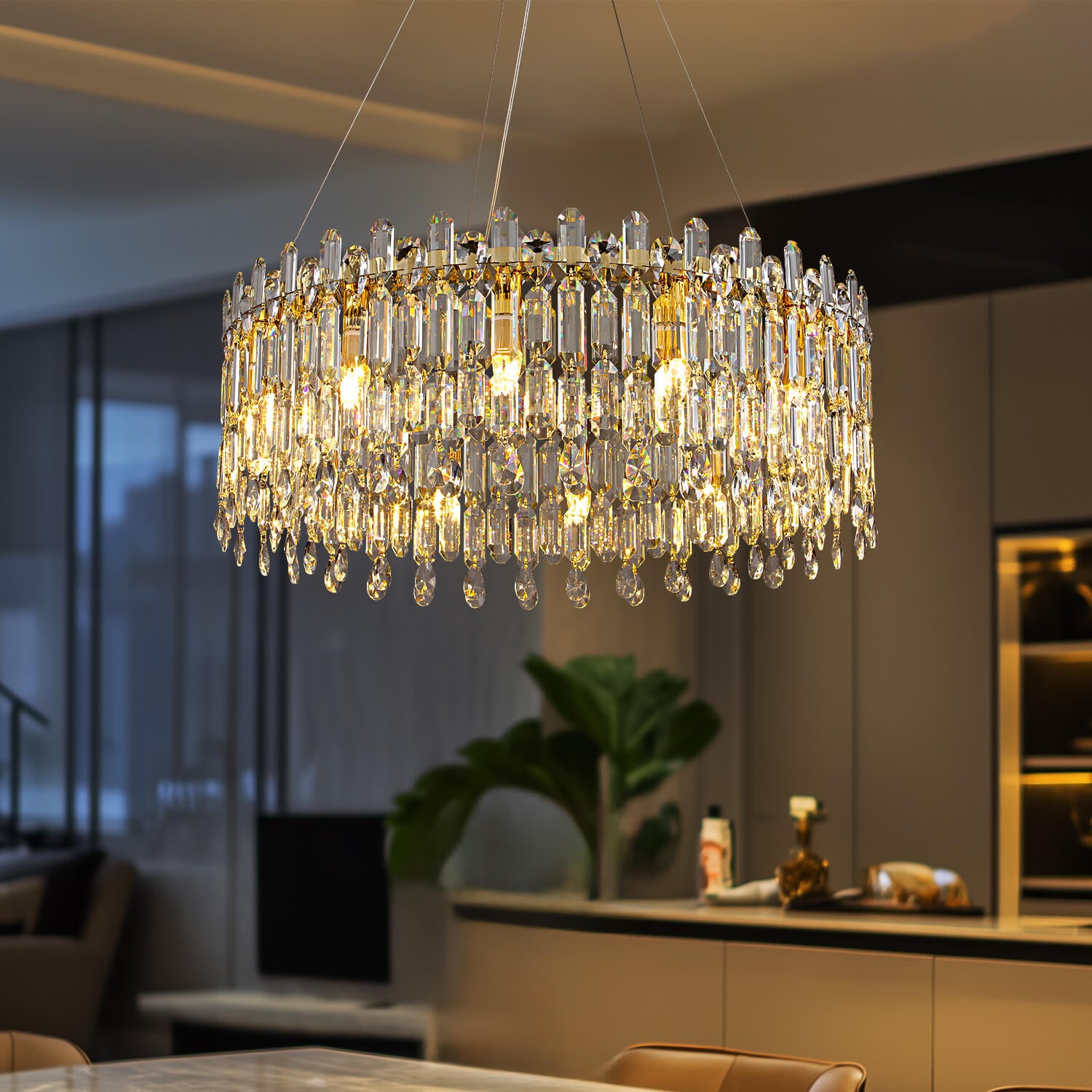
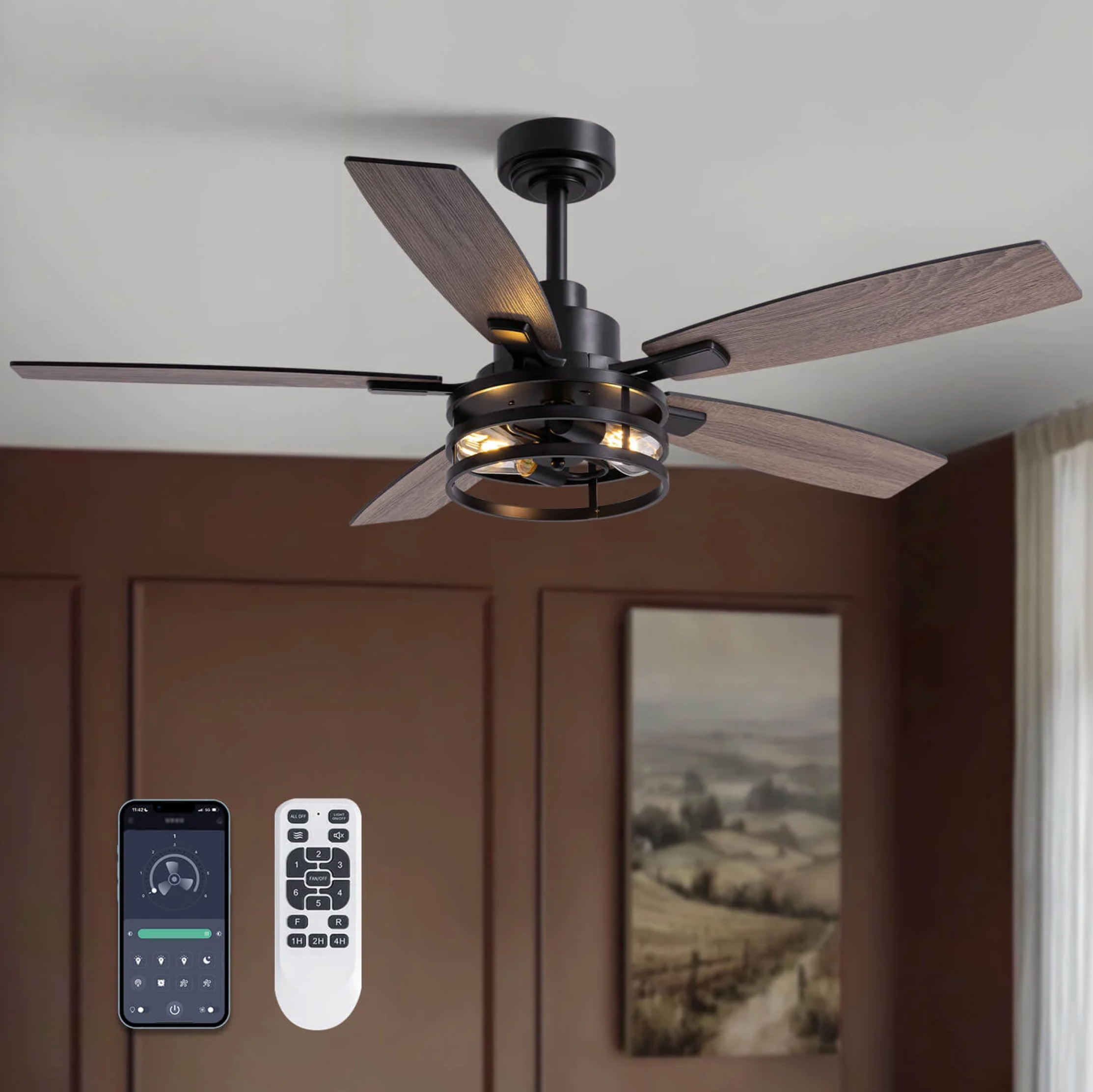

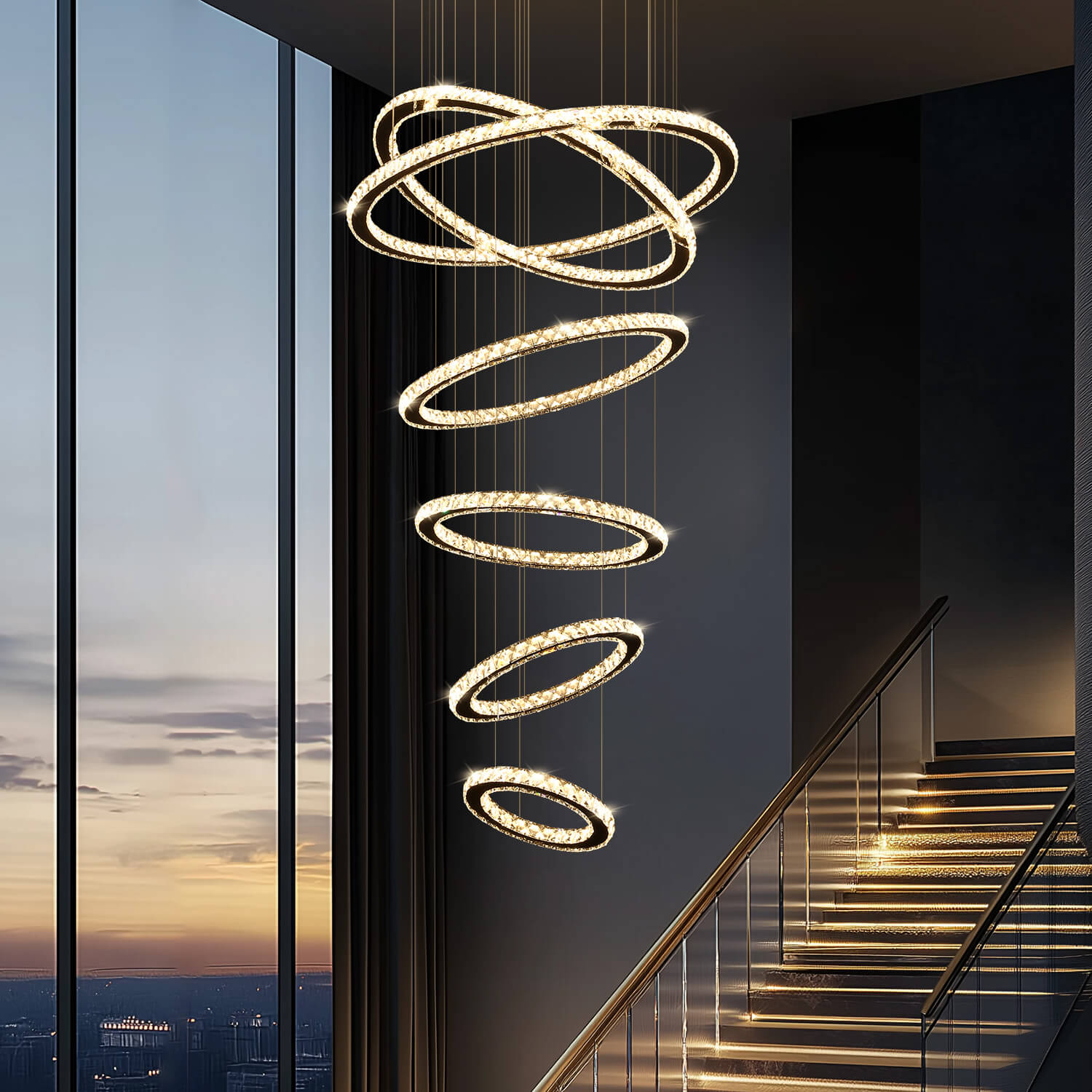

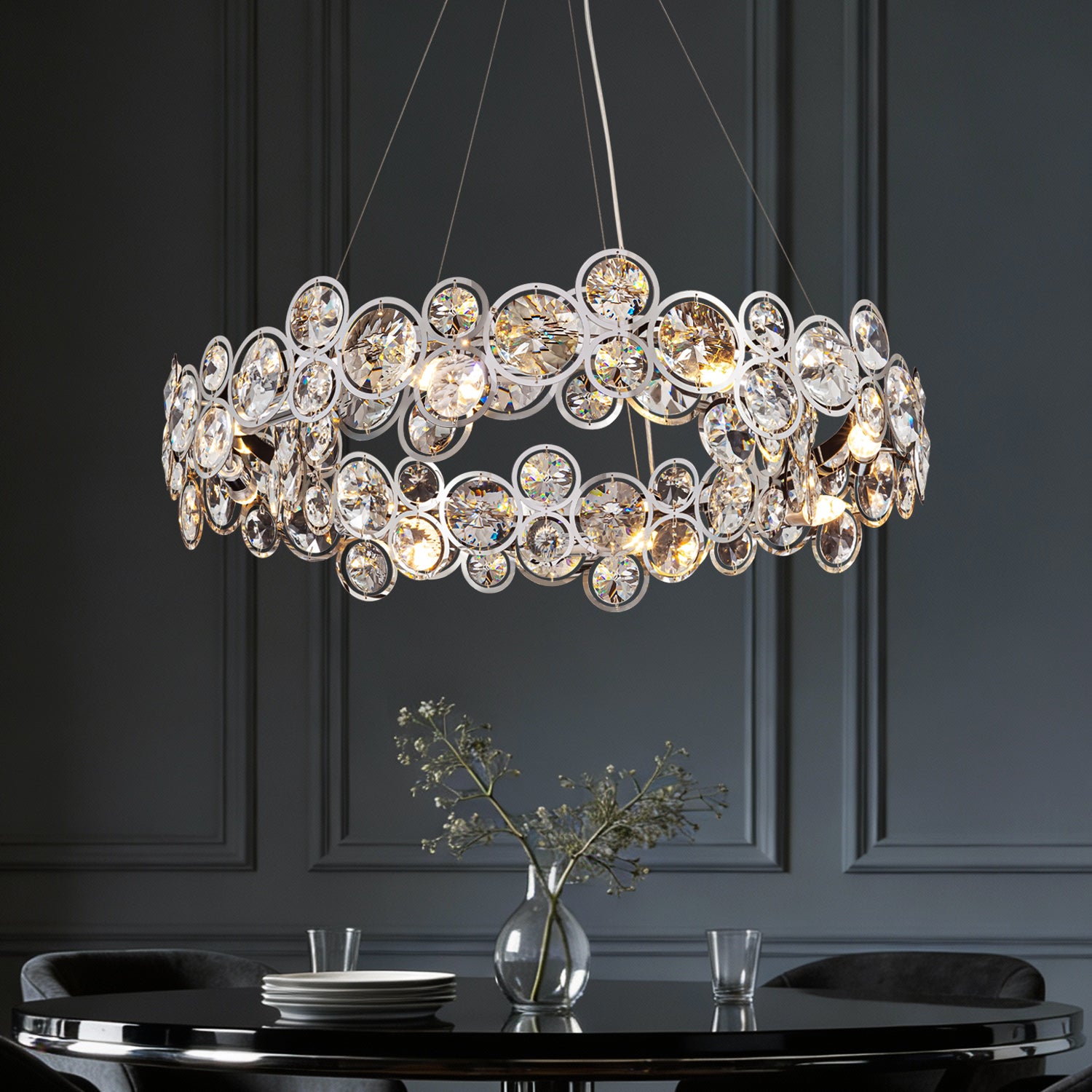
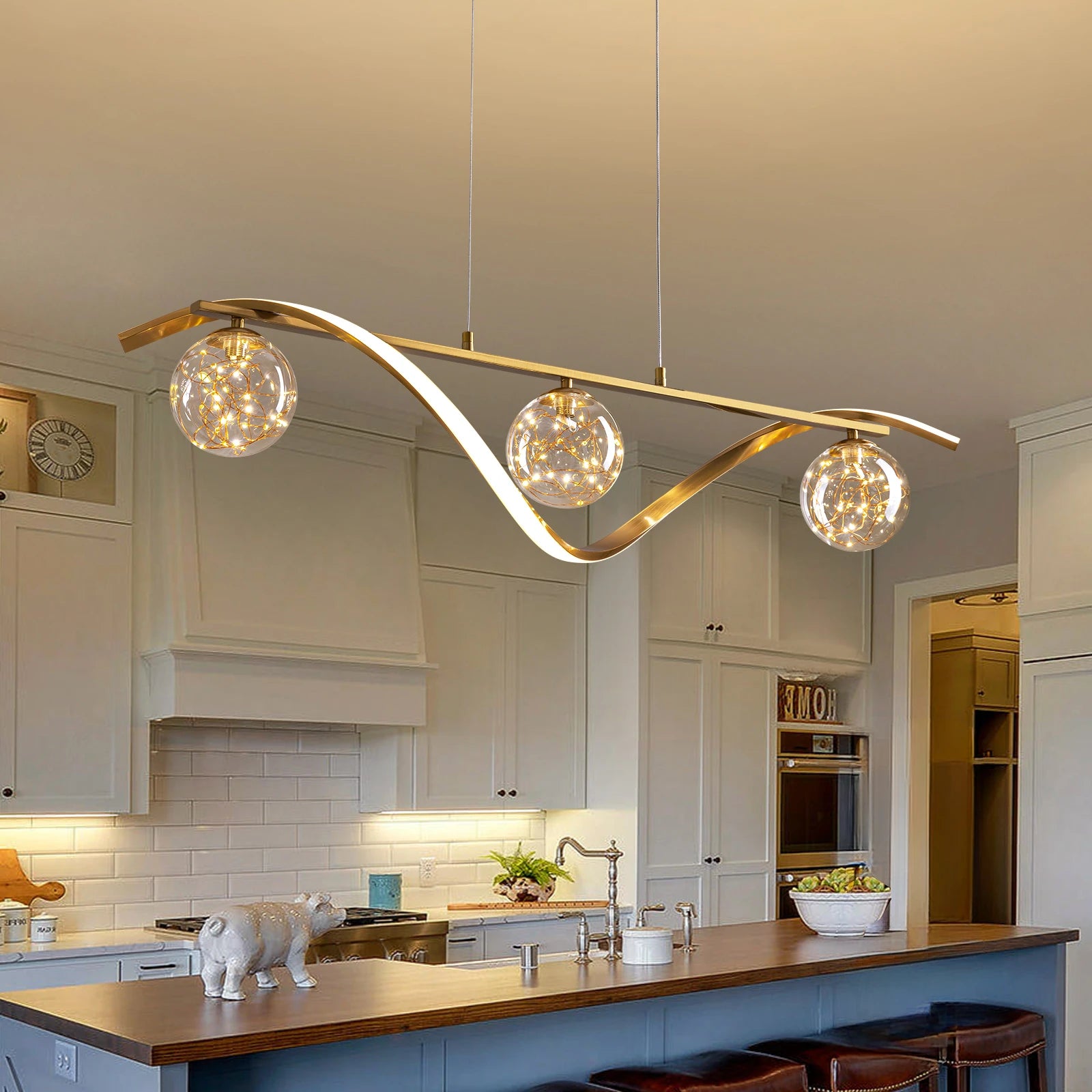

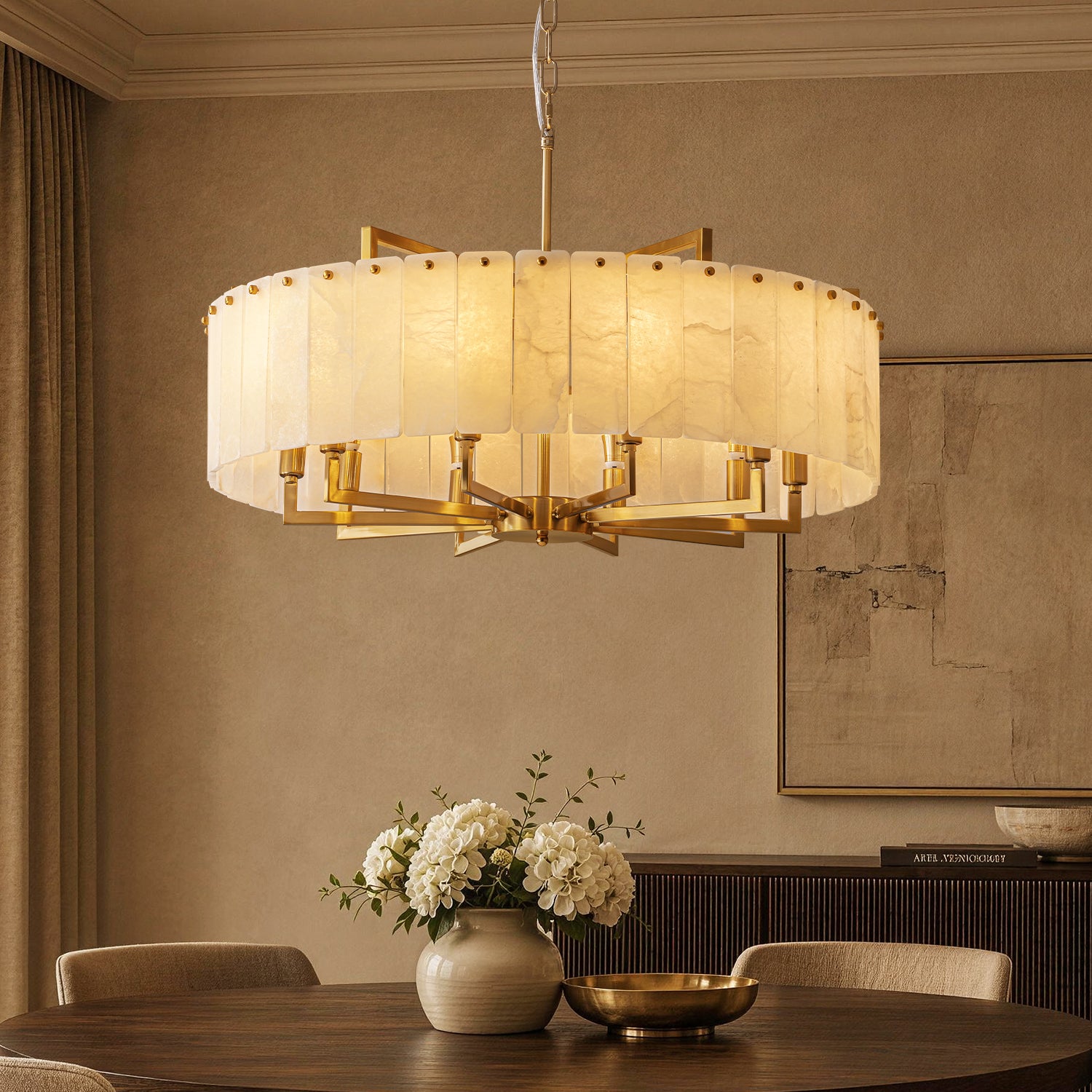
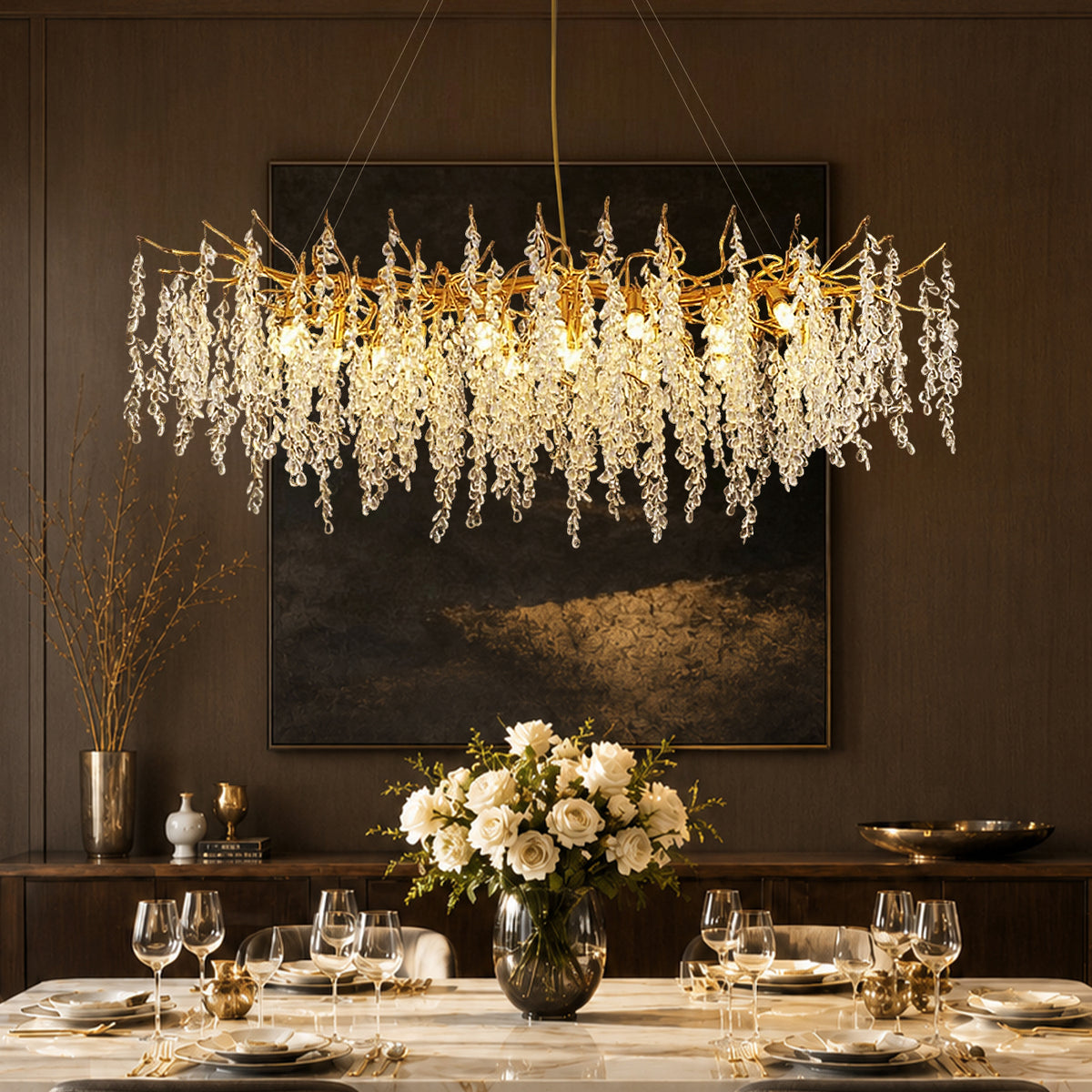


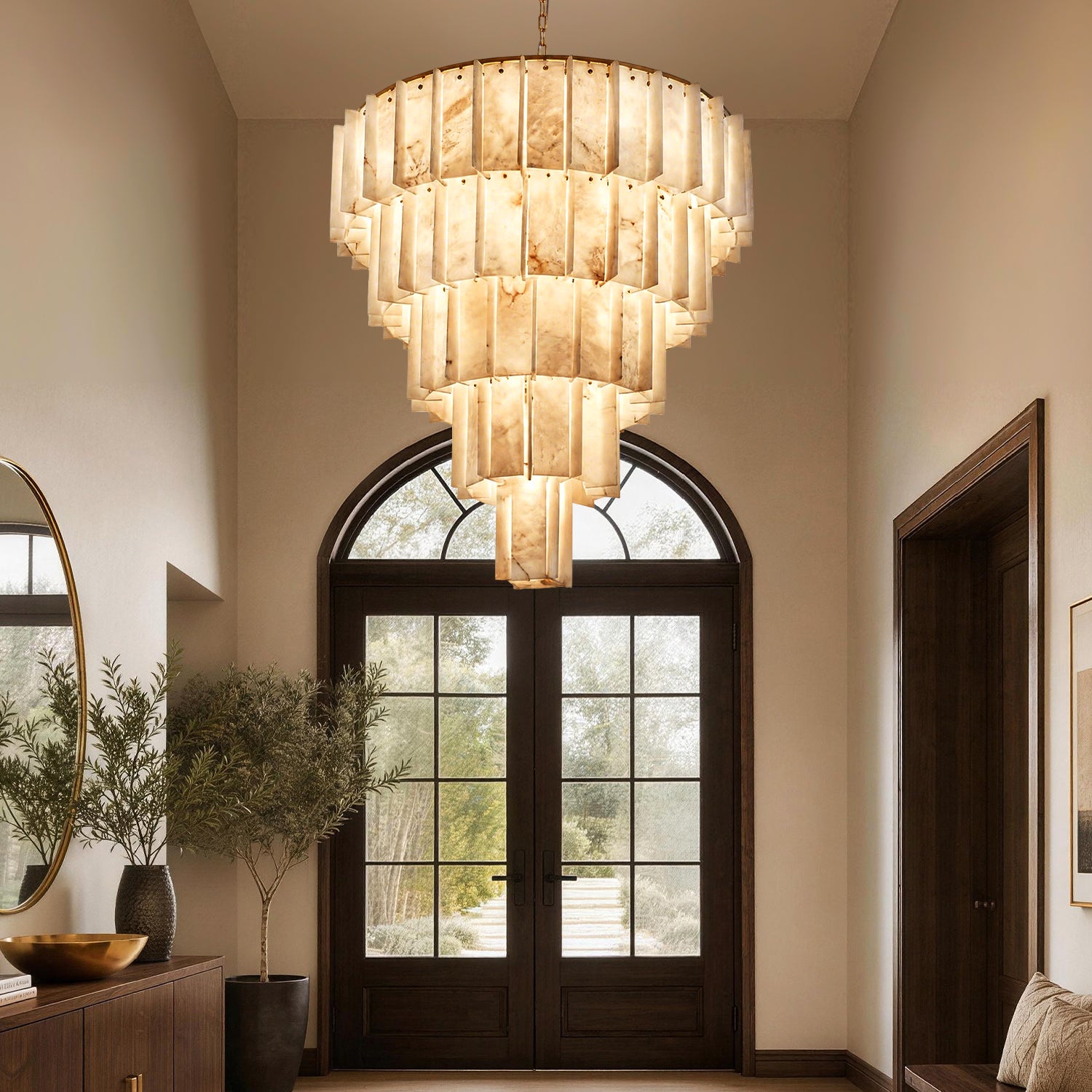
How to Choose a Bedroom Chandelier: Size, Height, Brightness & Placement
14 minutes
How to Choose a Bedroom Chandelier: Size, Height, Brightness & Placement
Quick answer: Choose a bedroom chandelier by its complete installed height, its scale beside the bed and its appearance from the pillows. Keep walking routes clear, check whether the light source is visible when you lie down, and plan separate light for reading. A chandelier can be the room's decorative focal point without doing every lighting job.
A bedroom changes how you see a fixture. You may like it from the doorway, then find yourself looking straight into its lamps at night. Start with that second view before choosing a larger size, a lower position or a brighter bulb.
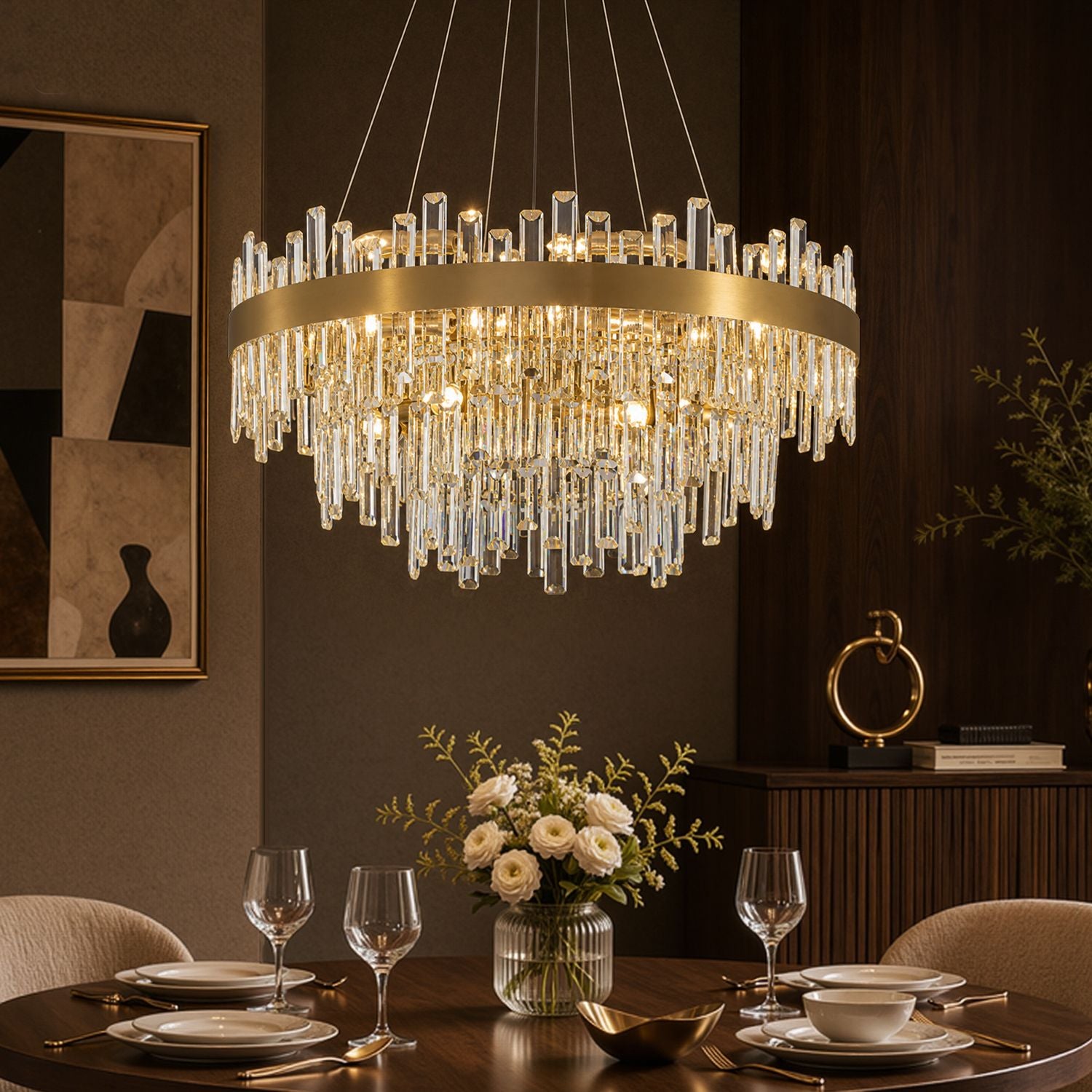
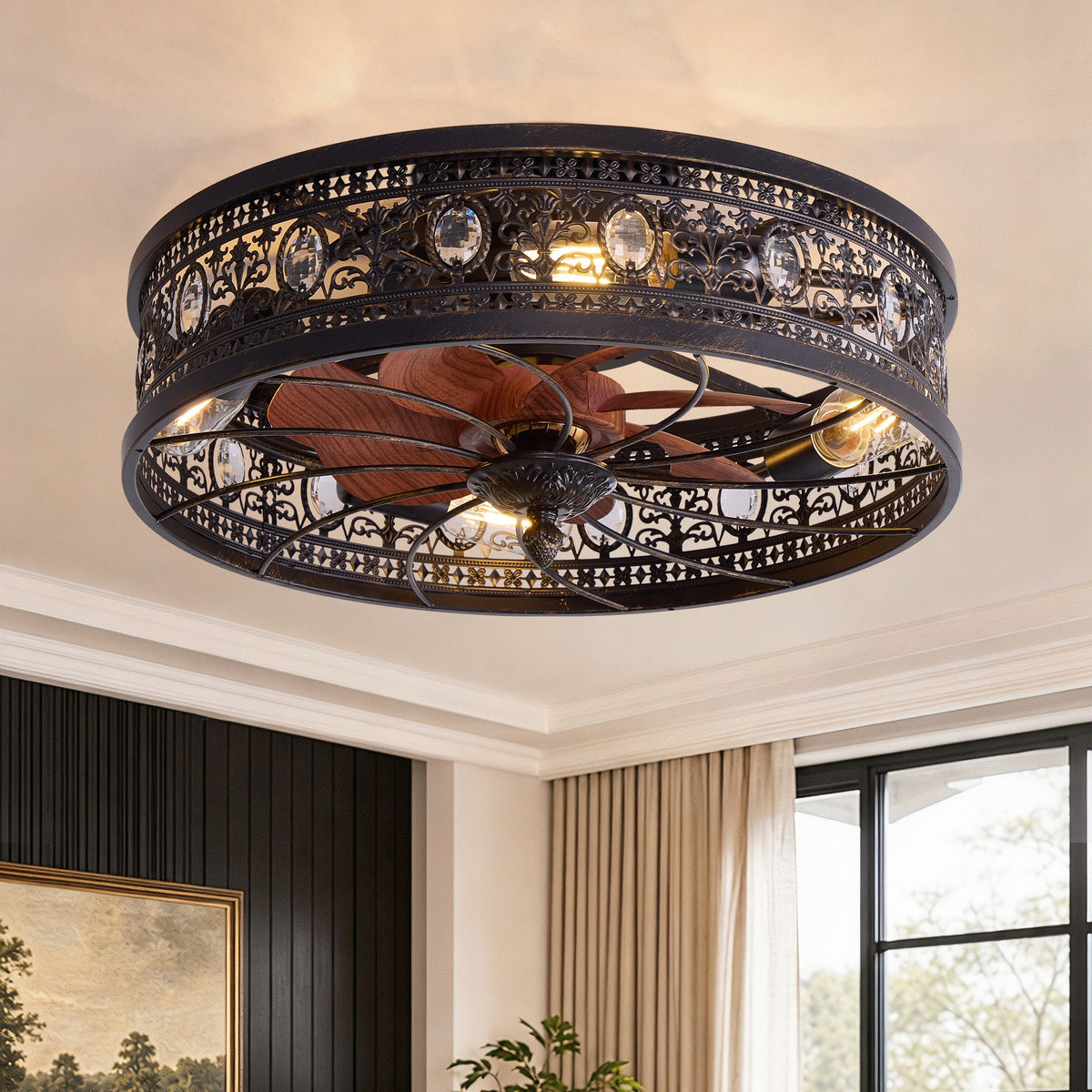
This guide uses three exact Sofary variants from two product families to make the decisions concrete. Product information was checked on October 24, 2026. The generated room scenes are styling illustrations based on those products, not customer installation photographs or measured layouts.
1. Map the bed, the walking routes and the ceiling point
Draw a simple furniture plan before shopping. Mark the bed, nightstands, wardrobes, bedroom door, bathroom door and any route you use in the dark. Then mark the existing ceiling outlet. The room's geometric center, the bed's centerline and the outlet may be three different points.
Take these measurements:
- The room's length and width, plus the ceiling height at the actual mounting point.
- The bed frame's overall width and length, including a projecting headboard or footboard.
- The space beside and at the foot of the bed, including door and wardrobe movement.
- The distance between the outlet and the proposed fixture position.
- The location of mirrors, a television, a ceiling fan and other objects sharing the view.
If the outlet is off-center, decide whether the fixture should stay there or whether the electrical location needs to change. Ask the installer to confirm the mounting arrangement before ordering. Do not assume a chain can simply be pulled sideways, or that a rigid stem will accommodate an offset.
2. Choose width by the whole silhouette
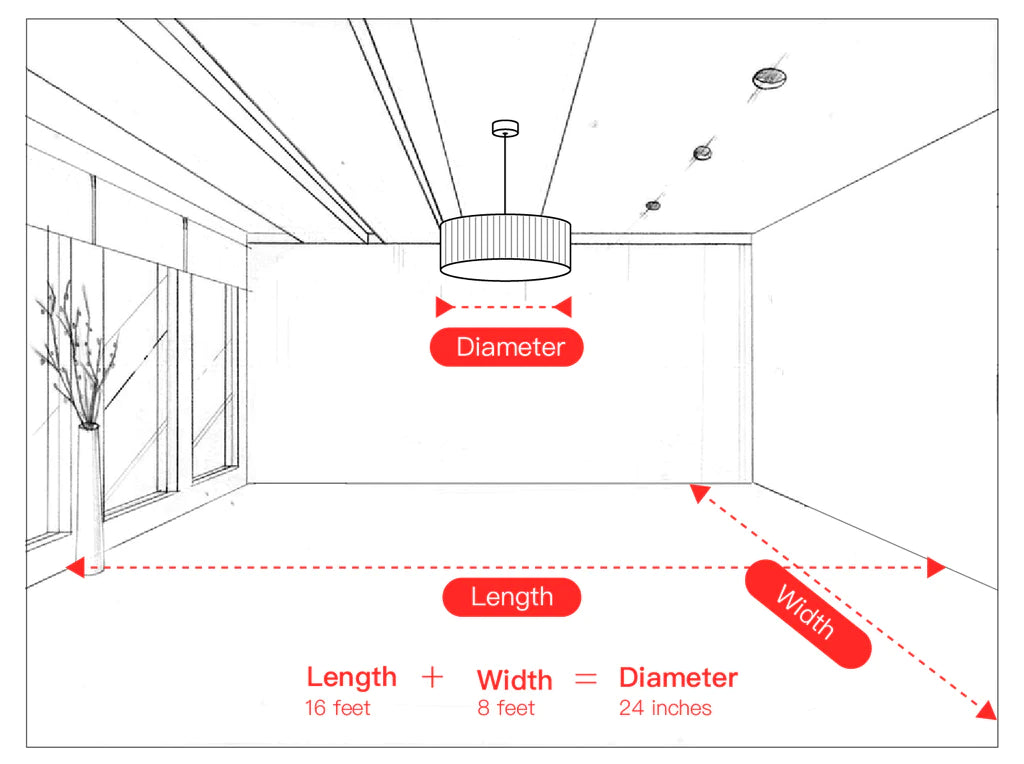
Bed width provides a useful visual reference, but it does not produce one mandatory chandelier diameter. A wide, shallow fitting can feel quieter than a narrower, deeper cluster. Crystal density, shade opacity and the amount of visible metal also affect how much attention a fixture draws.
Compare the proposed width with the headboard and the furniture beside it. Check a front view from the foot of the bed and an oblique view from the doorway. A fixture should look deliberate in both, rather than appearing centered only in a tightly cropped photograph.
For example, an 18.9-inch woven drum and a 23.6-inch crystal flush mount offer different kinds of presence. The first introduces a small suspended volume; the second spreads more widely along the ceiling. Neither is automatically the better choice for every queen or king bed.
A practical way to shortlist is to compare two candidate widths on a photograph of your actual room. Keep the bed and room at the same scale in both versions. Treat that exercise as a visual check, then verify the manufacturer's dimensions independently.

3. Calculate the complete hanging drop
Body height and installed height are different measurements. A suspended fitting also needs its canopy, attachment hardware and the permitted chain, cable or stem assembly. A flush-mount label does not tell you how shallow the fitting is.
Kichler's bedroom planning guidance generally places a chandelier 7 feet above the floor and asks readers to consider standing clearance and television placement. Its installation guide also uses that floor clearance for standard 8-foot rooms. This is manufacturer planning guidance, not a statement of the building rules for every location.
Using 84 inches as that preliminary floor-clearance reference:
Available complete drop = ceiling height − selected floor clearance.
| Ceiling height | Calculated complete drop | What the calculation means |
|---|---|---|
| 8 ft / 96 in | 12 in | The entire assembled fitting must be checked against this small budget. |
| 9 ft / 108 in | 24 in | A compact body may leave room for suspension; confirm the permitted minimum assembly. |
| 10 ft / 120 in | 36 in | More drop is available, but the lowest permitted position is not necessarily the best-looking one. |
These are subtraction examples, not product approvals. If a taller household member needs more clearance, use a higher selected floor clearance and recalculate.
The distinction matters with real products. CH103-A has a listed height of 11 inches, while CH103-B is listed at 15 inches. Against a 12-inch preliminary budget, the smaller fitting leaves little nominal allowance; the larger one exceeds it. Check the assembled height and mounting details before treating either as suitable.
For a suspended example, Tavira's listed body height is 9.8 inches. A 24-inch complete-drop budget leaves 14.2 inches for everything above the body. That remainder is not a confirmed chain setting: the canopy, connections and minimum permitted assembly still have to fit. An advertised adjustable chain length does not establish the shortest installed height.
A bed underneath the fitting does not automatically justify using a low dining-table hanging rule. People sit up, change bedding, move furniture and access the fixture for cleaning. For more on the assembly check, see Sofary's low-ceiling lighting guide.

4. Position it for the bed and the people using it
When the bed is the main visual anchor
Start by testing the bed's centerline. Then examine where along its length the fixture will sit. A position that looks balanced from the doorway can put a bright opening directly above your eyes when you recline. A location nearer the middle or foot may change that view, but it still needs to satisfy clearance, support and the actual room plan.
When the room has a separate seating area
A chandelier over a chair-and-table grouping can be an alternative to placing it over the bed. Check the chair's standing area and the route around the furniture. The chair should not be used to disguise a fitting that hangs too low for the occupied zone.
When the existing point is in the room center
It can remain a reasonable location if the fitting clears movement and looks comfortable from the bed. Perfect alignment with a headboard is not worth forcing an unsuitable hanging arrangement. If you change the bed's position later, review the lighting position as part of that change.
For sloped ceilings, ask about the exact mounting assembly and permitted angle. A model's general sloped-ceiling label does not answer every project-specific question.
5. Check the view from the pillows
Inspect four things from your normal resting position: whether a bare lamp is visible, whether the fixture has an open bottom, whether a mirror repeats its bright image, and whether it reflects in a television screen. Repeat the check while sitting up to read.
A shade can conceal lamps from the side while leaving them visible from below. An underside photograph is therefore useful evidence when shopping online. The Tavira reference photographs show a lower panel with a central retaining cap; the crystal fitting has a different, more open optical character. Confirm the selected product's supplied components if that distinction is essential to your choice.
Neither a material name nor a warm color temperature proves that a fitting will be comfortable from every angle. Clear crystal can produce distinct highlights; woven material can produce visible patterns. Look at the actual source position and shielding, not just the mood of the room photograph.
- Request a clear underside image when the bottom is not shown.
- Check whether the chosen bulb shape projects beyond its intended position.
- Review the proposed view at a useful lower light level, not only at full brightness.
- Use separate reading light so that reading does not require the whole room to be brightly lit.

6. Separate room light, reading light and evening light
A useful bedroom scheme has different settings for getting dressed, reading and settling down. The chandelier can provide decorative general light, while a separate task light serves a book or dressing area. Controls should let one person read without requiring every overhead lamp to stay bright.
This layered approach is supported by Kichler's bedroom guide. The Australian Government's Your Home lighting guidance likewise distinguishes general and task lighting and recommends considering separate lighting solutions and controls for different activities. Here that source informs lighting design principles, not U.S. installation requirements.
Read lumens, not just watts or lamp count
Watts describe electrical power; lumens describe light output. With replaceable lamps, the bulb you buy materially affects the result. A product's maximum wattage is a limit, not a target to fill.
For a clearly hypothetical example, five bulbs rated at 450 lumens each add up to 2,250 rated lamp lumens. That is not a measured Tavira output, a bedroom recommendation or a prediction of illumination at the pillow. The shade, room surfaces, position and dimming level all affect how the light is used in the space.
There is no single lamp-lumen total that makes every bedroom work. A dark room with a desk and reading corner is a different problem from a pale guest room used mainly for sleeping. Choose the tasks first, then evaluate the fixture and selected bulbs together.
Choose light color as a preference, then verify the actual bulb
For a bedroom with warm woods and neutral textiles, 2700–3000K is a useful editorial starting range to sample. Your Home places warm-white household lighting in the broader 2700–3200K range. Test your preference against the actual paint, bedding and nearby lights. A color-temperature number does not describe brightness, glare or color-rendering quality on its own.
Verify the dimming combination
Match the fixture's requirements, the exact dimmable lamps or driver, and the dimmer model. A claim of color adjustment does not establish dimming compatibility. Lutron's LED compatibility guidance directs users to tested bulb-and-dimmer combinations; use the relevant manufacturer's current compatibility information for your own system.
Ask about low-end behavior as well as maximum output. Flicker, hum or lamps turning off early may only become apparent near the bottom of the dimming range. The selected Sofary pages do not establish a tested bulb-and-dimmer pairing, so obtain confirmation before purchase if dimming is central to your plan.
Three exact Sofary variants to compare
These examples illustrate different proportions and mounting decisions. They are not a ranked list or a claim that every listed fitting suits your room. Dimensions below are the published product dimensions; confirm the complete assembled installation separately.
| Exact variant | Published dimensions and lamps | Decision to resolve |
|---|---|---|
| Tavira CH646-A | D 18.9 × H 9.8 in; E26 × 5; lamps not included. | A compact suspended woven body. Confirm its shortest complete hanging assembly and the underside components. |
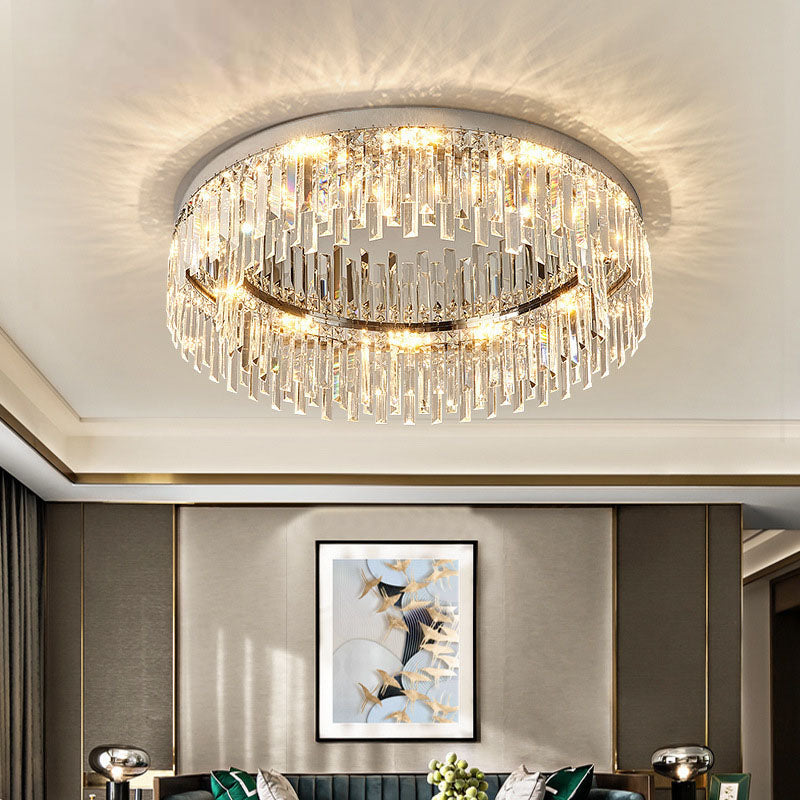
| Round crystal CH103-A | W 12 × H 11 in; E12 × 3; max 7W LED per lamp; lamps not included. | A narrow chrome crystal flush mount. Check whether its small footprint gives the visual presence you want. |
| Round crystal CH103-B | W 23.6 × H 15 in; E12 × 12; max 7W LED per lamp; lamps not included. | A wider and deeper version with more lamp positions. It needs a new height and brightness check, not just a wider ceiling space. |
The two CH103 sizes are not interchangeable in a low-ceiling calculation. Their product page lists flat-ceiling use, with sloped-ceiling customization requiring confirmation. Tavira lists adjustable chain suspension, but the shortest complete installed height is not stated on the inspected page.
Start with Sofary's bedroom lighting collection for alternatives after defining your height and viewing requirements.
Before ordering
Send the seller or installer the exact variant, a room photograph, the mounting-point height and the proposed location. Ask for the following answers in one place:
- The complete minimum and maximum installed height, with the hardware included in those measurements.
- The supplied ceiling-mounting arrangement and any confirmed sloped-ceiling limitations.
- Finished weight and the support required for that exact fitting.
- Bulb base, count, size restrictions and maximum permitted wattage.
- The proposed bulb or driver and dimmer compatibility, if required.
- The cleaning method, access plan and availability of replacement decorative parts.
Have a qualified installer verify the electrical and structural installation for the project. The weight alone does not establish that an existing box is suitable; see how chandelier weight affects the mounting plan.
Frequently asked questions
What size chandelier should go over a queen bed?
There is no single required diameter. Compare its width and depth with the actual bed frame, headboard and room. Then check complete hanging height and the view from the pillows. The right silhouette may be a small suspended shade or a wider fitting close to the ceiling.
Can I use a chandelier with an 8-foot bedroom ceiling?
Possibly, but calculate the whole assembly. Using a 7-foot floor-clearance planning reference leaves 12 inches of total drop. Many suspended chandeliers exceed that once their hardware is included. Confirm an exact model rather than relying on the words “mini” or “flush mount.”
Should it be centered on the room or the bed?
Test both against the furniture layout. The bed's axis often makes a useful starting point, but the outlet location, walking routes and resting view also matter. A qualified installer should assess any change to the mounting point.
Can a crystal chandelier be comfortable in a bedroom?
Yes, when the source position, selected lamps, level of light and viewing angles suit the room. Crystal is not inherently a guarantee of either comfort or discomfort. Inspect the underside and consider a separate reading light.
Is 2700K or 3000K better?
Both are reasonable warm-light samples to compare. Choose against your own materials and nearby lights, then verify the selected lamp specification. Neither number on its own tells you the brightness, glare level or dimming performance.
Do my bedside lights need to match the chandelier?
They can share a finish, shape or material without being identical. Give each fitting an appropriate job and check the group from the bed. For connected rooms, see Sofary's guide to coordinating lighting across an open-plan home.
Sources and how to use this guide
Research date: October 24, 2026. Product dimensions and lamp requirements were checked against the linked Sofary catalog records and product pages. The three examples are three variants from two models; they are not a controlled performance comparison.
External sources: Kichler bedroom planning; Kichler installation planning; Your Home lighting design; and Lutron LED compatibility.
Width comparisons, placement checks and the suggested color-temperature starting range are editorial guidance. The drop budgets are arithmetic illustrations using a stated manufacturer planning reference. No room illuminance, glare rating, product CRI, dimmer performance or structural suitability was measured for this article. Use the current product instructions and project-specific professional advice for the final installation.
More Blogs
What Should You Take into Consideration When Buying a Chandelier?How to Find the Best Staircase Chandelier for Your HomeHow to Pick the Perfect Chandelier Ceiling Fan for Your Living RoomHow to Choose Matching Lamps with Chandeliers ?How to Choose the Right Light Bulbs for Your HomeHow to install crystal chandeliers | Sofary LightingThe Lighting Guide: How to Light Your FoyerChandelier Ideas: A Guide to Choosing the Right Crystal ChandeliersYour Guide to the Top Types of Crystal For ChandeliersCrystal Chandelier Maintenance: How to Keep It Sparkling Like New