Open Box




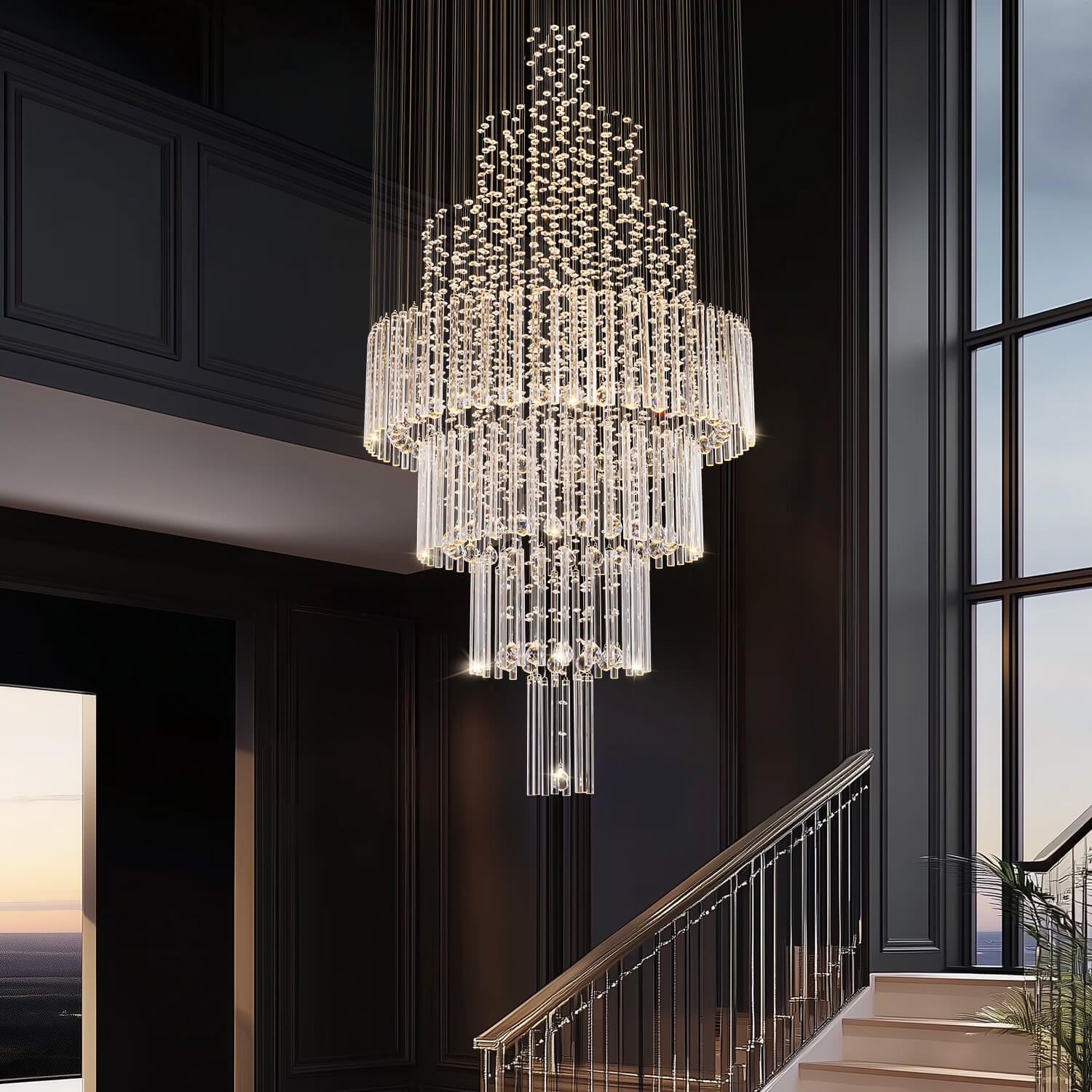
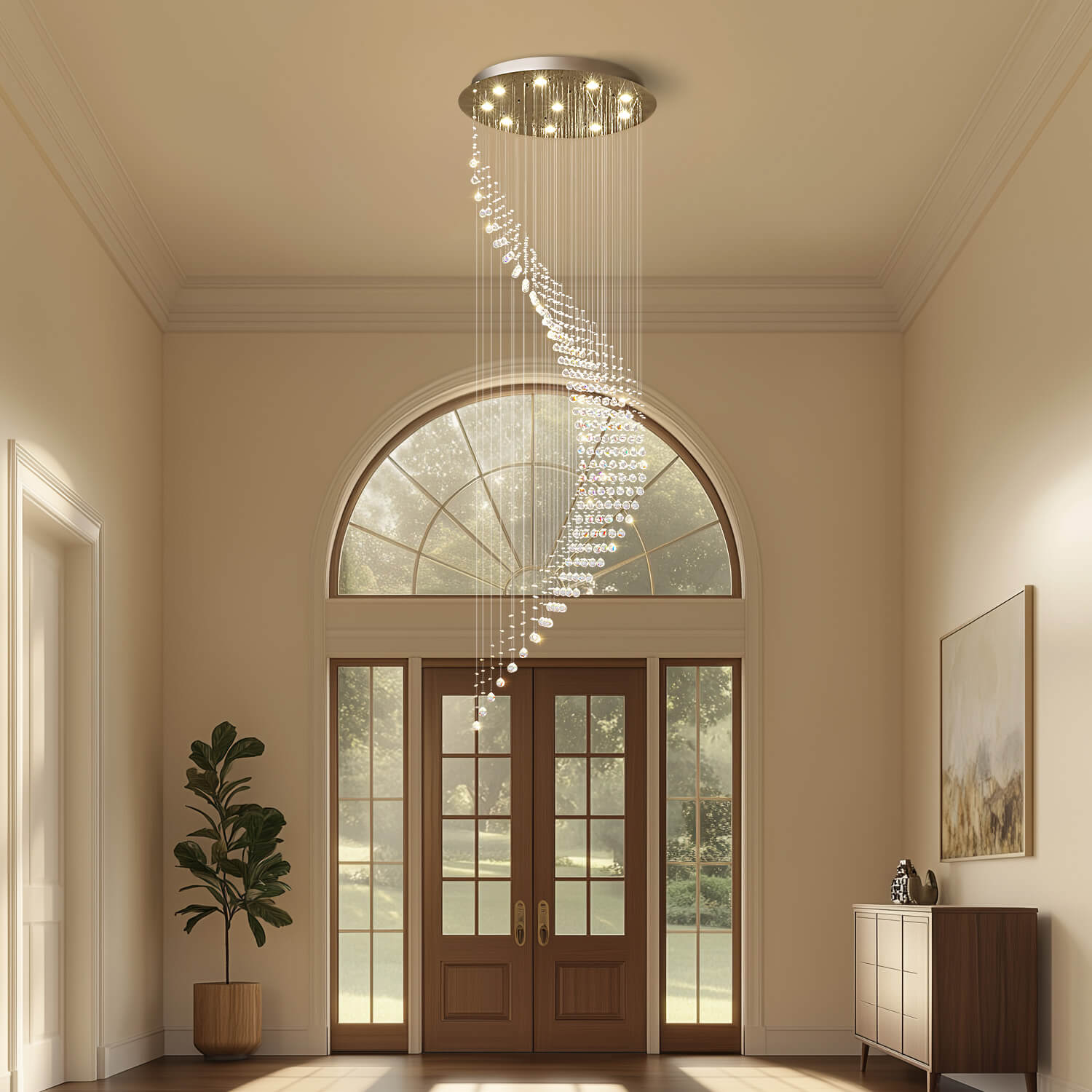
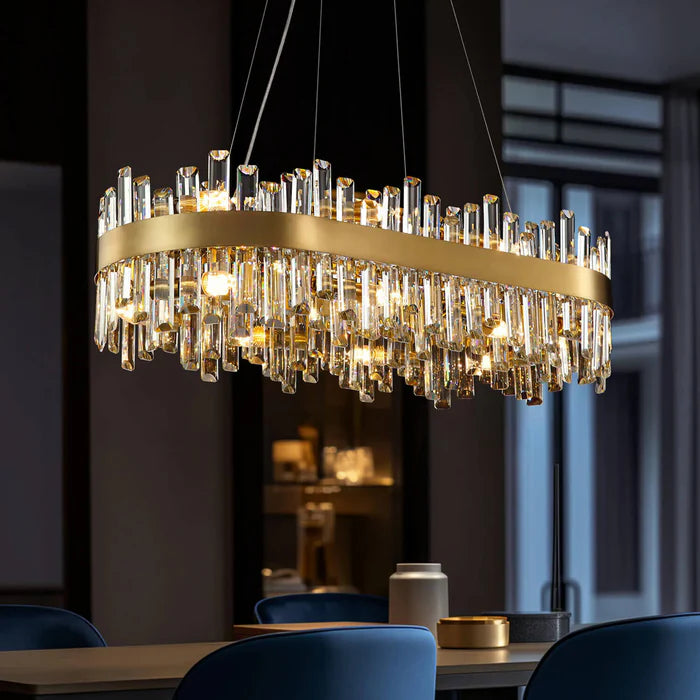
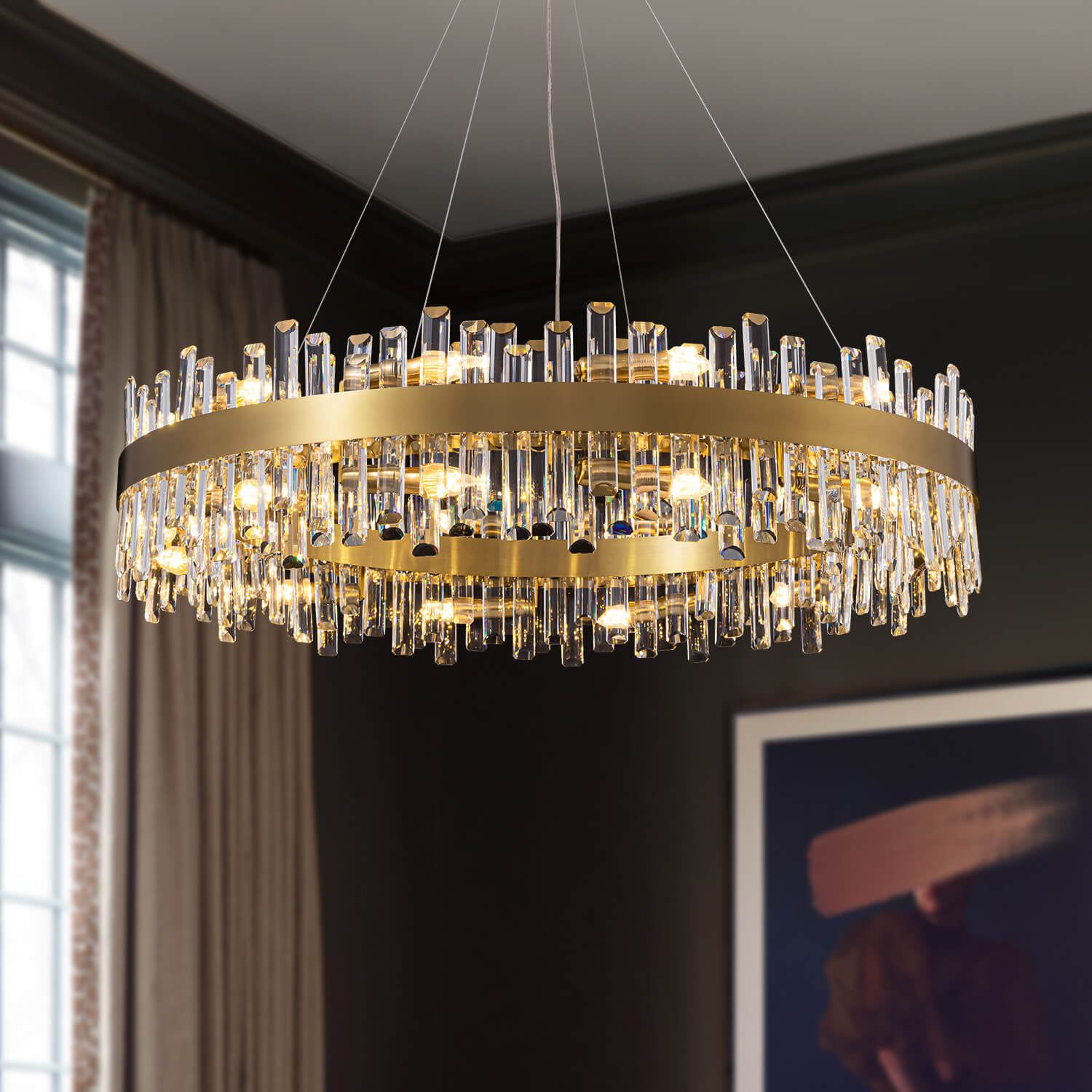



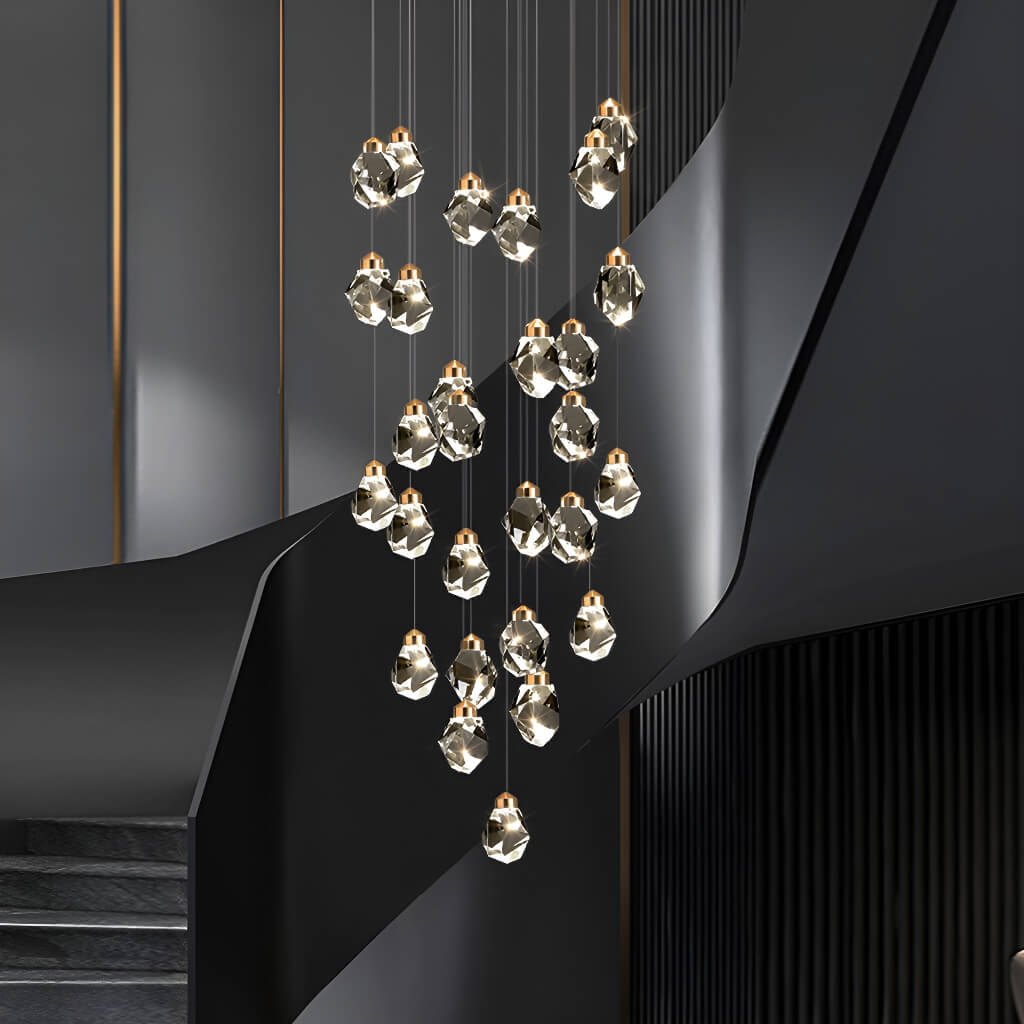


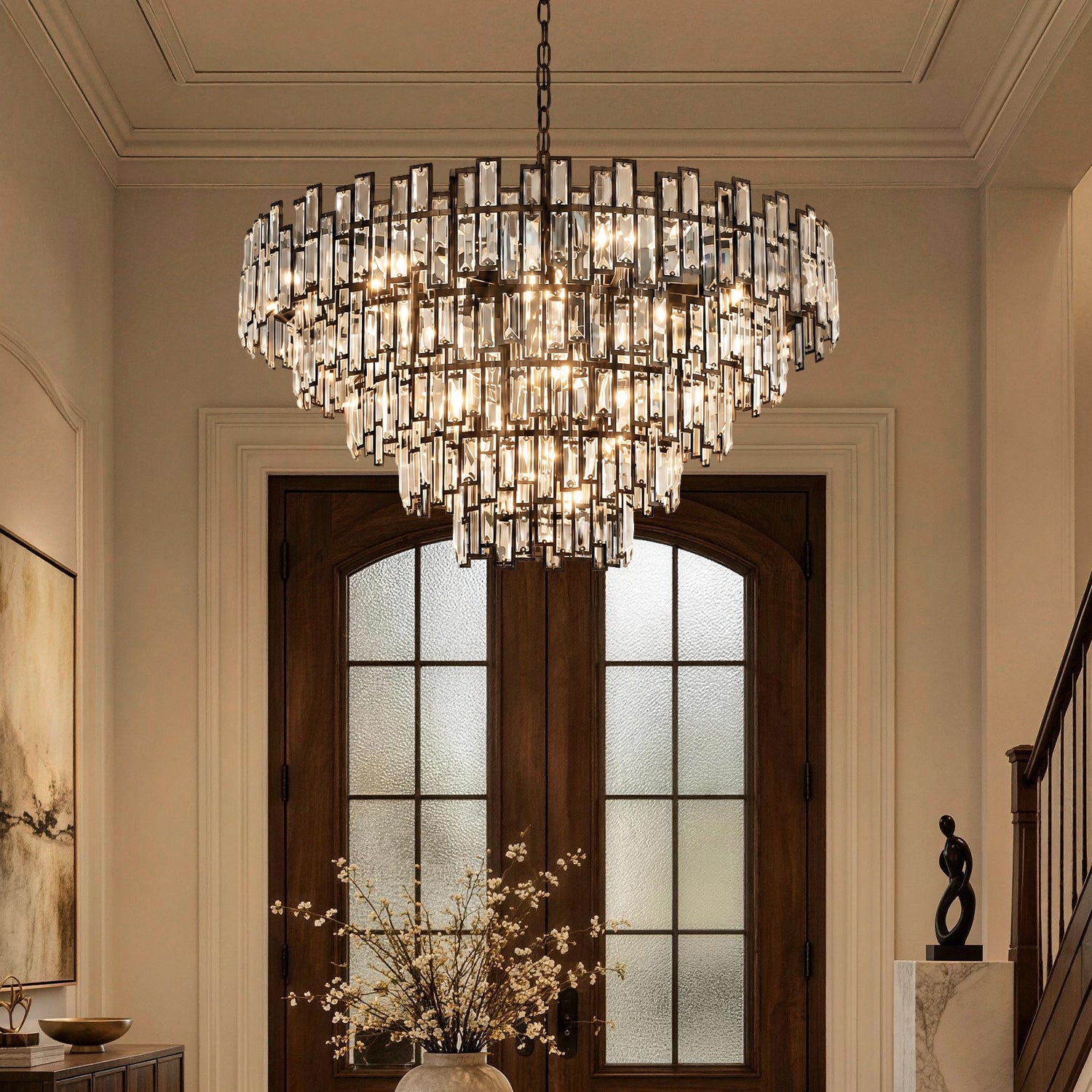
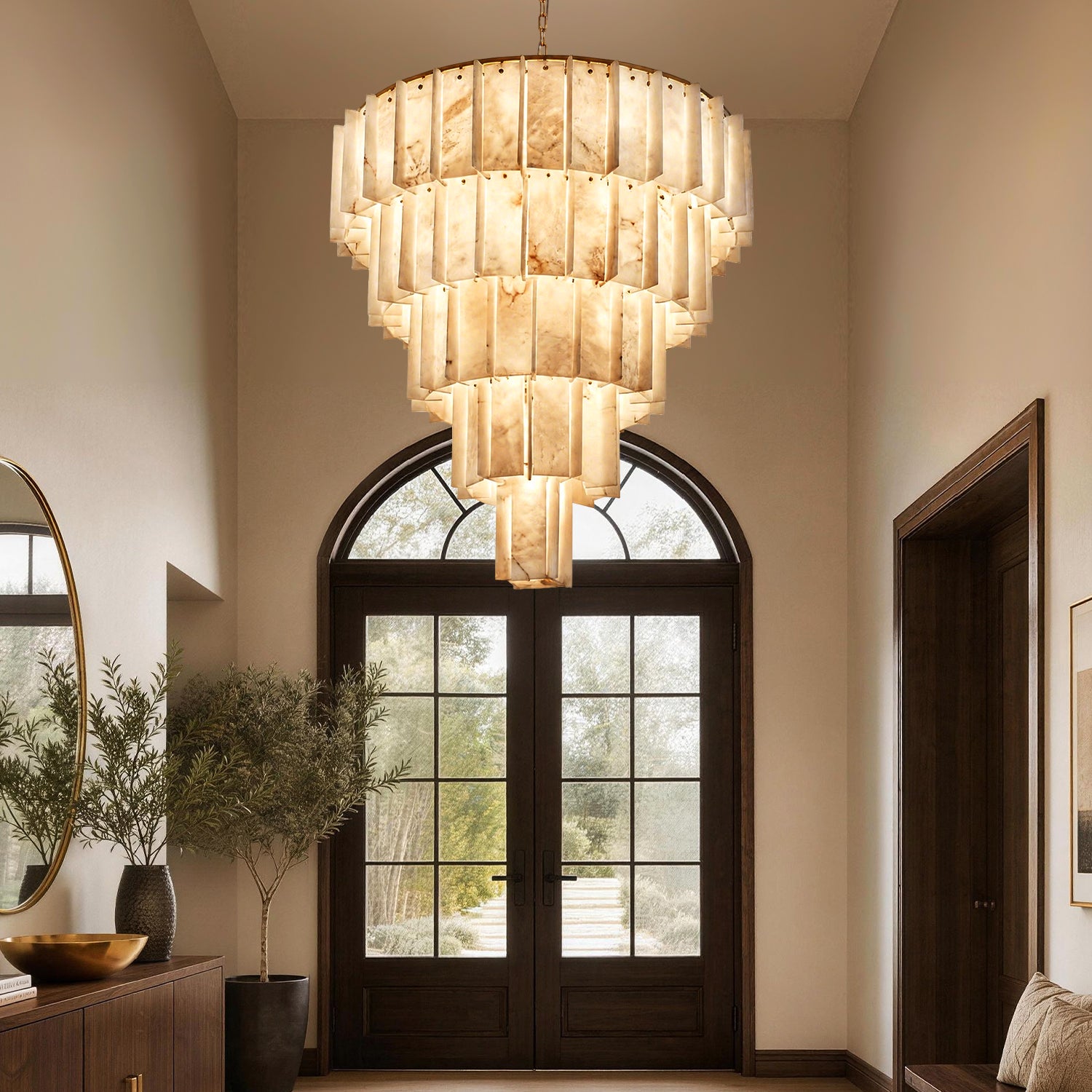
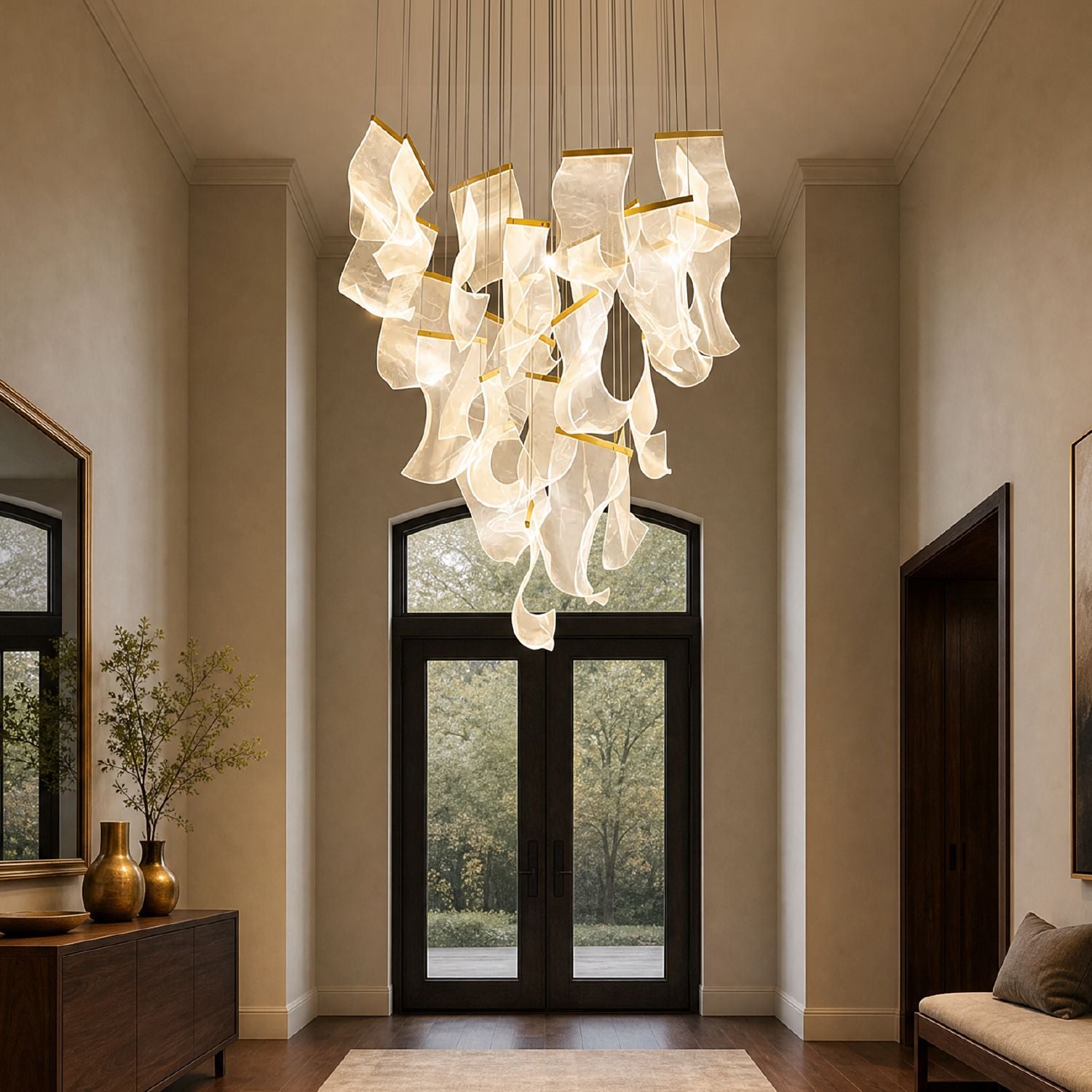
How Bright Should a Dining Room Chandelier Be? Complete Lighting Guide
Quick answer: Choose a dining room chandelier by checking five separate things: lumens for brightness, watts for electrical load, color temperature for the appearance of the light, CRI for how accurately colors are rendered, and dimming compatibility for control. For a warm residential dining atmosphere, 2700K or 3000K is a practical starting point. Do not assume that a larger chandelier is brighter, that a higher wattage means more light, or that “three-color” operation includes brightness dimming.
Scope and research date: This guide was researched on August 25, 2026. It uses U.S. Department of Energy and Federal Trade Commission lighting guidance, dimmer-manufacturer compatibility guidance, and published Sofary product specifications. It does not replace product-specific instructions, photometric testing, local electrical requirements, or advice from a qualified electrician.

The five lighting specifications that answer different questions
A chandelier can fit the table perfectly and still produce the wrong light for the room. Read each specification for the job it actually performs.
| Specification | What it tells you | What it does not tell you |
|---|---|---|
| Lumens | How much visible light a lamp or fixture produces | How much electricity it uses or exactly how bright the tabletop will be |
| Watts | Electrical power used, or the maximum permitted lamp load when stated by the fixture | Brightness across different lighting technologies |
| CCT | Whether the white light appears warm, neutral, or cool, measured in kelvins | Brightness or color accuracy |
| CRI | How accurately a light source renders colors compared with a reference source | Brightness, color temperature, or crystal quality |
| Dimming method | How brightness is controlled and which controller, bulbs, or driver must be compatible | Whether the fixture can change color temperature |
The Federal Trade Commission’s light-bulb guidance makes the central distinction clear: lumens describe brightness, while watts describe energy use. This matters when comparing LED bulbs with older lamp technologies and when selecting bulbs for a multi-light chandelier.
How many lumens should a dining room chandelier produce?
There is no single lumen number that works for every dining room. The answer depends on the room area, ceiling height, wall and table finishes, the chandelier’s optical design, and whether recessed lights, sconces, lamps, or daylight contribute to the room.
First decide what job the chandelier must do
- Decorative and ambient layer: The chandelier creates atmosphere while other fixtures provide much of the room’s functional light.
- Primary dining light: The chandelier must provide enough useful light for meals, serving, cleaning, and other table activities.
- Flexible multi-use light: The dining table is also used for homework, work, crafts, or entertaining, so brightness control and good color rendering become more important.
For replaceable bulbs, add the bulb lumens
Check the Lighting Facts label on the exact bulb package. As a simple example, nine bulbs rated at 450 lumens each provide 4,050 lamp lumens before the chandelier redirects, absorbs, or diffuses the light. That arithmetic is a useful comparison tool, but it is not a measurement of the light reaching the tabletop.
Never exceed the fixture’s published maximum wattage per socket or total permitted load. A wattage limit is an electrical and thermal constraint, not a brightness recommendation.
For integrated LED fixtures, ask for total fixture lumens
LED wattage alone is not enough. If total fixture lumens are not published, mark the output as needs confirmation. For a high-value or primary-light purchase, ask the seller for tested lumen output or photometric information for the exact size and color-temperature setting.
Keep size and lighting as two separate checks
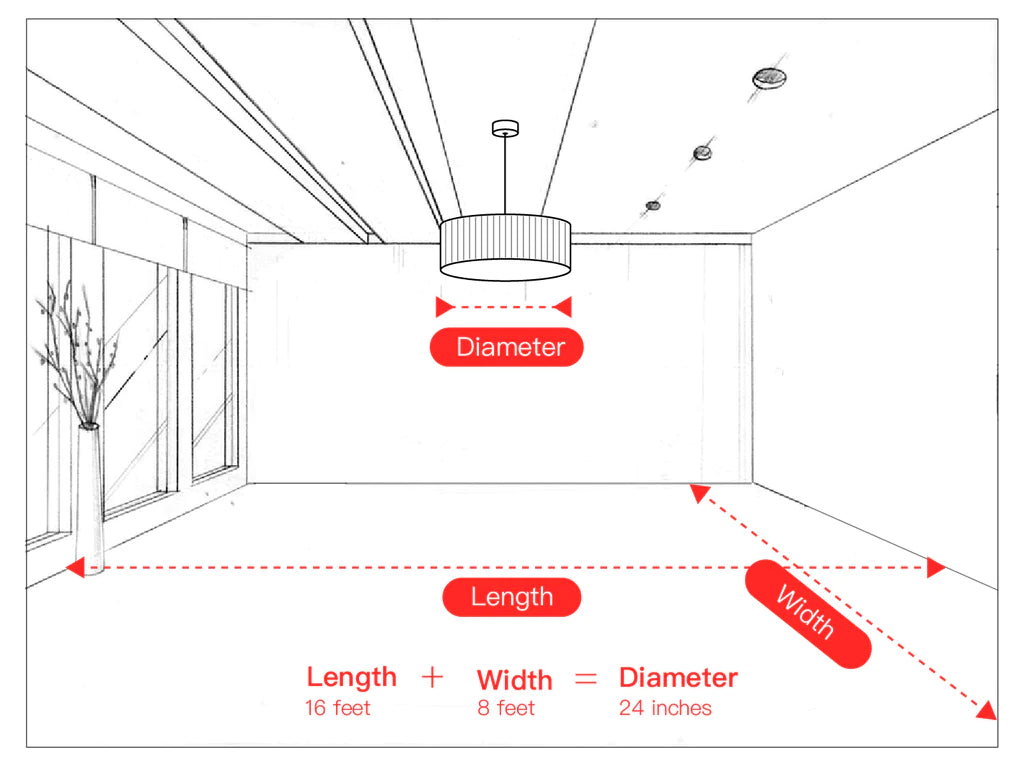
A wide linear chandelier can look correctly proportioned over a long table but still provide modest light. A compact multi-bulb fixture may produce more lamp lumens than a larger decorative LED ring. Use the dining-table chandelier size guide to establish proportion and hanging height, then use this lighting guide to evaluate performance.
Which color temperature works best over a dining table?
Color temperature changes the appearance of white light; it does not determine how bright the light is. The U.S. Department of Energy describes 2700K as a warm, friendly light commonly used in homes and restaurants, while 3000K is warm but slightly crisper. Its guidance describes light around 4100K as cooler and cleaner in appearance. See the DOE light-bulb purchasing guide.
For a more focused comparison of warm, neutral, and cool light in different dining styles, see Sofary's guide to choosing dining-room chandelier color temperature.
| Color temperature | Typical appearance | Dining-room use |
|---|---|---|
| 2700K | Warm and relaxed | A strong starting point for intimate dining, traditional rooms, warm woods, brass, and gold finishes |
| 3000K | Warm with a slightly clearer white | A flexible residential choice for modern, transitional, glass, crystal, and mixed-material chandeliers |
| 3500K–4000K | Neutral to cool-neutral | Useful when the dining area is also a work surface or when adjacent open-plan lighting already uses this range |
| 4500K–6000K | Noticeably cool | May be useful as an optional tunable setting, but it is not the default choice for a warm residential dining atmosphere |
Editorial guidance: Start with 2700K or 3000K for most residential dining rooms, then compare it with the room’s other light sources, wall colors, metal finishes, and how the table is used. Avoid mixing visibly different color temperatures in one open sightline unless the contrast is intentional.
Why CRI matters for food, finishes, and crystal
CRI is measured on a 0–100 scale. A higher value generally indicates more accurate color rendering. As a baseline, look for CRI 80 or above when it is published. If accurate food color, wood tones, artwork, fabric, and metal finishes matter, CRI 90 or above is a useful editorial target.
Do not confuse crystal brilliance with CRI. Crystal, glass, and metal can refract, reflect, or diffuse light, but CRI is a property of the light source. A chandelier can sparkle strongly while using a lamp whose CRI is not published.
If a product page does not list CRI, do not assume a value from the fixture material, wattage, color temperature, or a similar-looking model. For a replaceable-bulb chandelier, select bulbs with a verified CRI. For integrated LED, ask for the CRI of the installed LED system.
E12, E26, G9, or integrated LED: which source is easier to live with?
| Light-source format | Main advantage | What to verify |
|---|---|---|
| E12 candelabra bulbs | Replaceable; the buyer can select lumen output, CCT, CRI, and dimmability | Bulb count, maximum wattage, physical bulb size, enclosed-fixture suitability, and dimmer compatibility |
| E26 medium-base bulbs | Widely available replaceable format with many output and style choices | Socket count, shade clearance, maximum wattage, bulb visibility, and compatible control |
| G9 bi-pin bulbs | Compact source that fits small globes and slim decorative forms | Physical fit, heat, rated wattage, lumen output, dimmability, and whether the bulb is suitable for the enclosure |
| Integrated LED | Allows thin rings, continuous light, and built-in color-temperature or controller features | Total fixture lumens, CRI, CCT settings, driver and LED serviceability, dimming method, replacement parts, and warranty coverage |
Replaceable bulbs give the buyer more control over future lamp choice. Integrated LED can enable a cleaner form and built-in controls, but the buyer should understand what happens if the driver, controller, or LED module fails. The better choice depends on the exact product and the information published for it—not on the source category alone.

“Three-color” does not always mean dimmable
Lighting controls are often described with overlapping terms. Separate these functions before buying:
- On/off switching: The light has one brightness and one color temperature.
- Three-color switching: Repeated wall-switch operation changes color temperature, such as 3000K, 4500K, and 6000K. This may not change brightness.
- Remote brightness dimming: An included controller or remote adjusts brightness. The fixture may still be incompatible with a conventional wall dimmer.
- Wall-dimmer brightness control: The bulbs or LED driver must be compatible with the exact dimmer type and electrical load.
The full compatibility chain matters: fixture or driver, bulbs, dimmer, total load, and wiring arrangement. The DOE advises buyers to verify that LEDs are compatible with the intended dimming system. Dimmer manufacturers also maintain model-specific compatibility information; for example, Lutron recommends using tested bulb-and-dimmer combinations.
Terms such as forward-phase, TRIAC, reverse-phase, ELV, and 0–10V identify different control approaches. Do not select a control by guessing from the phrase “dimmable.” Ask which exact dimmer or control model the fixture requires, and have electrical work performed in accordance with the product instructions and local requirements.
What published Sofary specifications show
The examples below are not a performance ranking. They show why buyers must read the exact product and selected size instead of treating every Dining Room chandelier as having the same light source or control method. Specifications were inspected on August 25, 2026 and may change.
| Example | Published light-source information | Buyer takeaway |
|---|---|---|
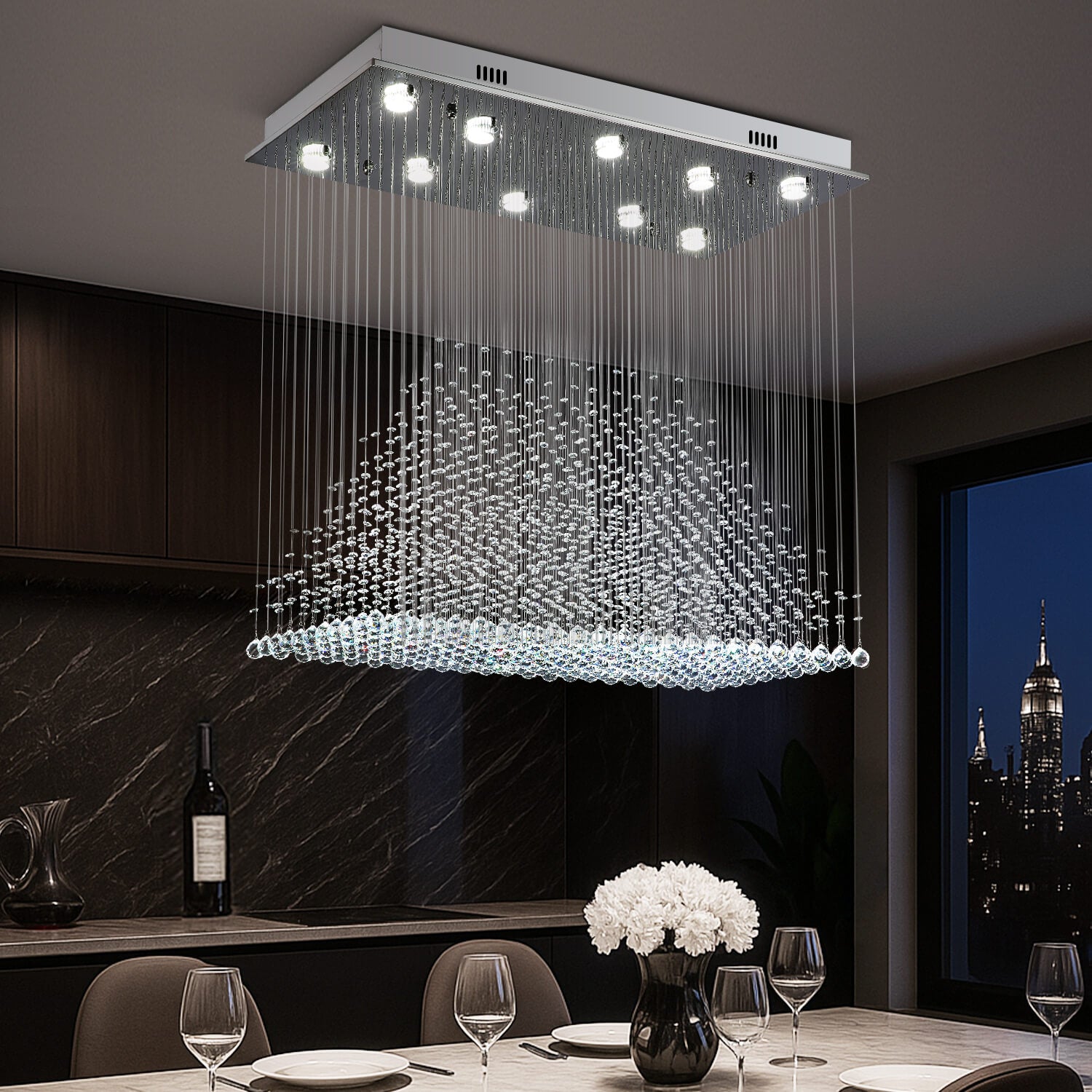
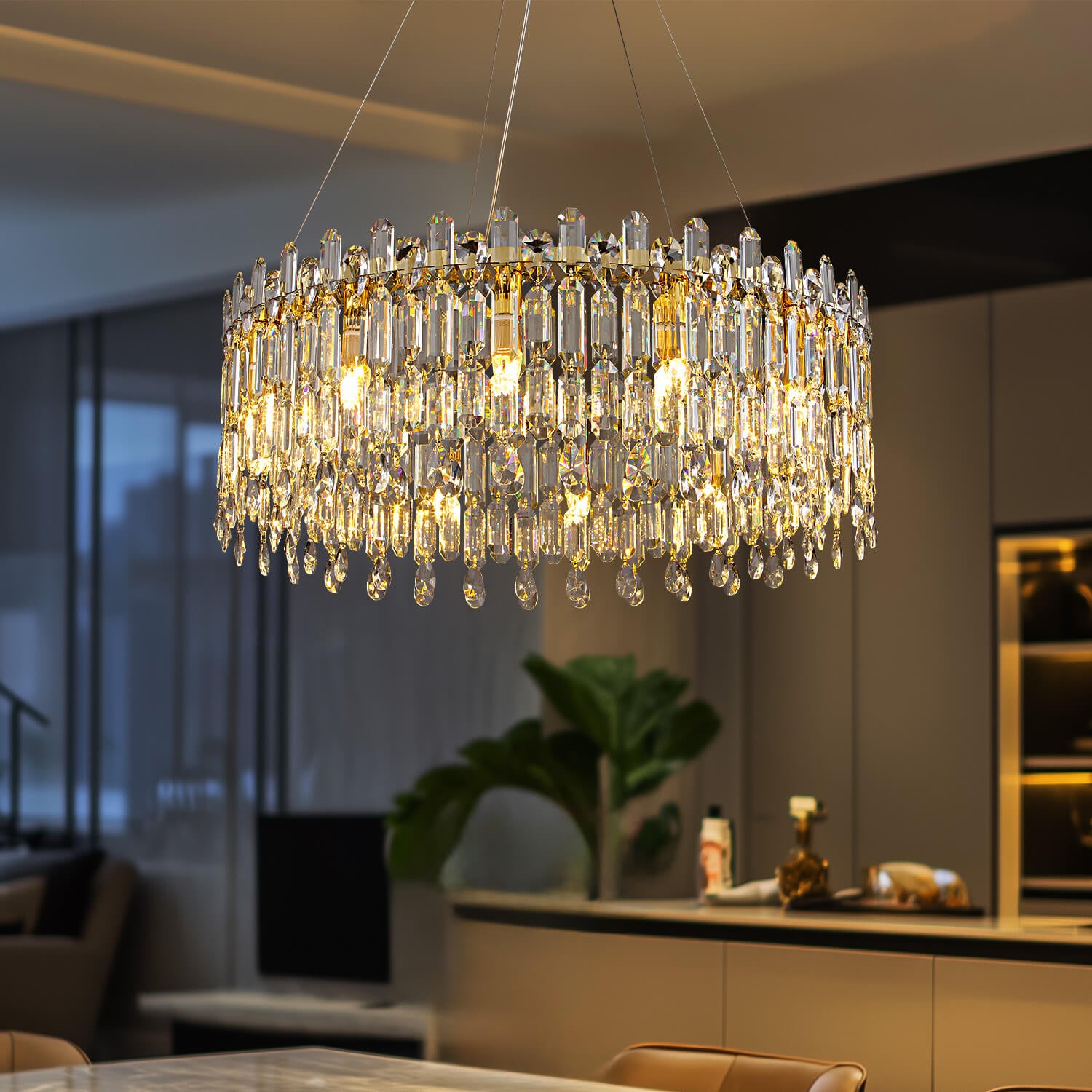
| Modern Tiered Crystal Prism Chandelier | E12 bulbs; 10, 19, or 27 lights depending on size; maximum 7W LED per bulb; bulbs not included | The buyer controls bulb lumens, CCT, and CRI. Total lumens and dimming compatibility are not published in the inspected specification block. |
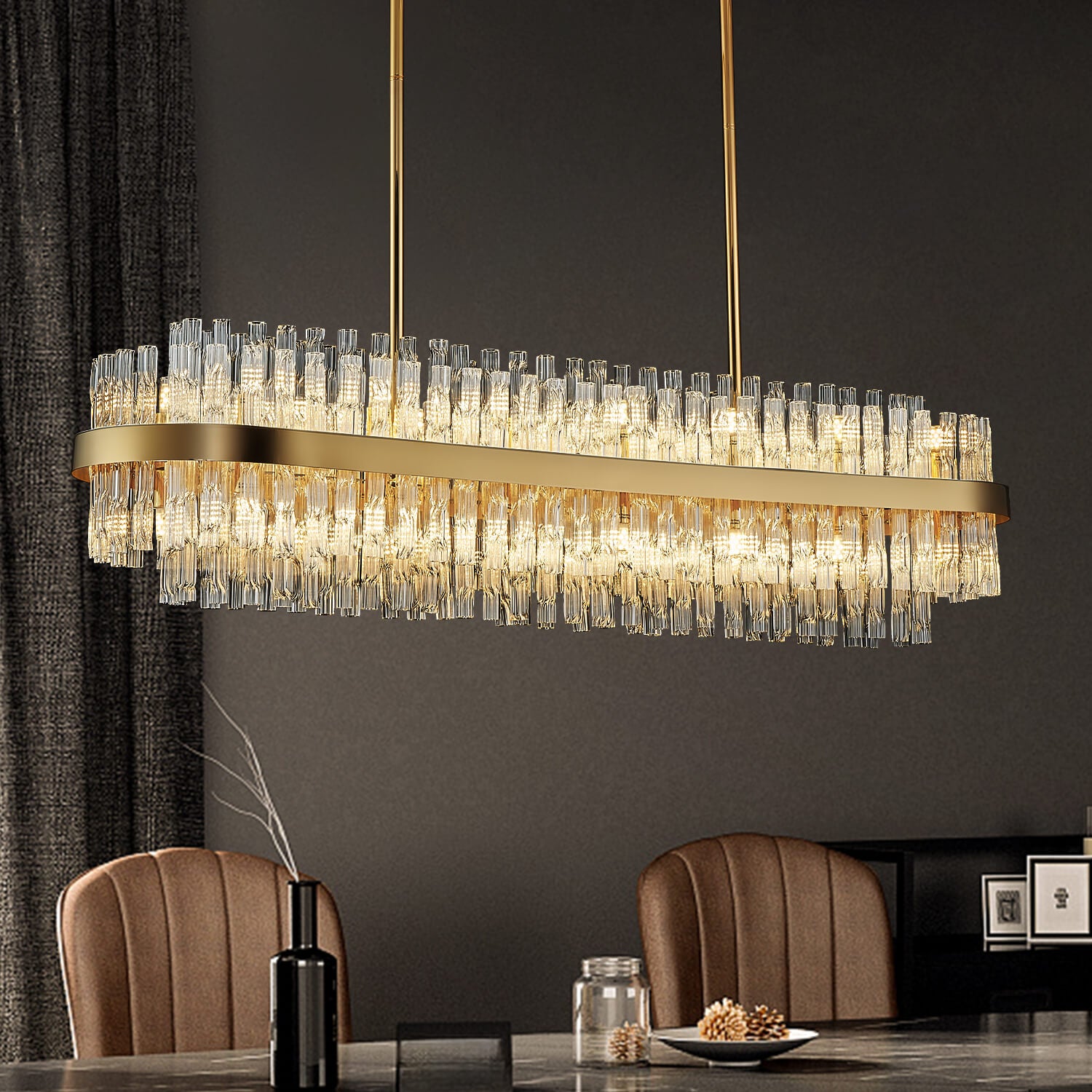
| Glass Globes Linear Chandelier | Sixteen G9 bulbs; 3–5W LED recommended; bulbs not included | Confirm bulb dimensions, lumens, CCT, CRI, enclosed-use suitability, and dimming compatibility before ordering bulbs. |
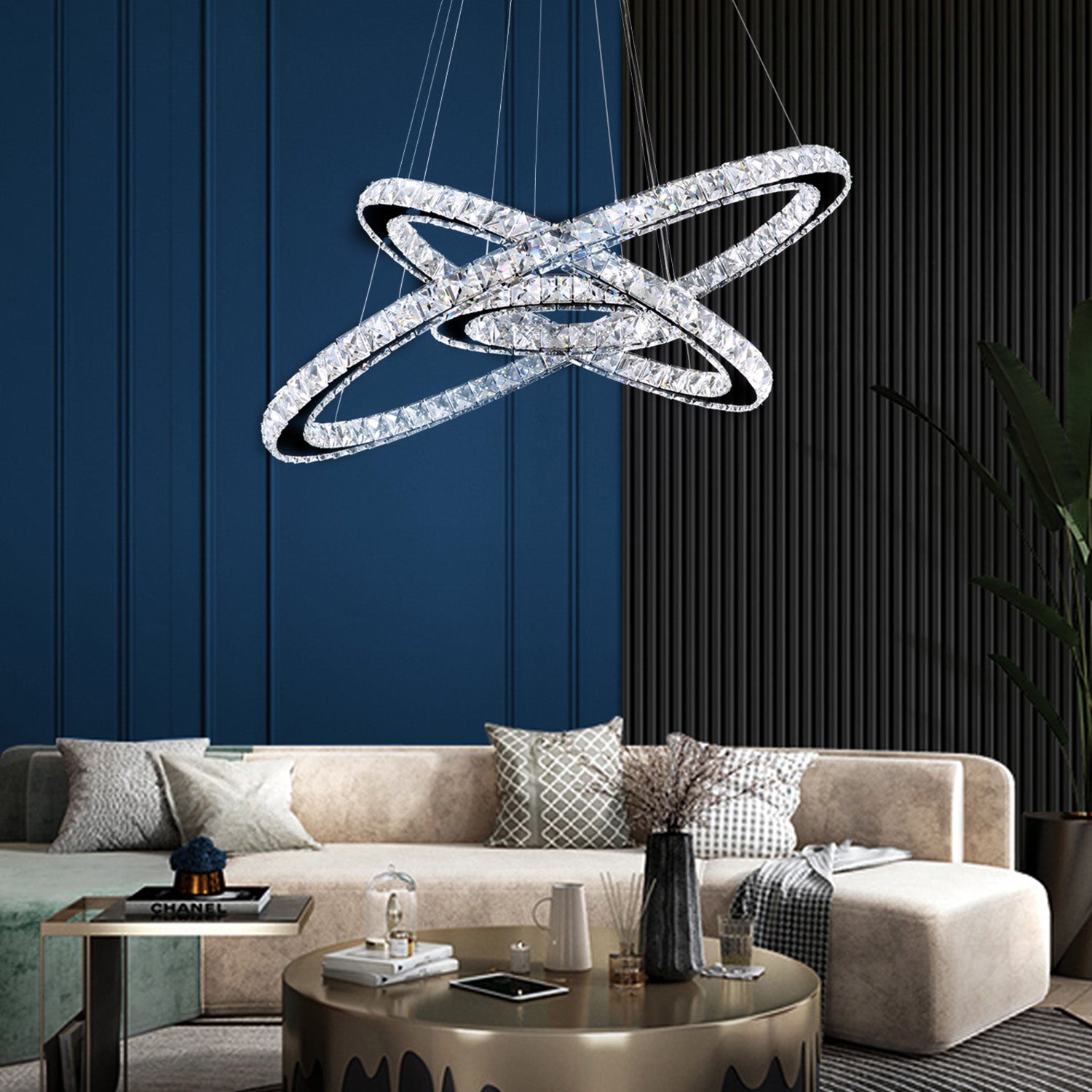
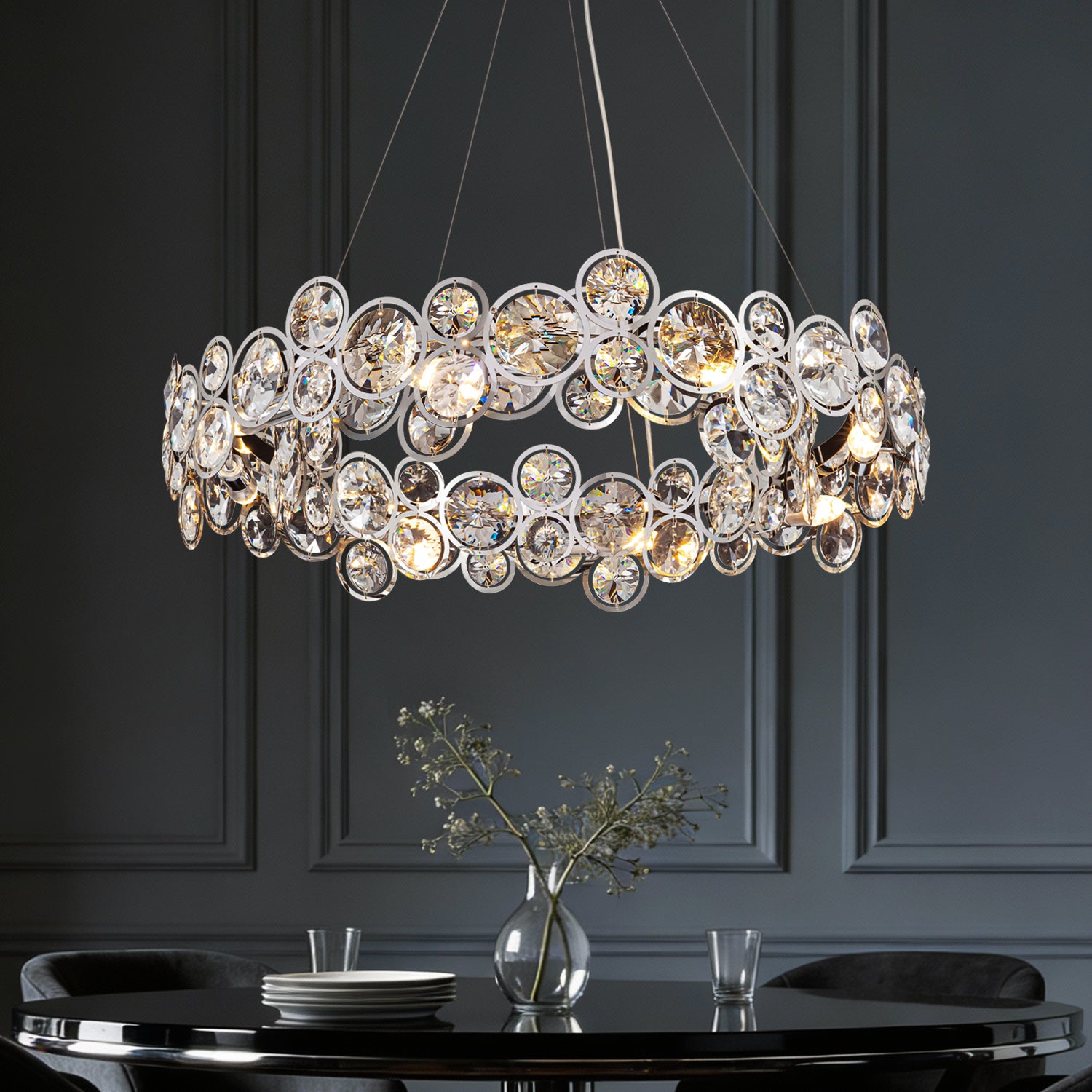
| Crystal Bloom Halo Ring Chandelier | Included LED strips; 58W or 79W by size; switches among 3000K, 4500K, and 6000K; published as not dimmable and incompatible with a wall dimmer | The fixture changes color temperature but does not provide published brightness dimming. Total lumens and CRI are not published on the inspected page. |
| Iceberg Round Gold Black Chandelier | Included LED strips; remote-control brightness dimming; 3000K, 4500K, and 6000K switching; conventional wall dimmer listed as incompatible | Remote dimming and wall dimming are different control methods. Total lumens and CRI are not published on the inspected page. |
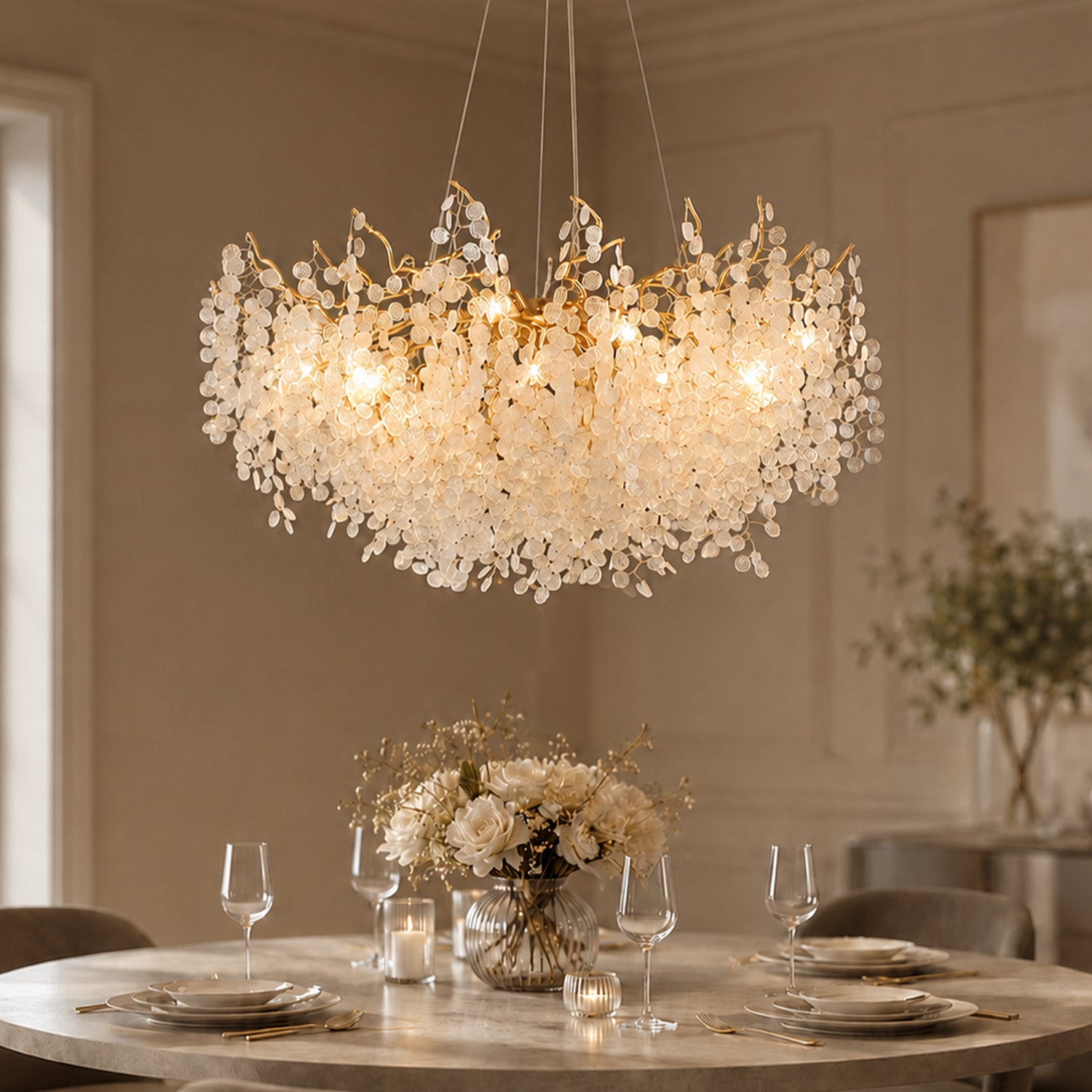
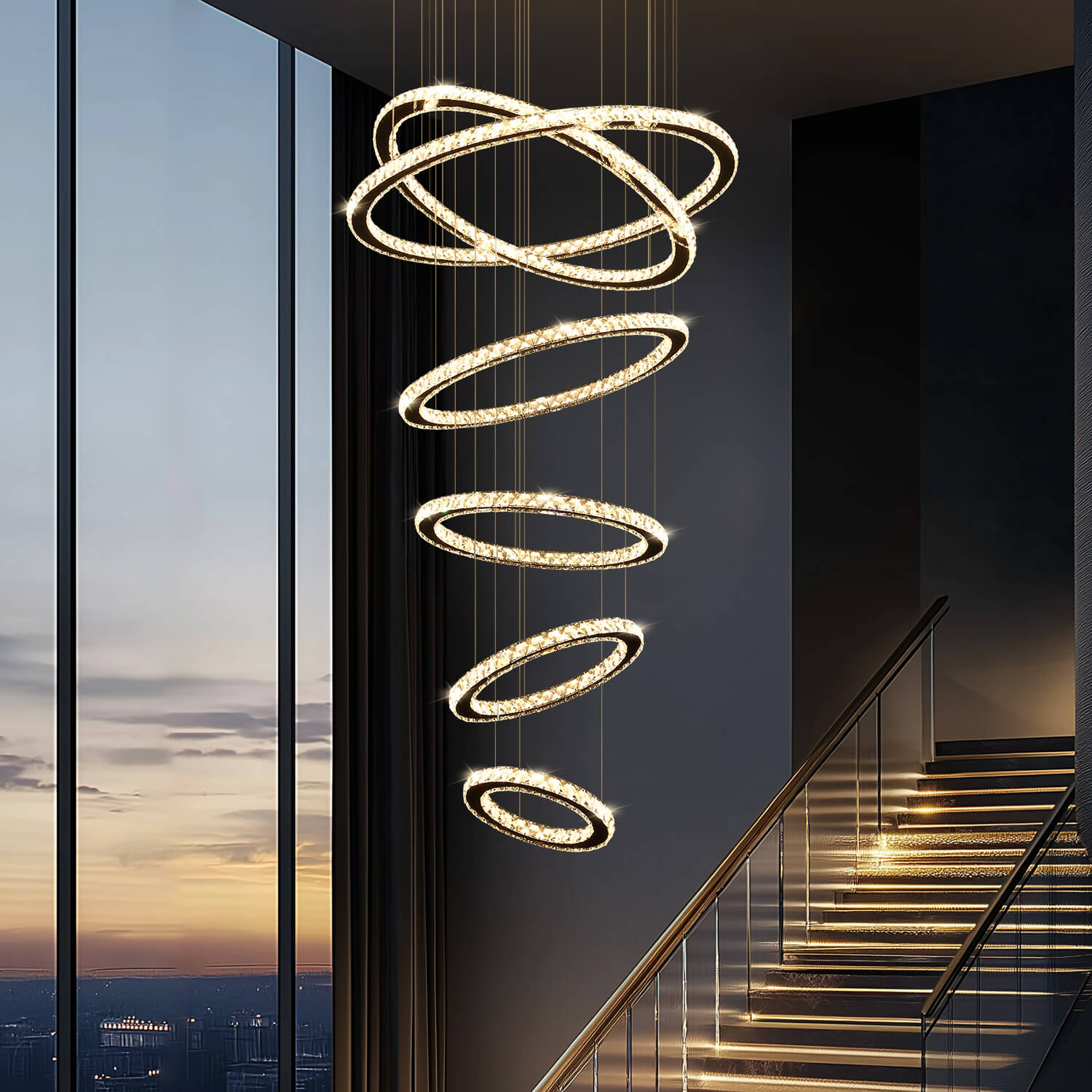
| Lumaire Alabaster Crystal Ring Chandelier | Integrated LED strips; 3000K, 4500K, and 6000K switching; wall dimmer listed as incompatible | The product publishes color-temperature choices, but total lumens, CRI, wattage, and LED/driver service information require confirmation. |
Choose lighting by the way the dining room is used
| Dining scenario | Starting direction | Most important checks |
|---|---|---|
| Intimate dinners and entertaining | 2700K or 3000K with real brightness dimming | Low-end dimming stability, glare, adjacent lighting, and control compatibility |
| Everyday family dining | 3000K as a flexible starting point | Adequate useful light, replaceable bulbs or serviceable LED components, and easy controls |
| Dining table also used for work or homework | 3000K–4000K or tunable white, supported by layered lighting | Brightness range, CRI, glare control, and separate task lighting |
| Open-plan dining and kitchen | Coordinate CCT with the kitchen and nearby fixtures | Visible color-temperature mismatch, control zones, and consistent dimming behavior |
| Formal crystal statement fixture | Warm-to-neutral light with verified CRI when available | Source visibility, sparkle versus glare, service access, and whether accent or recessed lighting is also needed |
Cross-check lighting with budget, size, and brand evidence
Budget: include the complete lighting system
The fixture price may not include bulbs, a compatible dimmer, electrical work, or future driver replacement. Use the chandelier budget guide to compare the complete purchase rather than the decorative frame alone.
Size: proportion does not prove performance
Use table length, room proportions, hanging range, and sightlines to choose the physical fixture. Then evaluate lumen information, source type, CCT, CRI, and controls separately. A visually balanced fixture is not automatically a complete lighting plan.
Brand evidence: missing specifications are purchasing information
A reliable product comparison should show what is published and what still needs confirmation. The fact-based chandelier brand guide explains how specification transparency, warranty, returns, parts, and support contribute to a more informed decision.
Dining chandelier lighting checklist
- Exact product, size, finish, and voltage selected
- Fixture role defined: decorative layer, primary light, or multi-use light
- Bulb base or integrated LED confirmed
- Bulb count and maximum permitted wattage confirmed
- Bulbs included or excluded confirmed
- Total lamp or fixture lumens verified when available
- Color temperature or tunable settings verified
- CRI verified when color accuracy matters
- Brightness dimming distinguished from color-temperature switching
- Exact bulb, driver, dimmer, remote, or controller compatibility verified
- Replacement bulb, LED module, driver, and parts plan understood
- Fixture size, hanging height, weight, ceiling support, and installation requirements checked
After completing the checklist, browse the Sofary Dining Room chandelier collection and confirm the live specifications for the exact product and variant before ordering.

Frequently asked questions
How many lumens should a chandelier have over a dining table?
There is no universal number. Determine whether the chandelier is the primary source or one layer of the room’s lighting. For replaceable bulbs, add the published bulb lumens as a source-output estimate. For integrated LED, use tested total fixture lumens when published. Room surfaces, fixture optics, hanging height, and other light sources affect the result.
Are watts or lumens more important for brightness?
Lumens describe brightness; watts describe power use. Always follow the fixture’s maximum wattage limit, but compare brightness using lumens.
Is 2700K or 3000K better for a dining room?
Both can work. Choose 2700K for a warmer, more intimate appearance and 3000K for a warm but slightly clearer appearance. Compare the choice with adjacent lighting and the room’s finishes.
Is 4000K too cool for dining?
Not necessarily. CCT is a preference and coordination decision, not a brightness measurement. Around 4000K can suit a multi-use or modern open-plan space, but it will look more neutral than 2700K or 3000K.
Does “three-color” mean the chandelier is dimmable?
No. Three-color operation usually changes color temperature. Brightness dimming is a separate function and requires a compatible control system.
Can dimmable LED bulbs be used in any chandelier?
No. The fixture, bulb, dimmer, electrical load, and wiring arrangement must be compatible. Confirm the exact bulb and dimmer combination rather than relying only on the word “dimmable.”
What CRI is good for a dining room?
CRI 80 or above is a practical baseline when published. CRI 90 or above is a stronger editorial target when accurate food, wood, fabric, art, and finish colors are important.
Are integrated LEDs better than replaceable bulbs?
Neither is automatically better. Integrated LED supports slim forms and built-in controls; replaceable bulbs provide more control over future lumen output, CCT, CRI, and replacement. Compare serviceability, parts, output data, dimming, and warranty for the exact fixture.
Methodology and sources
This guide separates published facts from editorial guidance. Lighting definitions and buyer checks were reviewed against the U.S. Department of Energy light-bulb purchasing guide, the Federal Trade Commission’s consumer guidance on lumens and Lighting Facts labels, and Lutron’s model-specific LED compatibility guidance. Sofary examples were taken from the linked product pages as inspected on August 25, 2026.
The product examples are not laboratory comparisons and do not rank light quality. Where a lumen, CRI, dimming, driver, or service field was not published on the inspected page, this guide labels it as unpublished or requiring confirmation rather than estimating it from another model.
More Blogs
What Should You Take into Consideration When Buying a Chandelier?How to Find the Best Staircase Chandelier for Your HomeHow to Pick the Perfect Chandelier Ceiling Fan for Your Living RoomHow to Choose Matching Lamps with Chandeliers ?How to Choose the Right Light Bulbs for Your HomeHow to install crystal chandeliers | Sofary LightingThe Lighting Guide: How to Light Your FoyerChandelier Ideas: A Guide to Choosing the Right Crystal ChandeliersYour Guide to the Top Types of Crystal For ChandeliersCrystal Chandelier Maintenance: How to Keep It Sparkling Like New